The Timothy Cole Exoneration Review Commission held an organizational meeting on Thursday and will meet again before the end of the year.
In addition to the members designated by statute, Chief Justice Nathan Hecht appointed former Harris County DA Carol Vance on behalf of the Texas Judicial Council, and Governor Abbott appointed Charles Eskridge, a prominent Houston attorney who helps vet federal judicial candidates for Senators Cornyn and Cruz and helped Anthony Graves seek Charles Sebesta's disbarment. (As luck would have it, your correspondent is an advisory member of the panel on behalf of the Innocence Project of Texas.)
I particularly enjoyed meeting Mr. Vance, whose name I've heard since my youthful days as a reporter, by which time he was already a living legend among Texas prosecutors. Having been appointed Harris County DA by John Connally then winning reelection, Vance served in that capacity from 1966 to 1979. Then in 1992, Ann Richards appointed him chairman of the Texas Department of Criminal Justice where he presided over its massive expansion. For the past twenty years, though, he's been a passionate prison-ministry advocate. An eponymous prison unit 30 miles from Houston is the site of the late Charles Colson's famed Inner-Change Freedom Initiative. (Vance is 82.) His reputation may be that of a "stormtrooper," as an attorney friend declared upon learning of his appointment. But that's neither the sense I got from his remarks to the group on Thursday, nor from our brief conversation, after which I left thinking he could end up being a really valuable addition to the group.
Most of the meeting consisted of brief overview presentations and introduction of staff and members. Senator Rodney Ellis and an ailing but game Ruth Jones-McClendon offered opening remarks. The Commission saw a compelling video on Tim Cole's posthumous exoneration and
heard exoneree Richard Miles recount the story of a prosecutor hiding exculpatory
evidence to convict him and the state bar giving the guy a pass. Forensic Science Commission Chairman Vincent DiMaio described the challenges distinguishing between real and junk science among traditional forensics.
The only real action taken by the Commission was to select a chair, which HB 48 declared would be selected by the group's members. State Rep. John Smithee of Amarillo offered to do the job and was handed the gavel by acclamation. Grits thinks he'll be an excellent leader for the group. He's passionate about the issues - as Tim Cole's family was leaving toward the end of the meeting, Smithee stopped them and pledged that the commissioners would try to make them proud - and he has supported all the major innocence reforms at the Texas Legislature over the last several sessions.
As a bonus, as a House committee chairman and ally of the Speaker, perhaps Chairman Smithee will be in a position to shepherd reforms through the Calendars Committee, which for several sessions has functioned as a graveyard for reform bills like recording custodial interrogations. After all, the important thing in the end is not, "what does the commission recommend?," but "what does the Legislature pass?" The 11 recommendations from five years ago covered six major issue areas, all but one of which (recording interrogations) have been addressed by legislation in the intervening years.
The group has basically a year to come up with new recommendations to prevent false convictions, so of necessity they'll have to limit the issue areas on which they focus. IPOT produced a summary document
for the commission suggesting potential areas of focus based on the group's statutory duties and the array of cases from 2010-present they've been charged
with analyzing - it's not a set agenda but a starting point for discussion. In particular, IPOT hopes they'll issue recommendations on new areas which the 2010 Tim Cole Advisory Panel did not address, like reining in mendacious confidential informants and the pressure put on innocent defendants in less-serious cases to plead guilty because of pretrial detention. The commission has a big job ahead of it and I look forward to working with all these folks.
MORE: From the Amarillo Globe-News.
Showing posts with label Timothy Cole. Show all posts
Showing posts with label Timothy Cole. Show all posts
Sunday, November 01, 2015


Monday, December 22, 2014
Tim Cole honored most by reforming system that wrongfully convicted, killed him
An author of a book about Timothy Cole - who famously died in prison from an untreated asthma attack before he could be exonerated by DNA evidence - is seeking an honorary posthumous degree
for Cole from Texas Tech, where as a student he had for years been falsely demonized as the "Tech rapist." The school has so far demurred, "citing a lack of
achievement. But proponents say Cole accomplished more in death than
most people ever do in life," reported the Texas Tribune.
There's little doubt Tim Cole's story has become one of the pivotal narratives helping redefine public perceptions of the justice system in Texas, so I'd never begrudge any posthumous honor, statue, historical commemoration, etc., that anyone wants to bestow on him. However, a colleague of mine from the Innocence Project of Texas expressed a concern your correspondent simultaneously would echo.
There's little doubt Tim Cole's story has become one of the pivotal narratives helping redefine public perceptions of the justice system in Texas, so I'd never begrudge any posthumous honor, statue, historical commemoration, etc., that anyone wants to bestow on him. However, a colleague of mine from the Innocence Project of Texas expressed a concern your correspondent simultaneously would echo.
Some people associated with Cole’s case feel that the efforts on his behalf would be better spent on addressing criminal justice reform.“I’m always worried that the more Tim Cole becomes a memorialized symbol, the less people will think about what we really need to do to fix the system in Texas,” said Jeff Blackburn, the founder of the Innocence Project of Texas and the lawyer who secured Cole’s exoneration.While he had no objection to honoring Cole with a degree, Blackburn said, “it does make me think about how much energy people are willing to put into something that’s past and how little energy they’re willing to put into the scary stuff, which is changing the system going forward.”
That's exactly right. Honoring Cole's memory is important but it's no substitute for changing the system so that what happened to him will be less likely to happen to others.
If the state wants to further honor Timothy Cole, arguably the best way would be to approve the innocence commission bill named after him that would review the justice system with an eye toward proposing changes to the law to further reduce the likelihood of convicting innocent people. (The bill passed the House in 2013 but died in the Senate.) Or, the Lege could pass Rodney Ellis' and Terry Canales' bill requiring police to record interrogations in serious cases, the last, unfulfilled recommendation from the now-disbanded Timothy Cole Advisory Panel on Wrongful Convictions (which was a poor man's substitute for a full-blown innocence commission).
If Tech doesn't want to go the honorary degree route, maybe they could figure out how to endow a chair in Cole's name at the law school to hire someone to study and teach about wrongful convictions and how to prevent them. I'd be glad to see Cole further honored, but even happier if such tributes contributed to improving the justice system.
Sunday, September 21, 2014
Tim Cole statue unveiled in Lubbock, and other stories
Here are a few items from the last week that may interest Grits readers but which lost out in the competition for time with my paid work:
Tim Cole memorialized by VIPs at statue unveiling
Lubbock this week unveiled a 13-foot tall statue of Timothy Cole, who was falsely convicted of rape in that county and died in prison before his innocence could be proven. Lots of VIPs there, including Gov. Perry and both the Democratic and Republican nominees to succeed him. See CNN's coverage, AP, and the Lubbock Avalanche-Journal. Perhaps the best way politicians could honor Timothy Cole next session would be to pass the final, unfinished recommendation from the Timothy Cole Advisory Panel: Requiring police to record custodial interrogations for serious offenses.
Texas Association of Business goes 'Smart on Crime'
A left-right "Smart on Crime" coalition formally announced this week including the Texas Public Policy Foundation, my part-time employers at the Texas Criminal Justice Coalition, the Texas Association of Business, and Goodwill Industries. The big news here really is the Texas Association of Business stepping up to the plate more seriously on the subject. Their interests are mainly in continuing adequate supply in the labor market, but at this moment in history that aligns their interests with less-government reformers on the left and right who think limited state resources should be spent on more productive endeavors than incarceration.
Abuses reveal Houston cops' mercenary view of ticket writing
Prosecutors in Houston will dismiss hundreds of Class C charges, reported the Houston Chronicle (Sept. 18), because four police officers lied on the tickets, claiming their colleagues were present at the stop so they could cheat on their overtime records. The four officers were recently "relieved of duty" and are "being investigated for criminal conduct." One frequently hear politicians claim the purpose of ticket writing is to enforce the law, not generate revenue. But for these cops it was about generating revenue: overtime, for themselves.
Harris DA candidates: End key-man system of grand jury selection
Both R and D District Attorney candidates in Harris County believe the key man system of selecting grand juries should be eliminated, reported HouChron columnist Lisa Falkenberg (Sept. 18). So do I. Problem is, judges make those appointments and nobody can tell them what to do but the Legislature. So if you want to change how grand juries are picked, the candidates might be running for the wrong office. I'm old fashioned that way, but I'd prefer the candidates debate stuff that's actually part of the DA's job.
The Driver Responsibility surcharge is still a catastrophe
The Texas Observer's Forrest Wilder has a column decrying Texas' Driver Responsibility surcharge; nothing regular Grits readers haven't heard before but he outlines the problem well and expresses the appropriate level of outrage at one of the most dysfunctional programs in all of state government.
Who is operating fake cell phone towers in Texas, US?
Popular Science wondered, "Who is running the phony cell-phone towers around the US?" (Sept. 15). Like me, they think it's probably cops and spooks. See prior Grits coverage.
Making slime
Off topic, but this was a lot of fun to do with the granddaughter this morning. A big hit. Eight year olds love to make slime.
Tim Cole memorialized by VIPs at statue unveiling
Lubbock this week unveiled a 13-foot tall statue of Timothy Cole, who was falsely convicted of rape in that county and died in prison before his innocence could be proven. Lots of VIPs there, including Gov. Perry and both the Democratic and Republican nominees to succeed him. See CNN's coverage, AP, and the Lubbock Avalanche-Journal. Perhaps the best way politicians could honor Timothy Cole next session would be to pass the final, unfinished recommendation from the Timothy Cole Advisory Panel: Requiring police to record custodial interrogations for serious offenses.
Texas Association of Business goes 'Smart on Crime'
A left-right "Smart on Crime" coalition formally announced this week including the Texas Public Policy Foundation, my part-time employers at the Texas Criminal Justice Coalition, the Texas Association of Business, and Goodwill Industries. The big news here really is the Texas Association of Business stepping up to the plate more seriously on the subject. Their interests are mainly in continuing adequate supply in the labor market, but at this moment in history that aligns their interests with less-government reformers on the left and right who think limited state resources should be spent on more productive endeavors than incarceration.
Abuses reveal Houston cops' mercenary view of ticket writing
Prosecutors in Houston will dismiss hundreds of Class C charges, reported the Houston Chronicle (Sept. 18), because four police officers lied on the tickets, claiming their colleagues were present at the stop so they could cheat on their overtime records. The four officers were recently "relieved of duty" and are "being investigated for criminal conduct." One frequently hear politicians claim the purpose of ticket writing is to enforce the law, not generate revenue. But for these cops it was about generating revenue: overtime, for themselves.
Harris DA candidates: End key-man system of grand jury selection
Both R and D District Attorney candidates in Harris County believe the key man system of selecting grand juries should be eliminated, reported HouChron columnist Lisa Falkenberg (Sept. 18). So do I. Problem is, judges make those appointments and nobody can tell them what to do but the Legislature. So if you want to change how grand juries are picked, the candidates might be running for the wrong office. I'm old fashioned that way, but I'd prefer the candidates debate stuff that's actually part of the DA's job.
The Driver Responsibility surcharge is still a catastrophe
The Texas Observer's Forrest Wilder has a column decrying Texas' Driver Responsibility surcharge; nothing regular Grits readers haven't heard before but he outlines the problem well and expresses the appropriate level of outrage at one of the most dysfunctional programs in all of state government.
Who is operating fake cell phone towers in Texas, US?
Popular Science wondered, "Who is running the phony cell-phone towers around the US?" (Sept. 15). Like me, they think it's probably cops and spooks. See prior Grits coverage.
Making slime
Off topic, but this was a lot of fun to do with the granddaughter this morning. A big hit. Eight year olds love to make slime.
Tuesday, October 15, 2013
Ruby Session, R.I.P.
Grits offers heartfelt condolences to the family of Ruby Cole Session, whose son Timothy Cole died in a Texas prison after his wrongful rape conviction before he was posthumously pardoned by Gov. Rick Perry. Ruby passed away last Thursday. Ruby's son, Cory Session, is a colleague of mine at the Innocence Project of Texas. The Texas Legislature created the Timothy Cole Advisory Panel on Wrongful Convictions named after her son and has implemented five of the six major recommendations made by that group. From AP:
Ruby Cole Session, whose son was wrongly convicted and prompted her campaign to win landmark legislation in Texas, has died. She was 77.Her memorial service will take place on Saturday in Fort Worth. It's great that she lived to see her son exonerated and to witness the state seeking to reform the justice system in response to his and other DNA exoneration cases. The New Yorker will soon publish a feature on the Tim Cole case and its impact on the Texas justice system (Grits was interviewed for the story in August), not the least of which was the passage of the nation's most generous compensation package for Texas exonerees - legislation that also bore Tim Cole's name. Ruby's passing will make for an unhappy postscript to what otherwise has been an inspiring and triumphant tale of a family seeking posthumous justice for their wrongfully convicted loved one. She will be missed. I know she was proud that she and Cory could so effectively carry on Tim's legacy.
Session lobbied Gov. Rick Perry to sign the Tim Cole Act, named for her son who was convicted of a 1985 rape and died in prison in 1999. The legislation compensates those who are wrongly convicted and spurred other reforms meant to reverse wrongful imprisonments.
DNA results prompted Perry to pardon Cole in 2010. Another man confessed to the rape of a Texas Tech student.
Session was honored earlier this year in the Texas Senate for her achievements as a criminal justice reformer and "fierce champion of the wrongly accused."
Son Cory Session says his mother died Thursday at her Fort Worth home of an aneurysm.
Monday, August 26, 2013
As death drugs dwindle, why not use firing squads for Texas executions?
 |
| Image via Sentencing Law and Policy |
Grits tends to favor a solution to this dilemma posed recently by Robert Blecker on CNN.com: Reverting to the firing squad. This would remove the medicalized facade that lethal injection promotes, stripping away phony appeals to execute inmates "humanely" and simply portray capital punishment as it really is: A raw expression of state power.
Indeed, make me philosopher king and I'd require that the sitting Governor - the only person empowered to commute the sentence - perform the execution with a single, large-caliber shot to the forehead of a kneeling prisoner. Let the people's representative carry out the people's will. Forget any nonsense about putting blanks in the gun of one of the firing squad members. If we're going to have the death penalty, it should be performed in a way that lays bare the power dynamics behind it. At least then debates on the subject would be more honest and we wouldn't drag the medical community into the matter in violation of their Hippocratic Oath. Put the onus on the pols, not the doctors. Barring that approach, to me the firing squad would be the next best thing.
Regular readers know Grits remains more or less agnostic about the death penalty, for a variety of reasons. For starters, I don't consider it the "worst" punishment the state can dole out and therefore reject the idea that death is reserved for the "worst of the worst." Everybody dies; not everyone is locked up in a cage for the rest of their life. To me, the latter punishment is "worse." I understand that's not a widely held view, but it's mine.
Part of me rejects total abolitionism simply because of respect for the democratic impulse. The public overwhelmingly supports the death penalty and in certain high-profile cases, the public's demand for blood from a real-world political perspective must be honored. An eye for an eye may leave everyone blind, as the saying goes, but there are too many folks who hold that view for a political realist in a democracy to sweep them aside. Though more rare than death-penalty proponents tend to portray, there are true monsters in the world whom I don't care to waste time nor energy defending. And though I personally believe Texas has executed at least two and likely more innocent people, polling shows that the public doesn't change their views on the subject even if they believe such mistakes have been made. C'est la vie. Lamenting the facts doesn't change them.
Finally, I find many death-penalty abolitionists (like many in the pro-life movement) disingenuous. Very few people believe "all life is sacred" when it comes down to it, or else the same folks would be equally upset about America's various volitional wars, drone strikes, etc.. For that matter, far more people die in prison because of inadequate healthcare than Texas has ever executed, but almost no one seems to care about them. Timothy Cole, one recalls, died from an untreated asthma attack. In 2012, just 3% of deaths in custody at TDCJ were executions; more than twice as many people committed suicide.
Culture-war driven debates about capital punishment tend to revolve around phony, trumped up axes that I consider a waste of time and a diversion from other important matters. Too much attention is paid by the media and politicians to the 10-20 death sentences carried out each year in Texas and far too little to the 3.7% of the adult population whose liberty is constrained in more workaday cases.
Like it or not, Texas will soon change how it executes capital murderers and no amount of litigation over how we do it will prevent executions in the future. So why not take the opportunity to be more honest and straightforward about what we're doing in Texans' name?
Saturday, May 25, 2013
Lege slowly but surely plowing through Tim Cole Advisory Panel recommendations
One has to give the Texas Legislature credit where it's due.
The Timothy Cole Advisory Panel on Wrongful Convictions was a one-time task force charged with making recommendations to reduce false convictions in the wake of the posthumous exoneration of Tim Cole as well as dozens of other Texas men declared innocent of serious felonies after post-conviction DNA testing. See their report (pdf). One often hears that panel made eleven recommendations, but really it was fewer than that. For example, five of them related to eyewitness identification standards, all of which were addressed in just one bill. Consolidated, the group effectively proposed six different legislative solutions:
Assuming Governor Perry approves these latest bills - and he's been supportive of past legislation based on Tim Cole Advisory Panel recommendations - the final major unresolved item from the list for next session will be requiring police to record interrogations in the most serious offenses. This year a bill to that effect was voted out of the House Criminal Jurisprudence Committee but, like a great deal of criminal-justice reform legislation, never received a vote on the House floor. The police chiefs' association says smaller departments can't afford it and until now my response has been that if they can't afford a recording device the department isn't big enough to handle rape and murder investigations. But that argument hasn't moved the needle so next session I've got my eye on a pot of untapped money that could perhaps be used for one-time recording equipment purchases, in much the same way the state used bond money to pay for dashcams in local police cars back in 2001. Recording equipment is cheap these days, it wouldn't take much.
Still, considering the Legislature created the Tim Cole Advisory Panel in 2009 (the same year it increased compensation for exonerees to become the most generous in the nation) and this is only the second session since its recommendations came out, five out of six isn't a bad ratio. There's more to be done, no doubt, and these measures represent modest first steps toward reform, not its culmination. But to outline half a dozen significant legislative suggestions and see five of them enacted in just two sessions is pretty darn impressive.
The Timothy Cole Advisory Panel on Wrongful Convictions was a one-time task force charged with making recommendations to reduce false convictions in the wake of the posthumous exoneration of Tim Cole as well as dozens of other Texas men declared innocent of serious felonies after post-conviction DNA testing. See their report (pdf). One often hears that panel made eleven recommendations, but really it was fewer than that. For example, five of them related to eyewitness identification standards, all of which were addressed in just one bill. Consolidated, the group effectively proposed six different legislative solutions:
- Eyewitness ID reform
- Recording custodial interrogations
- Discovery reform
- Expand access to post-conviction DNA testing
- Clarify standard for adjudicating junk-science habeas claims
- Fund staff at law-school innocence clinics instead of an innocence commission
Assuming Governor Perry approves these latest bills - and he's been supportive of past legislation based on Tim Cole Advisory Panel recommendations - the final major unresolved item from the list for next session will be requiring police to record interrogations in the most serious offenses. This year a bill to that effect was voted out of the House Criminal Jurisprudence Committee but, like a great deal of criminal-justice reform legislation, never received a vote on the House floor. The police chiefs' association says smaller departments can't afford it and until now my response has been that if they can't afford a recording device the department isn't big enough to handle rape and murder investigations. But that argument hasn't moved the needle so next session I've got my eye on a pot of untapped money that could perhaps be used for one-time recording equipment purchases, in much the same way the state used bond money to pay for dashcams in local police cars back in 2001. Recording equipment is cheap these days, it wouldn't take much.
Still, considering the Legislature created the Tim Cole Advisory Panel in 2009 (the same year it increased compensation for exonerees to become the most generous in the nation) and this is only the second session since its recommendations came out, five out of six isn't a bad ratio. There's more to be done, no doubt, and these measures represent modest first steps toward reform, not its culmination. But to outline half a dozen significant legislative suggestions and see five of them enacted in just two sessions is pretty darn impressive.
Monday, April 22, 2013
Leach: Pro-life means protecting the innocent accused
Republican state Rep. Jeff Leach from Plano has a column in the Dallas Morning News promoting HB 166 by McLendon, of which he is a joint author, establishing an "exoneration review commission" to examine the causes of wrongful convictions. The column describes the cases of Christopher Scott, Michael Morton and Timothy Cole, then concludes:
MORE: See an editorial supporting HB 166 from the Dallas News editorial board. AND MORE (4/23): from the Texas Tribune. UPDATE: The bill passed the Texas House April 23rd on second reading with some minor amendments. One more vote to go before it heads to the Senate. NUTHER UPDATE: The bill finally passed on a record vote of 115-28
RELATED: From the Austin Statesman, "Reforms prompted by Morton bill await action by state House."
I am unashamedly and passionately pro-life. I believe the most basic duty of government is to protect innocent life — from the womb to the tomb — which is why I am as passionate about protecting innocent defendants as I am about protecting the unborn.The bill is scheduled for a vote on the House floor tomorrow.
This is why I am honored to joint-author HB 166, authored by my friend and colleague Rep. Ruth Jones McClendon, D-San Antonio, which would create a commission of nine members appointed by the governor to investigate wrongful convictions for the purpose of singling out the core causes of exonerations. Named the “Timothy Cole Exoneration Review Commission,” this nine-member commission would submit its findings to governmental agencies, identify any patterns of prosecutorial misconduct, and propose solutions through legislation or procedural changes, among several other tasks, all at no expense to the taxpayer.
While this legislation is only a small step toward resolving this growing trend, it is a step in the right direction no less, and I am proud of the bipartisan support it has received. We owe it to our citizens to make this right, and the time is ripe for the Legislature to act.
MORE: See an editorial supporting HB 166 from the Dallas News editorial board. AND MORE (4/23): from the Texas Tribune. UPDATE: The bill passed the Texas House April 23rd on second reading with some minor amendments. One more vote to go before it heads to the Senate. NUTHER UPDATE: The bill finally passed on a record vote of 115-28
RELATED: From the Austin Statesman, "Reforms prompted by Morton bill await action by state House."
Saturday, January 26, 2013
Paper publishes propitious profile of Texas exonerees
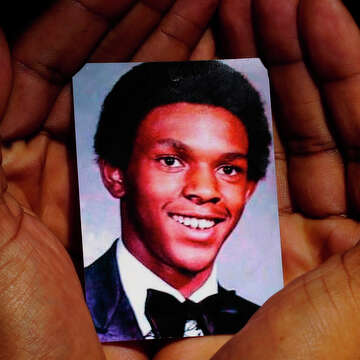 |
| Timothy Cole |
Sunday, June 10, 2012
Posthumous exoneree Tim Cole's memory honored in Lubbock
In Lubbock, the city has approved a memorial for Timothy Cole, who died in prison after being falsely convicted of rape and was later posthumously exonerated. Reported the Lubbock Avalanche Journal:
A bronze relief sculpture and granite marker will pay permanent tribute to Timothy Cole, just blocks away from the Texas Tech bar district where he was arrested for a crime he didn’t commit.
His brother, Cory Sessions, helped sway the Lubbock City Council to support the memorial to his brother, who died imprisoned in 1999 after being wrongfully convicted in the 1986 sexual assault of a fellow Tech student.
“Tim may be remembered for things that happened after his life, but we remember him for what happened during his life,” Sessions said Thursday morning at the council meeting. “The most important part of his headstone is the dash, and that’s what we remember Tim by.”
The council approved a renewed proposal by Councilman Todd Klein to honor Cole with a memorial on city property to be designated as a park at 19th Street and University Avenue.
Klein designed the proposal with the help of attorney Kevin Glasheen, who has represented several wrongfully convicted people seeking compensation, including the Cole family.
Glasheen said his firm would pay the estimated $25,000 for the monument, a granite marker with a bronze relief sculpture of Cole and text similar or identical to the text on a state historical marker located near Cole’s Fort Worth grave site.
He praised Cole for his demonstration of character throughout his trial and imprisonment, recalling how Cole would not admit guilt even if it meant he had a chance for parole.
“That kind of character and integrity is worthy of honor,” Glasheen said.
Friday, April 27, 2012
Lubbock considers Tim Cole memorial
The Lubbock City Council is considering a memorial for Timothy Cole, who was posthumously exonerated and pardoned after a false rape conviction and died in prison before his name could be cleared. They at first suggested constructing a fountain in his honor but decided to delay the idea, questioning the wisdom of building another fountain in the middle of a drought. The majority of the council though, reports the Avalanche Journal, remains supportive of a memorial of some sort. Cole's half-brother, Cory Session, suggested a less costly cenotaph might be to rename the portion of Texas Avenue in front of the courthouse where Cole was convicted after him, though he reminded them, “I would say to any of the council members that might bring up the cost,
there is no greater than the cost that has been paid by my mother and
my family; that’s immeasurable.”
Wednesday, April 04, 2012
Tim Cole story, eyewitness ID reform featured on Rock Center
The NBC news show with Brian Williams tonight will examine Timothy Cole's false conviction and Texas' reforms of police eyewitness identification procedures.
Monday, February 13, 2012
Historical marker commemorates Tim Cole false conviction
Reuters has the story of the new historical marker near Timothy Cole's grave site commemorating his false conviction, his death in prison, and his posthumous exoneration via DNA evidence. The article opens:
The first person in the United States to be exonerated posthumously on the basis of DNA evidence received a lasting tribute in his home state of Texas this week.
State officials and the family of the late Tim Cole unveiled the first Texas historical marker dedicated to an exonerated convict, located in a Fort Worth cemetery a few feet from the grave where Cole was buried in 1999.
Governor Rick Perry issued Texas' first posthumous pardon to Cole in 2010, over a decade after he died from complications from an asthma attack while serving time in prison for a rape he did not commit.
"We finally have something visual that people can see to remember Tim," Cory Session, Cole's brother, told Reuters. "We are very pleased and grateful that Tim's life and legacy will not be forgotten."
Post-conviction DNA testing has exonerated nearly 290 people in the United States since 1989, including 17 death row inmates, according the Innocence Project, which works to reverse wrongful convictions. It says that witness misidentification was a factor in nearly 75 percent of cases.
Of the DNA exonerations nationwide, over 40 have been in Texas, more than in any other U.S. state.
The Texas marker tells the story of how Cole was convicted in 1986 of raping a fellow student at Texas Tech University and was sentenced to 25 years in prison. An Army veteran, Cole served more than 13 years in prison, steadfastly insisting he did not commit the crime.
Monday, December 12, 2011
'No Country for Innocent Men'
In a article with the same title as this post, Mother Jones takes a in-depth look at Timothy Cole's false conviction and the sad, bizarre circumstances that caused Governor Rick Perry to pardon a dead man. See a related sidebar from the story estimating how many innocent people are still in prison.
Friday, January 28, 2011
Giving props to an unsung hero
Michele Mallin, the rape victim whose incorrect identification of Timothy Cole mistakenly sent him to prison, has been an unsung hero, to my mind, for the way she's handled the aftermath of that horrible revelation. Her error was unintentional; she never meant to frame Tim Cole. But her identification was sufficient to send him to prison, where he died in 1999 from an asthma attack. From the moment the DNA proved Cole's innocence, Mallin took personal responsibility and did everything in her power to make amends with the family of the deceased (who graciously reconciled with her). She also helped push for changes to how such lineups are conducted - a bill which died last session amidst partisan feuding but which has been refiled in both the Texas House and the Senate. Bob Ray Sanders at the Fort Worth Star-Telegram has a nice column this week about Michele and her relationship with Tim Cole's family. Give it a read.
Wednesday, December 15, 2010
Tim Cole's place in Texas history
Bob Ray Sanders at the Fort Worth Star-Telegram has a column about effort by the family of Timothy Cole - who earlier this year was posthumously pardoned after he died in prison serving a sentence for a rape he did not commit - to have
Tuesday, September 28, 2010
Willingham, Cacy arson inquiries up ante on junk science debate
Travis County District Judge Charlie Baird, who presided over Timothy Cole's posthumous exoneration, has agreed to take up the Cameron Todd Willingham case upon request of Barry Scheck and the national Innocence Project out of New York. See coverage from the Fort Worth Star Telegram, the Houston Chronicle, and the Austin Statesman for the broad outlines of the story. Dave Montgomery from the Startlegram solicited this unbiased view from Williamson County DA John Bradley:
This will be the second "court of inquiry" in Baird's court aimed at clearing someone's name posthumously. Despite Bradley's protestations about jurisdiciton, the statute governing the process allows the motion to be filed in any Texas District Court. Scheck was also one of the attorneys on the Timothy Cole case, along with Innocence Project of Texas legal director Jeff Blackburn. At Timothy Cole's court of inquiry, the prosecution chose not to participate, which turned the event into more or less a one-sided shadow boxing match. But since Willingham was executed and there are death penalty (and potentially even electoral) politics involved, there may be a lot more pressure on the Navarro County DA to oppose Scheck and Co., for which reason I'd be surprised if there isn't a lot more drama in the courtroom this time around. Definitely one to watch.
Relatedly, in my Inbox this morning I received notice from the communications director for the Innocence Project of Texas declaring:
MORE: On the Cacy case from the Texas Tribune. AND MORE: A commenter points out this story in the Corsicana Sun which informs us that the jailhouse snitch in Willingham's case, who is presently incarcerated in the local jail on forgery and marijuana charges, will likely testify at the court of inquiry.
Gee Marty, tell us how your really feel!
This will be the second "court of inquiry" in Baird's court aimed at clearing someone's name posthumously. Despite Bradley's protestations about jurisdiciton, the statute governing the process allows the motion to be filed in any Texas District Court. Scheck was also one of the attorneys on the Timothy Cole case, along with Innocence Project of Texas legal director Jeff Blackburn. At Timothy Cole's court of inquiry, the prosecution chose not to participate, which turned the event into more or less a one-sided shadow boxing match. But since Willingham was executed and there are death penalty (and potentially even electoral) politics involved, there may be a lot more pressure on the Navarro County DA to oppose Scheck and Co., for which reason I'd be surprised if there isn't a lot more drama in the courtroom this time around. Definitely one to watch.
Relatedly, in my Inbox this morning I received notice from the communications director for the Innocence Project of Texas declaring:
Recently, the Cameron Todd Willingham case has raised serious questions about the Texas criminal justice system. To many, the issue is whether Texas executed an innocent man. To the Innocence Project of Texas, the questions raised by this case are much bigger. To us, the real issue brought up by the Willingham case is the ongoing use of junk science to falsely convict the innocent.These aren't the only murder convictions based on faulty arson forensics in Texas, but they're iconic ones. I still think it's a shame the debate over arson science has become so wrapped up in death penalty demagoguery on all sides, but cases like Sonia Cacy may help steer the conversation back toward faulty arson science and away from arguing how many angels can dance on the head of a pin. In the bigger picture, though, there still needs to be a mechanism created by somebody - the best candidate is the AG, perhaps directed by legislation, or not - to go back through and vet older cases whenever disproven forensic methods may have convicted innocent people, as with older arson cases and dog scent lineups. If not, it will still happen piecemeal, as with these cases, but that leaves a lot of innocent folks waiting around, sometimes in prison, for someone to right an injustice.
One of the most telling instances of an innocent Texan being convicted on the basis of junk science is the case of Sonia Cacy. Sonia was wrongfully convicted of murder in Fort Stockton, Texas. The state alleged that she doused her uncle in gasoline and set him on fire. In order to prove their case, they used evidence provided by the Bexar County Forensic Lab indicating that gasoline was detected on the deceased’s clothing. Since that time, however, a number of experts have examined the results of the Bexar County lab’s testing and have all unanimously concluded that there is no indication of gasoline on the evaluated evidence. Based on this development and other evidence of innocence in Sonia’s case, it is clear that Sonia Cacy was convicted of a “crime” that never occurred. Despite that, she continues to live on parole but hopes to one day prove her innocence and officially clear her name.
MORE: On the Cacy case from the Texas Tribune. AND MORE: A commenter points out this story in the Corsicana Sun which informs us that the jailhouse snitch in Willingham's case, who is presently incarcerated in the local jail on forgery and marijuana charges, will likely testify at the court of inquiry.
Monday, August 30, 2010
The Tim Cole Advisory Panel Report: Too Much Ado, Not Enough Done
Hey everybody, Jeff Blackburn here. Scott asked me to do some guest blogging during his well-deserved vacation. This my first post. Be as hard on me as you want.
On Wednesday of last week, my good friend Ana Yáñez-Correa reported on the meeting of the Task Force on Indigent Defense that had just happened. She called the meeting and what came out of it a “Great Day for Justice in Texas”.
I was at that meeting. I have to tell you that it didn’t make me feel warm, fuzzy or full of pride for Texas. I handled the Tim Cole case and represent his family, and if what happened at the Court of Criminal Appeals last Wednesday was a “great day” then we are all getting way too accustomed to way too little.
Ana is a strong thinker, a rock-solid activist and a very close colleague of mine. I think she and her outfit have done a great deal for the criminal justice reform movement. That’s why I was disappointed that she chose to give so much credit to the Task Force on Indigent Defense (TFID). If you read her post or listened to the self-congratulatory tone struck at the meeting, you would think the TFID is at the cutting edge of reform in this state. That is a long way from the truth.
I’m not saying that what happened on Wednesday set back the cause of justice or was the equivalent of nothing at all. I am saying that what the TFID did was take some small, long-overdue steps and suggest that they were giant leaps.
A good example of this is the report of the Tim Cole Advisory Panel on Wrongful Convictions (TCAP). That report can be found here. It is well written and carefully researched, thanks to the efforts of the TFID’s Dr. Jennifer Willyard.
The problem is not what the report says or how it reads. It is what it does not say.
As readers may remember the TCAP was created by the last legislature. The panel’s purpose was to prepare a study of the causes of wrongful convictions and make legislative recommendations.
The panel was mainly composed of politicians, prosecutors, ex-prosecutors, and police officers. There were no members of any innocence project on it (although, to be fair, folks connected with such projects were allowed to attend meetings.) Most of the panelists had undeniably good intentions. They worked hard at the report and it shows.
Intention and effort aside, however, what the panel finally came up with was a largely watered-down version of what has already been in play in prior legislative sessions. The panel could have gone much further. Instead, it chose to take a predictable path of limited resistance and avoid controversy.
On eyewitness identification, the panel recommended that the next legislature pass only a “training bill”. This kind of bill, which was before the legislature last session after a great deal of compromise, emphasizes training police departments in better eyewitness identification procedures. Given the sorry state of current “procedures” being used by cops throughout the state- many of which involve outrageously suggestive tricks like one-person “showups” (see the terrific 2008 report of the Justice Project here for an idea of how bad things really are ) this would help, but only a little. The limitations of the approach taken by TCAP are carefully examined by U. of H. Professor Sandra Guerra Thompson, a panelist who went to the trouble of writing a concurring report. Her position, which is well-researched and thoroughly explained, points out in detail the diluted nature of what the panel is recommending. Read it if you want to see how much more can and should be done in this area. Wonder why no one seemed to make much mention of Professor Thompson’s report at the meeting?
The panel also dealt with recording custodial interrogations, discovery reform, DNA testing, and whether we should have an innocence commission. Some of the recommendations are good (recording custodial interrogations and junk-science based writ reform, for example); some not so much (reciprocal discovery in criminal cases? Why not full discovery of the State’s file and leave the defense alone?). The report’s recommendation to shelve the idea of an innocence commission in favor of state-funded innocence projects sounds okay until you read the fine print where it advocates adding a staff member to the TFID at the expense of the already ridiculously underfunded projects, none of which currently receive enough money to get the job done.
Are the ideas and proposals in the TCAP report terrible? No. They are just too limited. This panel was set up as an independent body that could have done a lot more. It could have advocated a comprehensive reform of the writ system- a system that has been designed to ensure that most claims of actual innocence never see the light of day. It could have tackled the issue of lousy trial representation that has caused the vast majority of wrongful convictions so far and called for the creation of a statewide public defender system. It could have recommended measures to eliminate the use of junk pseudo-science in trial courts. These are the kind of big reforms that we need to make to really stop wrongful convictions and get more innocent people out of prison.
Instead of advocating such changes, the panel contented itself with making limited recommendations that have all been made before. By breaking no new ground, TCAP chose to focus on what it saw as “do-able”. That’s fine, I guess, and expected: after all, this is Texas and most of the panelists were criminal justice officials.
Less expected, however, is the attitude of many reform advocates toward this report. To imply that the adoption of the TCAP report is a big move forward, or to suggest that it somehow signals a major change in policy, is giving too much credit to officialdom.
The Tim Cole case itself was brought to public attention against the opposition of all kinds of officials, from Lubbock County on up. If we had relied on the conventional system to take care of the situation nothing would have happened and no one would have heard of Tim Cole, much less named panels and statutes after him.
We have a hard legislative session ahead. Money, money, and money are going to be the topics of the day. If we expect to get anything done at all with criminal justice reform we are going to need to be a little harder ourselves. We need to approach this session with big proposals. They will get whittled down, just as they were in the TCAP report. In the meantime, we need to start calling things like they are instead of praising the system for what is ultimately still too little and too late.
Monday, July 26, 2010
Authors explore stories of Texas exonerees
This press release (pdf) notifies us of the upcoming publication of a new book telling the stories of a dozen Texas exonerees.
Reverend Dorothy Budd rejoiced at the recent announcement that deaf inmate Stephen Brodie may become the latest Texas prisoner to win his freedom after being wrongfully convicted.Relatedly, the Lubbock Avalanche Journal brings word of a new book on Timothy Cole's posthumous exoneration: Fred McKinley's “A Plea For Justice: The Timothy Cole Story.” From the Avalanche Journal:
Budd, a former child-sex-crimes prosecutor for the Dallas County District Attorney’s office, wants the voice of Brodie, along with men who have already been exonerated in Dallas County, to be heard. She and her daughter Peyton share the men’s experiences in the upcoming book Tested: How Twelve Wrongfully Imprisoned Men Held onto Hope, to be published this October by Brown Books Publishing Group.
In 2009, the Budds became interested in the plight of these wrongly convicted men and requested a meeting with Dallas County DA Craig Watkins where they learned that of the cases his office selected with DNA viable for testing, about half of the tests went on to prove the men’s innocence. Dorothy and Peyton became convinced that their stories must be told. With DA Watkins’ assistance, the Budds interviewed the men and from these conversations Peyton wrote their stories and the book Tested was born.
“Every one of these men has lost something that can never be restored,” said Dorothy Budd. “We hope that the powerful stories in Tested cause readers to reexamine and reevaluate prejudices and preconceptions.”
By allowing each of the men to tell his story in his own words, Tested runs the emotional gamut from deep despair to final vindication. Along the way, the authors discovered how the men kept their faith and hope during their years of incarceration.
“When you get convicted for something you didn’t do, and hear that gavel hit along with the words ‘we find this man guilty,’ and you do time,” says exoneree Billy Smith. “Whether it’s a day, a week, a year, or twenty years…that takes something. It takes a bite out of you.”
Dallas leads the nation in exonerations of wrongfully convicted men. To date, more than twenty men have been released. These men were not just “released” but freed from prison with their convictions expunged, with a pardon from the governor and an apology from the DA.
For more information and to schedule an interview with the authors, please contact Cathy Williams, Brown Books Publishing Group at 972.381.0009 or via email cathy(dot)williams(at)brownbooks(dot)com. Additional information can be found at www.testedthebook.com.
Cole's brother Cory Session said the book should be required reading for law officials to prevent similar situations from occurring in the future.One should never underestimate the impact of storytelling, and these stories supply a powerful counternarrative to the typical Law & Order-style portrayal of prosecutors in white hats and criminal defendants as scum seeking to somehow wiggle out of justice. The Kafkaesque nightmare endured by Cole and the other exonerees can't be adequately described using the terms and means of the policy wonk, so these stories fill an important gap in the debate. It's impossible to fix a problem if one never examines in detail what went wrong.
"This book was put out because it's a blueprint for wrongful convictions," he said.
Ruby Session, Cole's mother, said the book is an accurate portrayal of the situation that occurred to her son and provides readers with an opportunity to see how all of the events unfolded from the beginning.
"I hope the average person knows it could happen to them," Ruby Session said. "We don't want this to happen anymore."
Sunday, June 20, 2010
No one could ever be convicted based on false eyewitness testimony in Lubbock, except for those who are
The Lubbock Police Department thinks cases like Timothy Cole's false identification that led to his wrongful conviction and death in prison don't imply the department needs to change their policies, reports the Lubbock Avalanche Journal ("Experts question LPD's new eyewitness process," June 20):
The department resisted what a spokesman called "knee-jerk reactions" to exonerations and new research that changed laws in three states and eyewitness procedures in at least five major departments including Dallas.
Capt. Greg Stevens said in a recent interview current procedures would make impossible a repeat of the series of errors that produced cases such as that of Tim Cole, Texas' first posthumous pardon recipient, who died innocent in prison serving a Lubbock sentence based heavily on the misidentification of a rape victim ...
"Not ever would that one piece of evidence be used to even, even substantiate a case against somebody," Stevens said. "It would have to be corroborated with more evidence, more information."See the rest of the lengthy article by Elliot Blackburn for details of the overturned conviction. It's hard to find credible LPD's claims that eyewitness testimony would never be used by itself to convict. After all, the law doesn't require corroboration, regrettably, and neither did Lubbock police and prosecutors as recently as 2008. In reality, unless and until the law corroboration for eyewitnesses (at least, for those who previously didn't know the suspect), neither will law enforcement. And clearly departments like Lubbock won't change their policies until they're forced to do so, either. It's rather silly to expect anyone to believe otherwise. Until then, according to eyewitness ID expert Gary Wells:
But a life sentence reversed by the Seventh Court of Appeals of Texas in 2008 - more than 20 years after the Cole investigation and several years after changes Stevens described - indicated eyewitness identification could make up the bulk of a case.
"LPD's procedures are woefully out of date and do not at all look like those of a police department that has taken this problem seriously," Wells wrote in an e-mailed response to questions. "They have seemingly ignored the science on this as well as the recommendations of the Department of Justice and virtually every task force in the country that has delved into this issue."Regular readers know that legislation to require updated eyewitness ID policies appeared to be on the fast track for passage in 2009 then died in the end-of-session meltdown over Voter ID. Since then, most Texas departments have failed to change policies on their own steam, so expect this subject to come up again in 2011 at the Lege, whether Lubbock PD is ready to change or not.
Thursday, March 18, 2010
Tarrant electronic discovery seen as gold standard
According to the Fort Worth Star-Telegram:
A state panel studying ways to reduce wrongful convictions in Texas seemed to find what it was looking for during a visit to Tarrant County this year.After reviewing the district attorney's open-file and electronic discovery system, Mary Anne Wiley, deputy general counsel for Gov. Rick Perry, offered one of several superlatives uttered by panel members.
"This sounds like a slam dunk," Wiley said.
Advocates of stronger open-discovery rules hope the Timothy Cole Advisory Panel on Wrongful Convictions will help lead Texas lawmakers to finally push through uniform statewide policies.
Some point to Tarrant County's system as a model for the state.
"Tarrant County does seem to be the gold standard," said Barry Macha, a panel member and Wichita County district attorney. "It's state-of-the-art, the best system I have seen. Personally, I think it's the direction we ought to go."
But the electronic system comes with a price tag, and some prosecutors remain leery of mandated policies, concerned that sharing certain information could put witnesses or victims at risk or give too big of an advantage to guilty defendants at trial.
In many states, prosecutors are required to turn over discovery documents -- such as police reports, witnesses' names and statements -- to defense lawyers long before a case goes to trial.
The rules are designed to ensure that defendants get fair trials and accurate verdicts.
But in Texas, defendants have few discovery rights and are often at the mercy of the policies of the jurisdiction where they were charged. They must file court motions requesting information that may not arrive in time for thorough review.
This approach landed Texas on the list of states "desperately in need of discovery reform," according to the Justice Project, which promotes fairness and accuracy in the criminal justice system.
I'm a big fan of what Tarrant has done for a variety of reasons. While an electronic discovery system requires an up-front investment, "It saves a whole lot of money for the taxpayer," according to local officials and "is well worth it." The main problem: Not all Texas prosecutors agree with the open file policy in Tarrant and Texas law doesn't require them to do so. Again, from the Startlegram:
"It's very rare to find a prosecutor with an across-the-board closed-file policy," said Shannon Edmonds, director of government relations for the association.But the definition of open varies.
"Down here in Travis County, you can get the files e-mailed to you," [Court of Criminal Appeals candidate Keith] Hampton said. "But go 30 miles up the road, and they are treated like state secrets. You sit there and write while somebody reads to you part of the offense reports, and you're left to wonder what else was in it."
Some counties allow defense attorneys to photocopy reports, he said. Others allow defense attorneys to view only certain reports and require them to take notes by hand.
Cost is often a factor, Edmonds said. It is not cheap to make copies of case information for all the felonies and misdemeanors handled by an office.
Obviously, making everything electronic eliminates the photocopying costs Edmonds is worried about, which leaves resistance by individual prosecutors and the initial cost as the main barriers, particularly when budgets are tight. Even so, there's little doubt that failure to turn over exculpatory evidence contributes to false convictions. Plus there's a cost-benefit argument to be made that a targeted state investment - perhaps of Governor-controlled federal grant funds to finance a statewide mechanism counties could opt into - would make the project a little cheaper overall thanks to economies of scale. I'm glad to learn the Tim Cole Advisory panel is looking into the matter.
Speaking of Timothy Cole, the Governor will be in Fort Worth on Friday for a signing ceremony for his posthumous pardon. Congratulations to Tim's mother Ruby Sessions, his half-brother Cory, and all his other family members who slogged a long, hard path to reach this joyful moment.
Speaking of Timothy Cole, the Governor will be in Fort Worth on Friday for a signing ceremony for his posthumous pardon. Congratulations to Tim's mother Ruby Sessions, his half-brother Cory, and all his other family members who slogged a long, hard path to reach this joyful moment.
Subscribe to:
Posts (Atom)


.jpg)

