Showing posts with label Death penalty. Show all posts

Monday, November 02, 2020

Presumptive Travis DA Jose Garza on death penalty, women's jail, and membership in TX state prosecutors association

The Marshall Project's prolific Keri Blakinger generates more copy than her employers will publish, so she's been sending Grits an occasional email featuring unpublished odds and ends. Today, we have a few tidbits from a recent interview Keri conducted with Jose Garza, Travis County's presumptive Democratic District Attorney pending tomorrow's election (he has an opponent, but the Democratic primary is the real race in Austin).

Keri spoke to Garza about the death penalty, building a new women's jail, and whether he intended to retain membership in the Texas District and County Attorneys Association. Enjoy!
Hey Grits,

A couple weeks ago I had a chance to Zoom chat with Travis County DA candidate Jose Garza. A lot of our talk was on background - but I just wanted to pass along some of the points that were not, and that might interest you and your readers. These are kind of off-beat questions because I was trying to ask about details I hadn’t seen discussed elsewhere - and the many prior interviews he’s done have covered a lot of the basics, plus his website is pretty detailed.

So at this point we already know that he’s pledged not to use civil asset forfeiture without a conviction, that he will stop prosecuting less than a gram drug cases, will put more resources toward serious crimes like sex assault, and various other things you have outlined previously.

Given how progressive his platform is, I was interested in whether he’d pull Travis County out of TDCAA. A few months ago on Twitter, he was pretty clear that he would: “TDCAA has been one of the largest impediments to progress at the TX state legislature,” he tweeted. “I’m running for DA to build a system that lifts up working people and people of color. When elected I will not be joining the association.”

And some elected prosecutors elsewhere - like Philadelphia and California - have cut ties with their respective DA associations because they were too regressive or “out of touch.” But as you pointed out to me, TDCAA provides training and other support that would have to be replaced so it’s not as simple as just walking out the door. When I asked TDCAA, they said that about 30 elected prosecutors in Texas are already not members. So it seems there is some precedent here for non-membership.

When I asked JG about all this a few weeks ago, initially he said that he would be evaluating existing relationships to figure out which are in line with the office’s goals before making any decisions. But when I circled back to ask if that was different than what he’d tweeted in January he clarified that he still hopes to exit TDCAA and basically is just figuring out what that looks like at this point: “It remains a goal to me,” he said. “It remains a goal to make that there is a better structure for truly representing the views of district attorneys and the people they are accountable to.”

I realize this is a lot of words I just spent on what is really a very niche thing to be interested in, but I hopefully Grits and Grits readers might share my niche interest.

In other, slightly-less-niche interests, I also asked him some about capital punishment. He’s talked before about opposing the death penalty, but I wanted to know if that meant that he would actually stop defending the existing death sentences that are in post-conviction litigation now - which is about half a dozen cases. When we spoke, he pledged to review those cases, but didn’t say whether he would defend death sentences if the convictions themselves seemed solid.

“We will be reviewing all of those cases to aggressively seek out innocence but not just innocence, constitutional defects in cases,” he said. “I presume that post conviction that there are probably challenges, there are probably actual innocence claims… as a matter of course no we are not just going to presume that all of these cases should continue to be defended.”

It’s not quite a clear answer to what I was getting at, but I’ll be interested to see how this develops.

The other thing we talked about the most on the record was the new women’s jail, which he’s previously said he opposes. As Grits readers probably know, Travis County has been working on building a new women’s jail for some time now. The proposal to replace it would create more beds, but the current one is shitty and doesn’t have good program space. As someone who has actually spent time in a jail, I always want to know exactly why when people oppose doing something that would improve shitty living conditions.

“I’m in favor of less shitty,” he said, “but for me this is about math and this is about resources. I think what the county is attempting to accomplish and what the sheriff is attempting to accomplish is admirable and is the right thing because there will continue to be people in our jail and we have a responsibility to make sure everyone there receives the best care.”

But not if it requires a bigger jail - which he believes will be even more unnecessary when he’s in office:

“There are a couple of hundred people in the jail right now and it’s about 500 short of capacity – it’s at something like 30 percent capacity, for women in particular,” he said. “And on top of that Travis County is going to have a new DA and new county attorney that have pledged significant steps that would reduce the jail’s population. I’m not convinced that when the trendline is decreasing jail populations… that the best way to care for the shrinking population of people in the jail is to build a brand new $98 million facility.”

Anyhoo, that’s a lot of words and I’ve droned on quite a bit about some obscure topics here so enjoy.
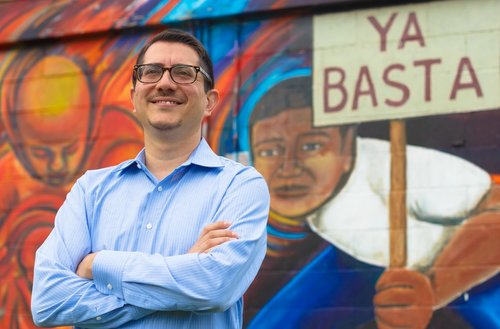
Grits here: Just to say so, since Keri didn't, Garza's answer on pulling out of the DA's Association was insensible, answering a yes-or-no question about a pretty-clear campaign promise with pure squish.

To be clear, I like Jose, while TDCAA has for two decades resided on Grits' frenemies list. It would tickle me to no end if DAs from the big counties started to walk away from the state prosecutors' association. At the same time, I marveled when Garza made that pledge in the first place. My immediate first thought was, "He hasn't considered everything that would entail." So Grits wouldn't blame him for not knee-jerk pulling out of TDCAA in January without a plan. After all, that's the organization that provides most of their training.

Plus, Garza will be arriving just as the legislative session gets underway: The biggest complaint about TDCAA from reformers is them thwarting reform bills behind the scenes. Once session begins, Garza can assess for himself whether it's possible to influence the organizational culture from within.

TDCAA has historically been a problem for the Texas #cjreform movement, and Garza along with other elected big-county prosecutors perhaps can help solve it, whether by working from within or leaving and doing their own thing. Their rural counterparts may outnumber them when it's time to vote for board members, but big counties' dues provide most of their funding.

RELATED: From the Texas Observer, "Jose Garza redefines 'progressive prosecutor'"

Saturday, January 18, 2020

Execution scheduled based on bogus "future dangerousness" testimony

Much attention has been drawn to the example of A.P. Merillat, the Montgomery County DA investigator and TDCAA favorite son who repeatedly overstated the dangers to inmates and staff at TDCJ in the sentencing phase of death penalty trials. But over the years, many different "experts" have played that role, and he's not the only one overstating the "future dangerousness" of capital defendants while understating TDCJ's ability to manage them.

At The American Scholar, Lincoln Caplan described the sentencing-phase testimony against Billy Joe Wardlow, who is scheduled for execution for capital murder on April 29th. He received his death sentence in 1993 for killing an 82-year old man during a robbery when he was 18-years old. Here's what the jury was told about whether Wardlow would constitute a future danger to others in prison:
The most chilling testimony for the state came from Royce Smithey, an investigator for a group that prosecutes felony crimes committed in Texas prisons. If the jury sentenced Wardlow to death, the investigator said, he would be “segregated” and “severely restricted” until he was executed. He would have limited access to prison employees whom he might harm. Solitary confinement on death row would punish Wardlow and protect prison employees from the continuing danger he represented, Smithey testified. But if the jury gave him a life sentence, he asserted, Wardlow would be released into the general prison population with other felony offenders. 
Recently, Frank G. Aubuchon, who was a correctional officer and an administrator with the Texas Department of Criminal Justice (TDCJ) for more than 26 years, reviewed Smithey’s testimony at the request of Wardlow’s current lawyers. Aubuchon wrote, “Mr. Smithey’s multiple falsehoods served to mislead the jury into believing that TDCJ would be completely unprepared to imprison Mr. Wardlow in a secure environment unless he received a death sentence. Based on my decades of experience as a TDCJ corrections officer, administrator, and prison classifications expert, I can say that this is categorically false.” 
But Smithey’s testimony was uncontested at the trial and made a life sentence for Wardlow sound like a serious threat to others. It would give him the chance to harm other people, perhaps even to kill again. The testimony made a life sentence sound like a reward for Wardlow, not an endless punishment.
Not only were Smithey's dire warnings about TDCJ's ability to manage inmates overstated, predictions that Wardlow in particular would pose a danger turned out to be false, wrote Caplan:
In the Wardlow case, the jury wrongly predicted his future: despite the horrendous crime he committed as a teenager, he has become in middle age a trusted, peacemaking, and in many ways exemplary inmate—generous to others on death row, attentive to fellow prisoners and to others he exchanges letters with, and as engaged in the world as an inmate on death row can be who has spent much of the past 25 years in solitary confinement in a tiny cell.
This blog has complained about "junk science" many times over the years. But not all expert witnesses testifying to "junk" wear lab coats. Many of the complaints by the National Academies of Sciences about forensics amounted to critiques of overstated testimony - e.g., declaring they could "match" evidence to a degree of scientific certainty. In reality, these experts were offering subjective opinions - ones based on observation and experience, to be sure, but also infused with a prosecution-centric agenda.

The example of "experts" predicting future dangerousness in Texas death-penalty cases demonstrate that overstated testimony isn't just a problem with the bite-mark or hair-and-fiber folks. And it certainly goes deeper than just a couple of over-zealous testifiers like Smithey and Merillat.

Wednesday, November 27, 2019

On the dangers of dick-ish drug enforcement, racist cop rose in Austin PD ranks, indigent defense denied in Amarillo, and other stories

Just in time for the drive to Grandma's house, here's the November 2019 episode* of Just Liberty's Reasonably Suspicious podcast covering Texas criminal justice politics and policy, co-hosted with Amanda Marzullo of the Texas Defender Service.


In this month's episode:

Introductory tomfoolery
Top Stories
Fill in the Blank
The Last Hurrah (29:30)
  • Denouement of Harris County bail litigation
  • Why Greg Abbott owns a homeless camp
  • Rodney Reed execution stayed
*N.b. It really is the November episode, despite my embarrassing screw up in the intro to say it's June. 

Find a transcript of this episode below the jump.

Thursday, November 07, 2019

Bonus tracks from Reasonably Suspicious interview with #RodneyReed's attorneys: Why all the forensics from his case have been discredited

For the October Reasonably Suspicious podcast, my co-host Mandy Marzullo and I interviewed attorneys for death-row inmate Rodney Reed, who is scheduled to be executed on November 20th. Despite this apparent failure, Bryce Benjet of the national Innocence Project and Quinncy McNeal of Mayer-Brown in Houston are in fact excellent lawyers, and their habeas-corpus-phase deconstruction has left little evidence remaining from the prosecution's case that convicted their client.

Regardless, Reed's execution looms.

We published the first part of the interview on the main, monthly podcast in October. Now, here's the full interview, including the final portion describing how all of the forensic evidence in Reed's case has evaporated.


If you already listened to the first part on the podcast, part two of the interview starts at the 11:40 mark.

Bottom line, the state's case hinged on two prongs: 1) forensic testimony that Reed must have had sex with victim Stacey Stites soon before her death, and 2) the fact that only friends of Reed, not Stites' acquaintances, corroborated his version that the two were engaged in an illicit affair.

Now, a re-investigation of the case by Quinncy McNeal has uncovered several additional witnesses who corroborate the relationship between Reed and Stites, none of whom had any relationship with Reed whatsoever. Indeed, after this interview was conducted, a witness came forward who says Stites' fiancee, Jimmy Fennell, confessed to killing her while in prison.

Meanwhile - and this is the portion of the interview that wasn't included in the October podcast - all of the prosecution forensics in the case have been discredited. The defense has secured retraction letters from the former Travis County medical examiner and the DPS crime lab saying the testimony provided against Reed at trial was wrong. If jurors had heard the corrected forensic testimony, much less the independent corroboration of his and Stites' relationship, Rodney Reed almost certainly would never have been convicted in the first place.

With evidence of Reed's likely innocence mounting, the decision whether he will live or die is up to Gov. Greg Abbott and the Board of Pardons and Paroles. They have less than two weeks to decide. Twenty-six Texas House members - 13 Rs and 13 Ds - have asked the Governor to commute Reed's sentence.

For more background, including the best exposition of recent evidence in the case, see Reed's "clemency petition." See also the Texas Tribune's latest coverage.

Find a transcript of our conversation below the jump:

Wednesday, October 30, 2019

Podcast: New evidence of Rodney Reed's innocence, first thoughts on the Atatiana Jefferson shooting, and the Mystery of the Disappearing Misdemeanor Arrests

Here's the latest Reasonably Suspicious podcast from Just Liberty:


This is the October 2019 episode of Just Liberty's Reasonably Suspicious podcast covering Texas criminal-justice policy and politics. This month, my cohost Amanda Marzullo and I interviewed attorneys for Rodney Reed, who is on death row with an execution date of November 20th. We plumbed unknowable but interesting questions about misdemeanor arrests, discussed the sad, grim, story of Atatiana Jefferson's shooting in Fort Worth, and complained that the moments spent reading and talking about a new ACLU report on how to end mass incarceration are time we'll never get back. :)

Intro
Okay, it's probably a crime for a former justice of the peace to pimp slap a Yankees fan at an ALCS game in Houston and make him cry, but it's also pretty funny.

Top Stories
  • First takes on the Atatiana Jefferson shooting in Fort Worth (2:34)
  • Evaluating ACLU decarceration recommendations for Texas (8:34)
Interview

This month, Mandy and I spoke to Bryce Benjet of the national Innocence Project and Quinncy McNeal of Mayer Brown in Houston on the Rodney Reed case. Reed is scheduled to be executed on November 20th. (14:38) This is excerpted from a longer conversation. I'll publish the full interview, which goes into more detail about debunked forensic testimony in the case, separately in a couple of days.

Suspicious Mysteries

Why have misdemeanor arrests declined? Why didn't they decline earlier when crime first dropped? What do we really know about why crime dropped or the relationship between crime and arrests? Mandy and I discuss some known unknowns. (27:15)

The Last Hurrah (36:40)
  • Hard to reprimand Texas judges
  • Years-long backlogs at crime labs
  • Message sent by jury in prison-guard murder trial
As always, I've ordered a transcript and will add it below the jump when it comes back. Enjoy!

Monday, March 18, 2019

Podcast: Elsa Alcala says Texas death penalty unreliable; parsing new TX traffic-stop data; prospects for Lone-Star marijuana reform, and other stories

Here's the March 2018 episode  of the Reasonably Suspicious podcast, recorded last week on the SXSW Podcast Stage hosted by Cadence13. Former Texas Court of Criminal Appeals Judge Elsa Alcala was our special guest, focusing on junk forensic science and the death penalty.


Here's what's on this month's show:

Opening Riff
Would permanently shifting to Daylight Savings Time reduce crime?

Top Stories
  • Prospects for marijuana reform in Texas
  • New data on use of force at Texas traffic stops
  • Legislative proposals to end the Driver Responsibility surcharge
Forensic Focus
Judge Elsa Alcala discusses junk science cases at the Texas Court of Criminal Appeals.

Death and Texas
Judge Alcala discusses the evolution of her views on capital punishment, from proponent to critic, and what the Texas Legislature should do to fix the state's unconstitutional laws on executing people with developmental disabilities.

The Last Hurrah
  • More corruption revealed after botched drug raid in Houston
  • Should stealing Amazon packages become a felony?
  • Closing the "Dead Suspect" loophole to the Texas Public Information Act
Find a transcript of the show below the jump.

Friday, December 28, 2018

Active death penalty explains efficacy of Texas' junk-science writ

There are three reasons that Grits expects the Lone Star State to emerge as the epicenter of forensic reform over the coming couple of decades. First, our Forensic Science Commission has altered the terms of debate among legislators and stakeholders about how to react when errors and bad science are discovered. I may not agree with everything they put out, but they've educated stakeholders here to a much greater extent than in most other states.

Second is Texas' junk-science writ, as discussed on Wednesday in the context of the Court of Criminal Appeals' Chaney decision invalidating bite-mark identification testimony. Texas and California are the only two states so far to expand habeas corpus in this way. (Comparable legislation has never been pushed in Congress, but that's a Texas innovation they should copy.)

These two Texas reform measures have been widely praised. But together they would be insufficient to rigorously reevaluate the array of questioned forensics identified by the National Academy of Sciences and the disbanded Obama-era president's commission on forensics. Texas courts have refused to exclude such testimony in front-end suppression hearings under the Daubert standard. And courts have discretion which habeas petitions to consider, so there's no way to compel them to take up these difficult cases.

The main reason Grits can confidently predict Texas will emerge at the forefront of forthcoming forensic debates is that we still actively use the death penalty. That's proven to be a critical factor because, as I'd observed previously:
In Texas, capital cases are the one sliver of indigent defendants whose appeals are all paid for by the state, meaning those defendants have access to attorneys to file a state habeas corpus writ. So it makes sense that many of the most high-profile, early uses of the junk-science writ would come in death-penalty cases. By contrast, plea the case to life without parole, and a defendant accused of the same crime with the same evidence would have no access to an attorney at the habeas corpus stage.
I discussed exactly this dynamic with Amanda Marzullo, the executive director of the Texas Defender Service, a nonprofit that represents capital-murder defendants, in a segment on the August episode of Just Liberty's Reasonably Suspicious podcast. Check out that conversation here:


This explains why California's writ hasn't as yet had as big an impact: Their capital punishment system is moribund and few executions are set, so there isn't the constant stream of deadlines requiring courts to act. These days, quite a few death-penalty cases include junk-science writ claims, and the Court of Criminal Appeals is required to consider all of them.

It's not inevitable that death-penalty cases will dominate the initial round of Texas junk-science writs. Instead, it's a function of which indigent defendants have access to counsel to challenge bad evidence in their cases.

Judge Elsa Alcala on the Court of Criminal Appeals has suggested the Legislature should extend the right to counsel to habeas corpus proceedings in ineffective assistance of counsel cases. If the Legislature were to do that for cases challenging old forensics under the junk-science writ, perhaps expanding the Office of Capital and Forensic Writs to take on the function, then junk-science writs would arise in a wider variety of cases.

Eight states, according to Judge Alcala's counting, appoint counsel for every indigent habeas-corpus petitioner. If indigent habeas petitioners in Texas had such access, capital cases wouldn't dominate the junk-science writ process.

As things stand in Texas, with forensics disproportionately being challenged in capital writs, Grits won't be surprised if it takes another 20 years or more for all of the dubious forensics identified by the NAS to be challenged and either confirmed or dismissed through the junk-science writ process. But at least we have a process. Most states and the federal government do not.

Friday, December 14, 2018

Podcast excerpt: TX Court of Criminal Appeals hears arguments about when it's okay to electrocute pro se defendants

James Calvert is a mentally ill capital murder defendant who allegedly murdered his ex-wife on Halloween night in 2012. He represented himself at trial in Smith County, Texas and was sentenced to the death penalty. Among other remarkable elements of the case, Mr. Calvert was shocked with a 50,000 volt stun belt during the trial for refusing to obey the court's demands. In addition, Judge Jack Skeen, who presided over the trial, repeatedly made negative comments about Mr. Calvert and the evidence he presented. Many observers believed Calvert should never have been allowed to represent himself in the first place.

In September, the Texas Court of Criminal Appeals heard oral arguments in Calvert's case, delivering perhaps the clearest window yet into the issues that may decide his fate. On the December 2018 episode of the Reasonably Suspicious podcast, my co-host, Texas Defender Service Executive Director Mandy Marzullo, and I reviewed highlights from oral arguments and discussed key issues in the case. Because of high levels of interest in the case, particularly in Grits' hometown, I've excerpted the podcast segment dealing with the case; listen to it here:


For a transcript of of the segment, go here.

And by the way, if, like me, the story about shocking a defendant with a 50,000 volt stun belt left you wondering, "What kind of company manufactures such a torture device, and how is there a market for such a thing?," here's a two-decade old Washington Post story offering some background, using a Texas case study, of course.

Wednesday, December 12, 2018

Podcast: Adversaries over Austin police-union contract sit down; when is it okay for courts to electrocute mentally ill defendants?; pythons as stocking stuffers?; and other stories

When is it okay for a judge to electrocute a mentally ill defendant?

What leverage did a Texas civil rights activist say enabled Austin advocates to force reforms into the city's police-union contract?

How many pet pythons are too many, and are they appropriate to give at Christmas as stocking stuffers?

These and other questions are answered on this month's episode of the Reasonably Suspicious podcast. As always, you can subscribe on iTunes, Google Play, or SoundCloud, or listen to it here:


Here's what's in this month's episode:

Opening: Pythons as stocking stuffers?

Top Story
Interview
Police-union negotiators Ron DeLord and Chris Perkins sit down with a now-familiar adversary, Chas Moore of the Austin Justice Coalition, to discuss the aftermath of the year-long fight over the capital city's police-union contract.

Home Court Advantage
  • When is it okay to electrocute a mentally ill defendant in court? Discussion of James Calvert oral arguments
  • Ken-Paxton prosecutors de-funded, but at what cost to indigent defense?
The Last Hurrah
  • Dallas PD officer indicted for murder
  • Lawsuit challenges driver surcharges
  • Ray Hill, R.I.P.
Find a transcript of the show below the jump.

Wednesday, May 02, 2018

One in three murder charges in TX a capital case

Now that the new Annual Statistical Report for the Texas judiciary is out, let's take a quick look at data on capital murder cases in Texas from FY 2017. (See p. 111 of the linked pdf from the Office of Court Administration.)

Texas prosecutors filed capital-murder charges in 446 cases last year, and gained capital convictions 249 times, including 162 by plea bargain and 74 by jury trial.*

Almost all of these resulted in LWOP sentences. The OCA reported that prosecutors announced plans to seek the death penalty in only three cases in 2017.

Six defendants were acquitted of capital murder at trial last year. Charges were dismissed in another 84 cases. (That'd be an interesting subset to review - that's a pretty high number.)

There were 897 capital murder cases pending statewide at the end of the year.

By comparison, there were 854 "regular" murder charges filed in 2017, with prosecutors generating 536 convictions. In addition, 31 murder defendants were acquitted at trial, with another 187 having charges dismissed.

One thought from these data: If prosecutors filed capital murder 446 times in 2017 and murder 854 times, then capital charges are not being reserved for the "worst of the worst." Not unless one believes one in three killers deserves that moniker. This overcharging is fueling an unnecessary shortage of capital-qualified trial attorneys statewide. While some have seen that shortage as a reason to reduce qualifications for capital-qualified attorneys, to me the better solution is for prosecutors to rein in this overcharging penchant and only use capital charges in truly exceptional cases.

*Obviously, these aren't all the same cases. Few capital murder cases are resolved within 12 months, and many if not most convictions were from cases filed in previous years. I'm analyzing overall patterns here, not claiming the cases in the "indicted" column are the same as those "convicted" in the same year.

Import of recanted informant testimony never evaluated in capital case

In the latest Reasonably Suspicious podcast, my co-host, Texas Defender Service Executive Director Mandy Marzullo, described the case of Juan Castillo, who is scheduled for execution on May 16. His conviction was based in part on informant testimony which was later recanted, but the courts have never meaningfully evaluated how this allegedly false testimony affected Castillo's case. Since there has only been sparse coverage of these events, I pulled this segment out as a stand-alone. Give it a listen:


Find a transcript of our conversation below the jump. MORE: From the indefatigable Keri Blakinger. AND MORE (5/7): See a plea for clemency for Mr. Castillo published in the SA Express News.

Sunday, April 29, 2018

Stop the Train! An Epic Indigent Defense Fail in Travis County, execution scheduled without hearing on snitch recantation, new music from Just Liberty's decarceration campaign, and other stories

Here's the latest episode of the Reasonably Suspicious podcast for April 2018. You can subscribe on iTunes, Google Play, or SoundCloud, or listen to it here:


In this episode, we discussed:

Top Stories
Death and Texas
Fill in the Blank
  • Litigation in Galveston County made national press after a judge refused to pay for defense-attorney investigation in misdemeanor case. 
  • Two Tarrant County cases show how politicized elections-based criminal prosecutions can be. 
  • Former Congressman Sylvestre Reyes authored a clueless column on Texas and the opiod crisis.
The Last Hurrah
Find a transcript of this episode below the jump.

Wednesday, February 21, 2018

Father's pleas heard as parole board recommends clemency

The Texas Board of Pardon and Paroles yesterday unanimously recommended clemency for Thomas Bartlett Whitaker, the first time in a decade the BPP has recommended against a death sentence. Whitaker orchestrated the murder of his family and his father, the only surviving victim, has been campaigning to save him from the death chamber. I mention it to remind readers that my podcast co-host, Mandy Marzullo, interviewed Whitaker's father last month about his son's case. Check out their full conversation here.

Saturday, February 03, 2018

Interview: Father/victim of soon-to-be-executed inmate pleas for son's life

Thomas Whitaker is scheduled for execution later this month for orchestrating an attack on his family in 2003 in which his mother and brother died and his father was injured. His father, Richard "Kent" Whitaker, is waging a campaign to convince the Board of Pardons and Paroles and Governor Greg Abbott to commute his sentence to life. The Washington Post yesterday published a feature on the story.

On the latest episode of our Reasonably Suspicious podcast, my co-host Mandy Marzullo spoke with Kent Whitaker about his son's case and his longshot campaign to secure mercy in the form of a gubernatorial commutation. Give it a listen:


Find a transcript of this conversation below the jump.

Friday, January 26, 2018

Reasonably Suspicious Podcast: Why Mein Kampf is okay but The Color Purple is banned at TDCJ

Check out the January edition of Just Liberty's Reasonably Suspicious podcast, covering Texas criminal justice policy and politics. You can listen to the latest episode here, or subscribe on iTunes, Google Play, YouTube, or SoundCloud.


If you haven't subscribed yet, take a moment to do so now to make sure you won't miss an episode. Topics this month include:

Top Stories
  • Banned books in TDCJ (featuring Lauren McGaughy): Why Mein Kampf is okay but The Color Purple is banned.
  • Alleged interference at State Counsel for Offenders: Did TDCJ board dictate defense strategies?
Interview
  • Ron DeLord, founder of the Combined Law Enforcement Associations of Texas on police pensions, predicts defined benefit pensions for police will vanish within the next couple of decades.
Errors and Updates
  • Harris County magistrate judges sanctioned for bail SNAFU
  • Austin police union declines to re-enter negotiations after contract rejected
Interview
  • Richard Whitaker: Father of a death row inmate, who is also one of his victims, asks the governor, parole board to spare his son's life.
The Last Hurrah
  • Latest Dallas exonerations based on prosecutor misconduct
  • Quick results from drug-law change in Oklahoma
  • Twin Peaks biker cases soon headed to trial
Find a transcript of the podcast below the jump.

Saturday, January 13, 2018

'Agree with me or I will kill you': On plea bargaining, the death penalty, and life without parole

Me, Harris County DA Kim Ogg, and Shannon Edmonds from the Texas District and County Attorneys Association commented in a Houston Chronicle story this week on the role of life-without-parole sentences in plea bargaining in capital cases. I'd suggested:
"There has always been speculation about whether that has encouraged prosecutors to file capital cases more than they otherwise would because what better leverage do you have in a plea bargaining situation than, 'Agree with me or I will kill you,'" said Scott Henson policy director with the non-profit Just Liberty, which advocates for reducing incarceration. "The government will literally kill you if you don't go for life without parole and there is no stronger bargaining chip than that."
However,
District Attorney Kim Ogg, whose office has overseen less than 25 life without parole sentences since she took the reins last year, pushed back against that suggestion. 
"We don't use the death penalty as a plea bargaining tool," she said.
Hmmmm ... What is plea bargaining, Grits wonders, if not a negotiation over sentences? More lenient sentences are offered as an incentive for the defendant to admit guilt and avoid a trial. Since the only two sentences available for capital crimes in Texas are death and LWOP, one wonders what else there is to bargain over if the death penalty isn't used "as a plea bargaining tool"?

Taking the claim on its face, perhaps this might explain the large number of cases charged as capital which don't result in capital sentences: when prosecutors take death off the table in a capital case, LWOP becomes the top sentence in a plea negotiation. So offering non-capital murder or some other charge with the possibility of parole would become the only negotiating chip to incentivize plea deals. Sufficient, county-level charging data doesn't exist, to my knowledge, to confirm that hypothesis, but I'm not sure why anyone would plea bargain to LWOP if the death penalty weren't being threatened.

If the Harris DA under Kim Ogg doesn't use the death penalty to get LWOP plea bargains, I'm glad to hear it. Shannon Edmonds from TDCAA, however, considered it par for the course "that prosecutors used the death penalty to get a guilty plea."
Shannon Edmonds, staff attorney and director of governmental relations for the Texas District and County Attorneys Association, said his group doesn't have an official position on the matter. 
"It kind of tickles me that defense lawyers are upset that prosecutors aren't trying to kill their clients," he said. "Even if the punishment was a minimum of 40 years on a capital life sentence, they still complained that prosecutors used the death penalty to get a guilty plea. That's not anything unique to life without parole."
So, there's that.

Finally, Houston attorney Pat McCann raised an issue that's been discussed recently on this blog and on the podcast - non-capital cases don't receive legal representation at the habeas-corpus stage, nor automatic review by the Texas Court of Criminal Appeals or the federal courts:
Unlike with death-sentenced cases, there's no automatic appointment of post-conviction appellate counsel and no punishment phase of the trial, which makes the whole process quicker and cheaper. 
"Life without parole was an unintentional gift to major urban prosecutors' offices," McCann said. "It makes it very easy to dispose of a large number of violent and often youthful offenders without any more thought than one would need to toss away a piece garbage."
Much has been written about the financial costs of the death penalty, but McCann's observation raises another important and less-often-discussed point: The reason the death penalty tends to drive criminal-justice debates isn't just the symbolic importance of imposing the maximum punishment. It's that defendants sentenced to the death penalty have attorneys representing them throughout the process, and so weak or unconstitutional prosecutions are more likely to be exposed.

Flawed forensics, for example, may be challenged at the habeas stage under Texas' junk science writ. But only capital defendants are guaranteed an attorney at that stage. Same goes for ineffective assistance, prosecutor misconduct, and other common habeas claims.

Death cases these days are more thoroughly vetted by appellate courts, at least at the federal level. (State-level representation in Texas capital cases too often remains shoddy.) But for the LWOP prisoners, McCann's "piece of garbage" comment isn't far off. Court of Criminal Appeals Judge Elsa Alcala has suggested extending the right to counsel in habeas proceedings to non-capital cases in order to pursue ineffective assistance claims. There's a strong argument to be made that LWOP sentences deserve the same level of automatic, post-conviction vetting.

Sunday, November 12, 2017

November Reasonably Suspicious Podcast: Let me be your lawyer dog, or I won't be your man at all ...

Check out the November edition of Just Liberty's Reasonably Suspicious podcast, covering Texas criminal justice policy and politics. We're coming out a little early this month to keep things on the right side of the Thanksgiving holiday. You can listen to the latest episode here, or access it on all the usual channels: iTunes, Google Play, YouTube, or SoundCloud.


If you haven't subscribed yet, take a moment to do so now to make sure you won't miss an episode. Topics this go-round include:

Top Stories
  • The Louisiana Supreme Court said a man who told police "Why don't you just give me a lawyer, dawg?" wasn't really asking for a lawyer. But this is common. A recent Texas case denied an attorney on the same basis.
  • Risk assessments have come under fire from liberals for generating racial disparities. What are the implications for using them as part of Harris County bail reform?
Game Segment: Tea Leaf Reading
Looking forward to criminal-justice-related interim charges at the Texas Legislature.
  • Appropriate treatment, services to offenders aged 17-25 to reduce recidivism, future crime. (See an earlier podcast segment on the topic.)
  • Ineffective Assistance of Counsel: Front-end and back-end solutions.
Death and Texas
  • US Supreme Court hears oral arguments in Ayestas v. Davis, seeking funds for investigation into an ineffective assistance claim.
  • A state district court considers Ex Parte Flores in which the key eyewitness was subjected to hypnosis before changing her ID of the suspect. She at first told police the suspect was a white man with long hair. Mr. Flores is an Hispanic man with short hair.
The Last Hurrah
Rapid fire quick takes:
  • USDOJ deleted 70% of tables from the newest edition of the national Uniform Crime Reports.
  • A new study says police bodycams haven't changed police behavior. Why is that?
  • Rent to own furniture companies as modern debtors prisons.

Tuesday, October 24, 2017

Reasonably Suspicious: Police unions, collective bargaining, and accountability

Check out the latest episode of the Reasonably Suspicious podcast from Just Liberty. You can listen to it here or access it on all the usual channels: iTunesGoogle PlayYouTube, or SoundCloud


If you haven't subscribed yet, take a moment to do so now. I'm enjoying the format and am hoping to do some interesting things in the coming months heading toward the 86th Texas Legislature. If the Wall Street Journal's right that the next billion internet users won't type, relying on voice and video, then it behooves an old dog to learn new tricks. And having cool, original music wrapped around the conversation - thanks to producer/guitar virtuoso Gabe Rhodes and some of the finest musicians in Texas (which is saying something) - makes it fun to put together.

This month's episode features three segments on police union politics, including one focused on Austin's "meet and confer" contract presently under negotiation (these highlights from the negotiating table recently made the rounds among city insiders), and a discussion of what Grits had dubbed the police union playbook on spinning to the press in the wake of police misconduct or high-profile "critical incidents." I'm perhaps most excited about the interview with Sam Sinyangwe, Campaign Zero's data specialist who has now twice visited Austin to support including accountability measures in the police union contract (or scuttling it if they're not included). I'll publish the full interview in a few days (in the meantime, you can also check out the speech he gave in Austin in September). But the segment in the podcast on why police unions too often get a political pass was worth the cost of admission.

Lots of other good stuff sprinkled throughout. As always, find a transcript of the podcast after the jump below.

Top Stories
  • The Police Union Playbook on reacting to critical incidents
  • If Harris County prosecutors are screening arrests, why are so many people arrested for Class C misdemeanors?
Interviews:
  • Sukyi McMahon and Kathy Mitchell on the Austin police union contract
  • Scott Henson interviews Campaign Zero's Sam Sinyangwe on why liberals and conservatives are both reluctant to criticize police union excesses
Game segment: Fill in the Blank
  • Bexar and Dallas Counties cease arrests for misdemeanor marijuana possession
  • Court of Criminal Appeals still denying DNA testing to capital defendants
  • Real costs of incarceration top $1 trillion nationally
The Last Hurrah
  • Unions now a minority at Dallas police pension board
  • Time to make the Austin crime lab independent?
  • Bipartisan push in Congress for asset forfeiture reform

Wednesday, September 13, 2017

Has Texas fixed the death penalty?, and other notable Texan commentary on the justice system

A few items, while I have you:

Views of the system from the perspective of the punished
These recent opinion pieces from Texans with experience on the wrong side of the justice system merit Grits' readers attention:
Discussing drug abuse and families
Meanwhile, with tens of thousands of drug overdose deaths making national headlines, Texans Care for Children this fall in Austin will launch an interesting-looking three-part discussion series on drug abuse, families, and public policy. For state-level policy folk in Texas, it's a good time to be thinking about this sort of big picture analysis more than a year out from the next legislative session. Between Gov. Abbott vetoing Good Samaritan legislation in 2015 - and the Lege declining once again in 2017 to pay for expanded treatment services through reduced incarceration of drug users - it's pretty clear most Texas pols don't yet feel comfortable addressing drug abuse through any but a tough-on-crime lens. Advocates will need new strategies, alliances and messages to get much further. 

Is Texas on the way to fixing its death penalty?
Finally, Pat Metze, a Texas Tech law prof, looked at criticism of Texas' death penalty system in a recent law review article and thinks the Legislature is on its way to solving the problem!! As luck would have it, your correspondent worked on many of the initiatives he's lauding - mostly innocence-type work - which he frames as responses to concerns raised in a 2013 American Bar Association report that was critical of several aspects of Texas' capital-punishment system.

But the Legislature didn't view its innocence work through a capital frame, and it's at best a stretch to attribute anything they did as a response to critics of capital punishment. By contrast, most of those innocence reforms could only be passed because they weren't framed as specifically affecting capital cases.

For the most prominent example, the Texas state fire marshal ultimately was happy to correct erroneous arson science and conduct a comprehensive review of disputed cases. But initially, debates over arson science were framed around the case of Todd Willingham, who was executed based on flawed arson testimony in the face of his claims of innocence. The resulting culture-war brouhaha nearly caused then-Gov. Rick Perry to disband the Texas Forensic Science Commission, the FSC's general counsel revealed to a recent national gathering. That pattern has been consistent - reforms can often happen in Texas if they're not about the death penalty or other hot-button culture-war topics - which is why it's odd to portray Texas as acting specifically to correct flaws in the capital punishment system.

Given that the US Supreme Court has taken to bench slapping the Lone Star State two or three times per year on death-penalty matters (e.g., Moore, Buck, etc.), the perspective Prof. Metze offers here definitely qualifies as a revisionist view. A capital-attorney friend who'd seen Metze's article told me it made her "blood boil."

In that light, I teasingly asked Grits' contributing writer Jennifer Laurin, one of the authors of the 2013 ABA report, whether this means "Mission Accomplished!" She responded, "The short answer is that Texas has made big strides on innocence reform, and continues not to touch anything that redounds to the exclusive benefit of capital defendants. And actually I think the analysis in the article bears that out." More on this later, for sure, but I wanted to flag the link.

Friday, August 18, 2017

Do brain-science advancements, death-penalty debates point to need for third path on young adults and crime?

Our latest "Reasonably Suspicious" podcast segment, Death and Texas, has sparked a number of lively, behind-the-scenes discussions, so I thought I'd pull it out as a stand-alone and provide links to a number of related, relevant resources. The topic: A ruling out of Kentucky finding that execution of defendants who committed their crimes before they were 21 years old violates the Eighth Amendment to the US Constitution, building on the holding in Roper v. Simmons. A majority of cases so situated come from Texas in recent years. You can listen to the full (5 minute) discussion here.

For context, here's the ruling by the Kentucky judge under discussion and some relevant media coverage.

Among states, Connecticut is considering extending the juvenile justice system all the way to age 21 because of similar considerations about youthful brain development.

In the podcast, I mentioned my pal Vincent Schiraldi's work suggesting the need for an alternative justice system for young adults. Here's what to my knowledge is sort of his "big paper" on the topic with Bruce Western and Kendra Bradner. See also this paper presaging the reform suggestions in Connecticut.

For more background: Here's a survey from last year of 10 state and local initiatives on these themes. And here's a law review article discussing the ideas of "extended adolescence" raised by Schiraldi's work and others.

Find a transcript of this excerpt below the jump: