Thursday, September 12, 2013

TDCJ audit of Dallas probation began this week

Updating a recent post: The Dallas Morning News reported over the weekend that, on "Monday, the Texas Department of Criminal Justice will begin an examination of the probation department’s policies and sample some of its 50,000 cases. Auditors will propose fixes if they find paperwork holes that could leave criminals free rather than behind bars for violating probation." CorrectionsOne posted the full article.

Just to say it, and surely TDCJ's auditors must know this, but not every probation violation merits ending up "behind bars" and it's disingenuous to tell the press otherwise. That's also the problem with the judges' complaints as publicly quoted. There may have been one felony DWI that was egregiously mishandled, at least in part due to large caseloads and understaffing. But that doesn't mean POs should file revocation papers every time they get a dirty UA on probationers of any stripe. You could fill up the jails and the prisons pretty quickly that way with little public safety bang for the buck.

Humorously (to me, anyway), in a moment of self-reflection, a lengthy DMN editorial published yesterday framed the issue in terms of media criticism:
Tempting though it may be, don’t think you know everything there is to know about our local criminal justice system from what you see on TV or read in Dallas Morning News crime stories.

Oh, you get a lot, no question. This newspaper, especially, does an exceptional job of informing you about the whats and whys of high-profile slayings, high-dollar frauds and other crimes of urgent community interest, like serial rapes.

Yet these crimes, however newsworthy, are only the very tiptop of the crime iceberg in North Texas. Beneath the surface is the bulk of all other offenses, many of which are certainly against the law but not serious enough to keep the perpetrator in jail very long. Simply, the system would collapse under its own weight if we tried to keep every miscreant locked up, key thrown away, no matter how deserving the lawbreaker might seem.

Which leads us to the probation system. In Dallas County, it falls under the Community Supervision and Corrections Department. On a given day, its 450 probation officers are responsible for 53,000 to 55,000 people under obligation to the state but free on the streets. Simple math tells you that each officer, on average, has far more than 100 active files.

Some probationers are otherwise law-abiding folks who made a mistake; they are far less trouble to supervise. Others are varying degrees of addicts or criminal hard cases, who, by design or happenstance, make everyone’s lives more difficult, in jail or out.

Expending a greater percentage of resources on the latter group is among the many transitional changes underway at the probation department. Recent news accounts exposed significant anecdotal problems in the management of some probationers, especially those with drug or alcohol problems. Felony court judges, led by state District Judge Tracy Holmes, were alarmed and said so.

Michael Noyes, who heads the county probation department, does not disagree. In fact, he says he welcomes an ongoing state audit of his department, hoping it will point to areas of systemic improvement achieved or needed. One reason he has been remarkably nondefensive is because he started implementing changes long before bad news hit the newspaper.

Many of the problems, he notes, are not new. One employee was fired, others were reprimanded. Some issues demand heightened training, which has begun. Other problems will benefit from smarter allocation of resources.
Good to see that Noyes appears so sanguine. We'll see what the audit says. Grits hopes they suggest progressive-sanctions approaches Dallas CSCD and the judges could take as opposed to automatic arrest or revocation.

Wednesday, September 11, 2013

When tuff on crime becomes tuff on taxpayers: McLennan County jail, DA edition

Loved this tidbit from a September 9 article in the Waco-Tribune Herald (which is once again publicly available after being subscription only for a time):
pursuing pending charges against a man unlikely to see the outside of a prison again and transporting him back into county custody to be paid for by residents could be seen as inefficient, given the county’s budget overruns, a bloated jail population, spiraling criminal justice expenses and a shrinking reserve fund, all of which contributed to a 5-cent county tax increase for the 2013-14 fiscal year.
It could be seen that way, couldn't it? County costs are rising and the jaiil's backed up, reported the Trib's Tommy Witherspoon, mainly because DA Abel Reyna's office is taking more cases to trial:
[Local attorney] Stan Schwieger said the DA’s office’s practice of “trying to force a plea” on pending cases after a defendant is sentenced to a substantial prison term or “threatening to retry them has become almost commonplace.”

“This is not at all atypical under the current regime,” Schwieger said. “But these are the district attorney’s charging decisions. I have no input on that. All I can do is defend my clients. If they continue with these cases, then we are going to continue to defend them.”

With 2,063 pending felony cases and the county jail housing more than 1,200 inmates, the county’s chief felony court judges, Strother and 54th State District Judge Matt Johnson, have hundreds of trials ahead of them in the next year.

As of this week, there were 475 jail inmates with felony trial dates set through the end of next year in 19th Court and 151 jail inmates with trials set in 54th Court.

County records show that dozens of county jail inmates have been locked up for more than a year at a cost of $51 a day per inmate.
By contrast, the McLennan DA's Office took 46 cases to trial in 2010 and 70 in 2012, the Trib reported las month. Jumping from that to hundreds would indeed boost your costs!

Reyna's office just took on the chin its second budget cut in two years, which won't help process cases any faster. The tax hikes are instead going to pay for McLennan County's jail, which commissioners foolishly expanded hoping to house contract prisoners, then couldn't find inmates to fill the beds. The weird, intractable finances underlying the jail contract coupled with Reyna's expanded use of pretrial detention creates a near perfect storm that the commissioners court could only manage through a tax increase. One imagines we will see this dynamic repeated again next year in the lead up to the 2014-15 budget, but with even more urgency by all parties concerned.

'Cameron County to crack down on money laundering'

The title of this post is the headline of a Sept. 9th story at ValleyCentral.com announcing the receipt of a multi-agency grant for a special money laundering unit. Reported Ashly Custer of Action 4 News:
The DA's office, Brownsville Police and Harlingen PD received over $2.2 million in August from the Southwest Border Anti-Money-Laundering Alliance to specifically combat money laundering across the US - Mexico border.

The money will be used to jumpstart a new taskforce in Cameron County called the Financial Asset Seizure Team or FAST.

“The old method was just cold hard cash surreptitiously being taken back to Mexico. Obviously with the law enforcement as keen as it is, they were apprehending a lot of those loads going south. So they figured out a different way to do I, thats with money cards, other related matters -- money order, money transfers, and the like,” said Cameron County District Attorney Saenz.

While grant money will be used to activate the taskforce, money seized as a result of illegal smuggling investigations is what will fund it.

That means FAST will operate without additional costs to the taxpayer.

The team will consist of 19 members who will work alongside federal partners like the U.S. Department of Homeland Security and the DEA.
Mixed feelings: On one hand, the "eat what you kill" funding structure where supposedly the task force will operate "without costs to taxpayers" because of seizures amounts to wishful thinking, at best. None of Texas regional drug task forces - including those along the border - could survive under that model. And that approach forces them to focus more on intercepting short-term money transports, which fails to get at the money laundered through local businesses or purchase of legitimate Mexican commodities like fruits and vegetables, etc..

OTOH, as Grits has previously noted, Texas law enforcement barely focuses on money  laundering beyond this constant search for south-bound mules carrying cash that will get them some quick forfeiture income. If Cameron County's new task force focuses on actual money laundering by banks and businesses in the Valley, and does it in a serious, concerted way, that could get interesting pretty quickly. From the press account it sounds like they'll be pleased as punch to chase mules, thank you, but you never know.

Tuesday, September 10, 2013

On the differences between DOJ and TDCJ prison population totals for Texas, and the Next Big Task

It turned out a number of national-level advocates were interested in a question raised as a footnote in a post titled, "If Texas' justice reforms were so great, why does the state still have the nation's largest prison system?" When you ask TDCJ how many people are incarcerated in prisons and state jails, they'point you to the 2012 Statistical Report (pdf) which informs us that there were 152,303 prisoners in Texas prisons, state jails and SAFP treatment facilities as of Aug. 31, 2012. According to the Bureau of Justice Statistics, though, Texas had 166,372 state prisoners in 2012, or 14,069 more than TDCJ's oft-quoted numbers.

Looking at TDCJ's figures regarding who is in Texas prisons and state jails, the prison population dropped by several thousand in recent years, enough to close three prison units over the last two sessions and leave enough extra beds to consider closing a fourth. But throughout this period, the BJS reporting on Texas incarceration levels remained stubbornly high, only falling finally in this most recent 2012 report.

"Which is right?" several people have asked me, including from a couple of different national groups. Having now looked into it more than I really cared to and crunching a few numbers, IMO, "Both," is the correct answer. The question boils down to the definitions underlying the two numbers. When Marc Levin, Jerry Madden or Grits cite numbers in the 150,000s for Texas' prison population, what we're quoting are TDCJ reports on the number of people actually, presently incarcerated in one of Texas' 109 prisons and state jails. Secure probation and parole facilities are reported in the same document but broken out separately. County jail data are reported to the Texas Commission on Jail Standards which publishes monthly reports.*

The federal number, though, is attempting to get to an apples-to-apples number they can apply across states. They count prisoners based on their legal status at the time of custody, not whether they've formally entered the prison system or not. Instead, the BJS report says in a footnote that, "Jurisdiction refers to the legal authority of state or federal correctional officials over a prisoner, regardless of where the prisoner is held" (emphasis added.).

Looking at Texas' data in that light, there are two main categories of prisoners in secure lockups who are formally state prisoners but not counted in TDCJ's incarceration totals: State prisoners in county jails and parolees in treatment facilities or Intermediate Sanction Facilities but who have not had their supervision formally revoked.

So, let's look at those numbers. The reporting dates won't be apples-to-apples, but close. As of Aug. 31, 2013, here are the statewide totals, by my count, of state prisoners in county jails:
  • Convicted felons in jail awaiting transfer: 4,769
  • Convicted state jail felons awaiting transfer: 1,186
  • Parole violators (technical): 2,170
  • Parole violators (new crime): 2,810
  • Convicted SJF, sentenced to county jail time: 823
  • Total: 11,762, or 17.5% of Texas' 67, 096 county jail prisoners
Now, let's look at TDCJ's most recent statistical report, which provided numbers as of Aug. 31, 2012 (the new one is due out soon). Here are the categories Grits identified as fitting the BJS definition:
  • Intermediate Sanctions Facilities: 1,831
  • Parolees in SAFP treatment programs: 318
  • Total: 2,149
Adding those to the county jail numbers, one gets 13,111. The difference between the DOJ's number and TDCJ's for 2012 was 14,069. So that explains most of the difference and the rest may be accounted for by the disjointed dates and/or some other small category of state prisoners BJS counted that I didn't spot with a cursory glance.

Bottom line: Marc Levin is right that there are fewer people locked up in Texas prisons and state jails. And I suspect even he would acknowledge that the greater credit for those reductions goes to the parole board than the 2007 probation reforms. Rissie Owens and Co. have inched up parole rates by a few points and it made a huge difference. Meanwhile, some of the national advocates (even if motivated perhaps in part by jealousy - same reason everybody loves to hate the Dallas Cowboys!), have just cause to scoff at claims of de-incarceraton based on federal data. For that matter, even using TDCJ's lower number, we still have more people incarcerated in Texas than California did even before its recent court-ordered reduction.

Texas has done most of what it can on the supervision side to reduce revocations. (Probation revocation rates remain stubbornly high but have improved greatly for parole.) The next step for Texas has to be actual sentencing reform, adjusting penalty categories for nonviolent drug and property offenders to make room for violent prisoners being held on extremely long sentences.

That's the biggest reason why the Texas Legislature balked at doing more for the last three sessions following the 2007 probation reforms. The obvious, next steps they need to do are really hard and small-government conservatives, especially after Jerry Madden's departure from the House, have been unable to muster the political capital necessary to get the job done. IMO the votes are there on the House side in particular to support pretty significant reforms if the leadership would ever let the bills get to the floor. The House Calendars Committee has become a graveyard for reform legislation, with Speaker Joe Straus, like his predecessor Tom Craddick, largely shielding the membership from voting on most of the promising bills that get out of committee.

For example, by my count there have been sufficient votes on the floor of the Texas House to pass a bill reducing low-level marijuana possession from a Class B to a Class C ticket-only offense ever since the House Criminal Jurisprudence Committee first unanimously voted such a bill out of committee in 2005. This year that committee passed a bill lowering penalties for defendants under 21, which also stalled in Calendars. Under both Speakers Cradddick and Straus, the Calendars Committee has consistently refused to let such legislation onto the floor. In retrospect it was a miracle (spurred by pragmatism: they couldn't afford to build new prisons) that the 2007 probation reforms ever got a vote.

FWIW, my sense is that Texas' prison population will go a little lower, still, on its current trajectory, so long as the parole board's approval rates don't decline again. I suspect we can even close one or two more prisons. But even with the pleasing contribution of a continued falling crime rate, Texas' too-high sentencing categories for the most common nonviolent offenses must change before state government's incarceration footprint can be reduced very much further. That's the next, big task.

* Note to the Texas Commission on Jail Standards: Please put your old monthly reports online in an archive!!

New Mexican highway system will expose flaws in border-security, supply-side drug interdiction strategies

So much of the "border security" talk we hear from Texas politicians falls on a range from trivial to stupid: E.g., calls to further enlarge the already bloated Border Patrol or insistence on building a wall along the border (which would make us perhaps the first ever nation to wall off our own residents' access to a major natural resource like the Rio Grande). Militarizing rural BFE Texas or walling off farmers and ranchers' access to water are such ridiculous suggestions that any sensible person truly interested in border security must oppose or else completely ignore them.

Sadly, American border security and immigration debates tend to focus on myopic, often anecdote-driven issues designed less to solve real-world problems than to amp up culture-war triggers. Those debates do not interest me. Grits has argued at least since 2006 that one of the biggest border security challenges facing the state (arguably number two behind southbound "spillover") was Mexico's decision to massively expand its interstate highway system, specifically to allow easy commercial access to the west coast, where major mountains and minimalist roads made travel times long and even treacherous. The United States has not built a new west-coast port in decades, but trade from Asia is expanding every year by leaps and bounds. Mexico made the (wise) strategic decision to build several new "super ports" on its west coast and to expand its highway infrastructure to position itself as a North American trade hub for Asian goods.

Now, a major superhighway cuts through the mountains in Sinaloa (home to one of the major Mexican cartels) and onto Mazatlan, a major western port, cutting travel times from the Texas border in half. (I'm actually kind of looking forward to driving it.) Highways through Mexico to Brownsville and Laredo have been similarly improved, specifically aimed at maximizing the ease and rapidity of moving commercial goods. A recent article from Southwest Farm Press ("Mexican superhighway challenges Texas preparedness," Sept. 4) depicts local officials struggling with the implications:
Officials in Mexico and Texas are applauding the aggressive highway project, pointing out that trucks servicing the rich agricultural district of Mexico will soon have a shorter and more direct route to Pharr/Brownsville than they do to the Arizona border, where border crossing facilities are already overcrowded.

South Texans have been gearing up for the influx of added Mexican commerce for several years, mostly along the Lower Rio Grande Valley corridor from McAllen to Brownsville. While the McAllen area has increased cold storage and traditional storage significantly over the last five years, the Lower Valley, specifically Brownsville, has been slower to respond, a measure Cameron County and Brownsville leaders say is quickly changing.

At a special meeting of the Brownsville/Cameron County Produce Committee earlier this month, County Commissioner Ernie Fernandez said the community is not ready for the major influx of freightliners expected in the weeks ahead.

"We're not ready...not even close to being ready," he told the committee. ...
USDA estimates confirm that since the North American Free Trade Alliance (NAFTA) was adopted between Mexico and the United States, elevated commerce and traffic has risen significantly. In Texas land ports of entry alone the number of commercial crossings has doubled in just the last 8 to 10 years. In Laredo, for example, land crossing by commercial trucks increased by more than one million vehicles since 1995. In Pharr, statistics indicate more than 300,000 additional trucks have crossed during the same period.
In anticipation of increased wait times at the bridge, local Valley officials say they are hoping to purchase land soon for construction of a staging area adjacent to the Veterans Memorial Bridge crossing.
The story's mainly talking about handling the volume of traffic and goods, at one point estimating the importance of the new highways to be as significant as the construction of the Panama Canal. Mexico exports time-sensitive fruit and vegetable products through Texas, spreading from here across the entire country, and there can already be hours-long waits for inspection at the bridges during peak hours, creating the need for short-term cold storage solutions and other special accommodations for fresh produce.

However, one could say the same thing - "we're not ready" - about the border-security implications of Mexico's new ports and highways. In practice, the overwhelming majority of smuggling into Texas, both people and contraband, comes through the major checkpoints at the bridges. The rise of the maquiladora industry after NAFTA resulted in scores of US companies operating manufacturing plants on the Mexican side of the river aimed at distribution to the American market. Bilateral trade unquestionably benefits both Texan and Mexican economies. But it also masks most human trafficking and contraband smuggling to and from Mexico, and it's about to increase by an order or magnitude.

Building a wall out in the hinterlands or assigning more Border Patrol agents to stalk the brush along the river won't affect the trade situation in the least. And pity the US Customs folks responsible for vetting vehicles at the bridges. It's already physically impossible to check more than a tiny fraction without inhibiting legitimate trade in ways that violate both international treaties and our national interest.

This looming shift in international trade dynamics will utterly swamp Texas checkpoints in the next few years, making a farce of supply-side interdiction strategies that consistently failed to stop drug flows even at much lower volumes.

Saturday, September 07, 2013

Elysium at the airport: TSA groping now only for poor people

Techdirt has an item on an airport security development that Grits first noticed during my vacation last month, but which I forgot to blog about upon my return. The Transportation Security Administration has partnered with the airlines to allow passengers who pay an extra fee to skip most security protocols. Reported NBC-News:
Currently, the program has been limited to U.S. citizens who are members of frequent flier programs on select airlines, or the U.S. Customs and Border Protection (CBP) Trusted Traveler program, or Canadian citizens who are members of the CBP NEXUS program.

Later this year, the TSA said it will allow other U.S. citizens to apply for 5-year enrollment online after submitting fingerprints and paying an $85 fee.

A TSA Precheck emblem embedded on the barcode of passengers' boarding passes indicates if a flier is eligible for expedited screening under the program.
Why should I pay extra to avoid groping, and by what logic would paying extra make me less of a risk? Don't you think an actual terrorist would be itching to pay the $85 and avoid the extra scrutiny? None of it makes any sense except from the airlines' perspective. They were allowed to profit by giving people in their frequent flyer or club-card programs special treatment, so I understand why they'd approve of this Elysium-esque logic. But from the TSA's perspective it seems like a public-relations calamity that a) demonstrates their irrelevancy, a tacit admission that such screenings were really pointless security theater and b) amounts to a tone-deaf snub of all passengers not so favored.

Bottom line: It appears groping at airport security is now only for poor people.

RELATED: Airport security, Kurt Cobain and the Fourth Amendment

Friday, September 06, 2013

The free jail myth: County pols must stop pretending incarceration pays for itself

When will they ever learn? Despite so many jail-for-profit schemes abysmally failing across the state, resulting in fat tax increases and countless management headaches, there are still county officials out there pretending that new jail construction will pay for themselves. Reported KIII-TV in Corpus Christi (Sept. 4)
[Nueces County] Sheriff [Jim] Kaelin has been pushing for jail expansion for some time with little success. Now, he's found at least one ally among county commissioners who says there is a way to do it without costing taxpayers money.

"We have quite a bit of space out there where we can expand dormitory type rooms for maintaining prisoners that are low-risk caliber, and that would free up space here at our main jail and allow us to bring in more federal prisoners," County Commissioner Mike Pusley said.

Those federal prisoners are key in the proposed plan. Pusley said the $60 per day federal inmates could pick up most of the tab for expansion.
Any time a politician says they can build a new jail "without costing taxpayers money," you can be sure of two things: That politician is feeding you a line of bull and taxpayers will be left holding the bag in the end.

As is typically the case, the suggestion for jail expansion ignores the underlying cause of jail overcrowding - decisions by local judges to require excessive pretrial detention. As of Aug 1, according to the Commission on Jail Standards, about 62% of Nueces County inmates have been convicted of no crime but are being held in jail pending trial because they couldn't make bail. Eighteen percent of county inmates were folks being held pretrial on misdemeanor charges. It would be far more fiscally responsible to eschew new jail building and instead fund programming to reduce pretrial detention for low-risk defendants. That's not as simplistic a fix, but it's a much smarter one that keeps the focus on public safety without needlessly boosting local property taxes.

Aussie plutocrat praises non-existent TX policy to buy one's way out of jail

Australia's richest person, Gina Reinhart, has some strange (and false) conceptions about the Texas justice system and hopes they'll copy the Lone Star State down under, even though the Texas policy she wants to mimic doesn't actually exist. Reported the UK Guardian (Sept. 6):
She writes that the Australian government should learn from the state of Texas which, Rinehart claims, allows prisoners to buy their way out jail in order to ease government costs and prison overpopulation.

"Let them pay to get out of prison or not enter prison (a new source of revenue), and let them be part of the tax-paying workforce. Texas has shown us a far more humane, cost-improved and more successful way of dealing with non-violent prisoners," writes Rinehart.

She adds: “And before the left media shrieks that this would only benefit the richer, non-violent prisoners, for those non-violent prisoners who couldn't pay sufficiently to get out of prison there could be other means, such as should they agree to give up their votes, and or passports for x years, depending on the seriousness of the respective non-violent crime, they could then leave prison and rejoin the workforce."
Unless this is some weird, ill-informed reference to commercial bail, such comments amount to pure hogwash. Nobody in Texas pays "to get out of prison or not enter prison." Indirectly that may be case - people who can can afford to hire top legal teams tend to face lesser punishments. But the idea that Texans can simply pay money in lieu of being locked up is just made-up foolishness.

Thursday, September 05, 2013

If Texas justice reforms were so great, why does the state still have nation's largest prison population?

Texas justifiably gets a lot of credit in the national press for its "smart on crime" probation reforms from 2007, but three sessions have passed since then and far fewer in the national press seem to have noticed that the Texas Lege subsequently has done very little on that front.

California has significantly reduced its prison population, though not to the full extent required by a federal court order. The Golden State reduced its inmate population by 15,035, or around 10%, between 2011 and 2012, according to the Bureau of Justice Statistics ("Prisoners in 2012 - Advance Counts"). Gov. Jerry Brown has proposed spending several hundred million dollars per year for private-prison space while the Legislature wants to fund diversion programs. Reported the LA Times, "Brown's effort to comply with the court order has short-circuited some of his previous plans to lower prison spending and end contracts to house inmates out of state. If the Legislature approves his proposal, prison spending will outpace state funding for higher education in the current fiscal year." Whichever side prevails, California has already reduced its prison population until it's lower than Texas, remarkably, even though the Lone Star State has less than 70% of California's population.

Texas' incarceration levels finally appear to have plateaued. Crime rates have for the most part continued their two decade plunge while the overall population boomed. That expanding denominator partly explains why one in 27 Texans were under supervision of the justice system in 2012 compared to one in 22 in 2008. According to the Bureau of Justice Statistics, Texas had the second largest decline in the number of prisoners from 2011 to 2012 after California, down 5,852 inmates from the year before. This drop allowed Texas to close three prison units - one nearly a century old that was a hub from the old convict leasing days and two private units from the Ann-Richards/George Bush-era expansions. No court order required. Grits continues to believe that just a handful of minor policy tweaks would allow the state to close another 5-6 units next session without harming public safety in the least, given current crime rates and imprisonment trends. Looking past California and Texas, among states reducing prisoner populations, those two large states were:
followed by North Carolina (down 2,304). Colorado, Arkansas, New York, Florida, Virginia, and Maryland also reported at least 1,000 fewer inmates during the same period.

Louisiana (up 1,538 prisoners or 3.9%) and the federal prison system (up 1,453 prisoners or 0.7%) reported an increase of at least 1,000 inmates. The prison population in Mississippi, Michigan, and Kentucky each increased by more than 500 inmates in 2012.
Still, there is an enormous qualitative and quantitative difference between Texas and these smaller states that must be fully acknowledged. It only really makes sense to compare Texas to other large states where people actually live. Even by that standard, though. Texas' incarceration levels are still completely over the top. We're just being congratulated for not getting worse anymore! When you hear people say the United States has 5% of the world's population but 25% of its prisoners, Texas is still driving that train. Sure, other, smaller states like Louisiana or Georgia may have higher incarceration rates per capita, but Texas' massive size makes its similarly draconian rates a major driver of the national data.

For a more accurate understanding of where Texas stands in terms of incarceration levels compared to other large states:, see this chart compiled from Bureau of Justice Statistics "Prisoners in 2012" (pdf) and Census data:

Comparing Incarceration Levels in
America's Four Most Populous States (2012)

Texas California Florida New York
State Pop (2012) 26,059,203 38,041,430 19,317,568 19,570,261
Prison Pop (2012) 166,372 134,534 101,930 54,210
Ratio: State prisoners per 100,000 population 638.4 353.7 527.7 277.0

To be fair, Texas has made progress - especially considering we're Texas and demagoguery about being "tuff on crime" seems to come second nature to our pols.  But any way you slice it, our incarceration rates remain excessive compared to other large states. And there's an extent to which our Legislature can't stop some really bad habits, like creating new crimes, enhancing penalties for existing ones, and pretending any extra, resulting incarceration will all be free. According to the Texas District and County Attorneys Association's count, Texas created a whopping 184 new crimes between 2007-2013, and "enhanced" (read: "increased") penalties for many dozens more. For almost all of these, the Legislative Budget Board said the costs would be too insignificant to include in the budget.

Which brings us back to the question in the title: Texas' reforms occurred at a time (2003-7) when the Legislative Budget Board (LBB) projected the state would need 168,166 prison beds by 2012. Back then, the state's max capacity including private contracts was perhaps 157K. Now, though, instead of far surpassing that, Texas is around 6,000 or so inmates below its max-ever capacity and as of last weekend has closed three large prison units. Texas prisons and state jails house nearly 20,000 fewer prisoners than LBB at one point projected would be the case.*

The Texas Legislature deserves kudos for averting that pointless extra spending. (Helpfully, the crime surge predicted by opponents of probation reform like then Williamson County District Attorney John Bradley never materialized.) But clearly we have a long way to go and in the near term, it's hard to find reason for optimism. Crime is down, but it's down even more dramatically in some of those other large states, particularly New York, where the incarceration rate is less than half of Texas'. Meanwhile, except for Sen. John Whitmire, many of those most intimately involved in the '07 reforms have either left the Legislature or may soon leave. Certainly no one has stepped up to fill Jerry Madden's shoes after the now-retired West Point graduate made this issue his signature, championing bipartisanship in the name of budgetary pragmatism that was praised on both sides of the aisle.

Texas is getting credit lately because it's taken folks from D.C. and New York six years to figure out what happened, and also because Marc Levin, Vikrant Reddy and Co. at the Texas Public Policy Foundation have been at the center of proselytizing the "Right on Crime" agenda outside of Texas to the national conservative movement, which has been a great mitzvah. It's also true that, on the juvenile front, the scale of de-incarceration in Texas has been downright breathtaking. But that doesn't mean our justice system all of a sudden has become some shining beacon of liberty: Far from it. It took more than a decade for Texas to fill its prison system after then-Gov. Ann Richards spearheaded the effort to triple its capacity. Texas has finally stopped prison population growth, but that shouldn't be such a noteworthy accomplishment in an era of declining crime! Three prison closures sets a fine precedent, but any national praise should not for a moment contribute to self-satisfaction nor complacency. In the scheme of things, Texas is still part of the problem in America on overincarceration, not really yet a vanguard charting new solutions.

Wednesday, September 04, 2013

Neal Robbins writ headed back to CCA after Lege ostensibly passed fix

Few of the thousands of habeas writs filed annually get local TV news coverage when they're filed, but Ex Parte Neal H. Robbins is no ordinary case. The medical examiner recanted her trial testimony and the Court of Criminal Appeals majority ignored recommendations by prosecutors and Robbins' attorney Brian Wice that he deserved a retrial. See coverage from MyFox Houston, an item by Wice in the State Bar Journal, and related recent Grits coverage. Robbins' writ was denied 5-4 but Whuitmire/Turner's SB 344 should help reverse that ill-considered precedent. Grits knows he's not alone in closely watching to see which case the Court of Criminal Appeals chooses first to interpret SB 344 and what they'll say about it - especially the five in the Robbins majority - and whether they'll do it before or after three of them leave the court in January 2015.

Siegler seeks affirmation from 'Cold Justice' audiences that voters wouldn't provide

There was a time not long ago when politics was openly considered "show business for ugly people." But in the YouTube/reality-TV era, politicians increasingly look like TV news anchors and show business offers a second career, even, for failed politicians. Further blurring those lines in Grits' own neck of the woods, former Harris County District Attorney candidate Kelly Siegler last night launched a new reality TV show on cable staple TNT called "Cold Justice," I've been everywhere reminded by the TV press. Here's a two-minute preview for the show, which laments the "epidemic" of unsolved murder cases in small towns. Reported the Houston Chronicle:
In "Cold Justice," which premieres at 9 p.m. Tuesday on TNT, Siegler travels to small towns to investigate unsolved murders.

Siegler has always had a flair for the dramatic. Before she left the district attorney's office, she tried and won 68 murder cases in Harris County - many of them the grisly, high-profile variety. In 2004, she got national attention when she brought a bloody mattress straight from a crime scene into the courtroom and tied a colleague to the bed, pretending to stab him so the jury could get a clear picture of the murder scene. (A Lifetime TV movie was made about that case last year.)

Siegler pitched the idea for "Cold Justice" to executive producer Dick Wolf, who created "Law & Order."

"That was probably three years ago," Siegler said. "Right away, Dick Wolf said, 'That's a great idea. We're going to do that idea.' "

In "Cold Justice," each case unfolds with the tick-tock pace of a "Law & Order" episode. Siegler is paired with Yolanda McClary, a former crime scene investigator for the Las Vegas Police Department. The duo arrives in a small town and meets with local detectives, learning the twists and turns of an unsolved murder case. Then they spend about 10 days examining the evidence, re-interviewing witnesses and family members and trying to bring the case to some sort of resolution.

Eight episodes have been filmed to complete the show's first season.

"Cold Justice" will visit towns all over the country, but it starts in Texas: In the first episode, Siegler and McClary go to DeWitt County to investigate a 2001 death in Cuero. A woman's death was ruled a suicide, but her daughter believes she was murdered by her live-in boyfriend. They revisit the crime scene and interview family members, plucking the truth out of their wildly conflicting stories.
Kelly Siegler showed a flair for the dramatic when she was a prosecutor for the district attorney's office in Harris County.

In next week's episode, Siegler and McClary investigate the 2006 stabbing death of a Louisiana woman. Without a weapon, fingerprints or a witness, local police haven't been able to break the case open - but the "Cold Justice" team interrogates a few suspects and pieces the story together.
We'll see if the show takes off. After Duck Dynasty, who can tell? I can see why Siegler would be an almost perfect made-for-reality-TV prosecutor. To say she earned a reputation for the theatric as a real-world ADA in Harris County would be an understatement. And her brief introduction to retail politics should prepare her to promote the show. If Siegler had been elected Harris County District Attorney in 2008 instead of losing in a runoff to Pat Lykos, IMO she'd have been a media darling and instant Texas GOP star with an inside track to becoming Attorney General in the 2014 election cycle. In that sense, "Cold Justice" was a shorter step for Siegler than it might appear from a distance. The Republican Party's loss was reality TV's gain. Grits wishes her luck; I bet she's a natural.

Be thankful: Incentive program all the fix we're getting for now on surcharges

As a new incentive program for the Texas Driver Responsibility surcharge belatedly rolls out this month, Grits should remind readers that state Rep. Sylvester Turner from Houston authored the amendment requiring DPS to implement the program, on top of the Indigence and Amnesty programs he'd mandated the previous session. I wrote a thank you note to Rep. Turner's long-time staffer, Alison Brock, with whom I've collaborated for years on this topic. I told her:
Getting the "incentive" program finally implemented this month must for you, as for me, have a bit of a surreal quality - like finally hearing a bell ring after we noiselessly pulled a legislative rope at the capitol 16 months ago! Not many people know enough to say "thank you," so thanks to you and your boss for all you did on that.
People ask legislators for stuff all the time. It never hurts to say "thank you" when you get a "yes," even on small stuff. The indigence and incentive programs were mandated by small, one-word changes - altering "may" to "shall," requiring the Public Safety Commission to implement programs that it had the authority to create but not the political will. Even with that legislative endorsement, DPS waited until the 11th hour then made the incentive program less generous than legislators discussed two years ago.

What's needed, even if, because of hospital subsidies, it's not yet considered politically viable, is outright abolition of the surcharge and retroactive amnesty. Short of that, Turner's incrementalist reforms aren't cure-alls but they will be significant - in the long run, potentially even life changing - for low-income drivers who qualify. It's possible that Rep. Larry Gonzalez's abolition bill or something like it simply takes the surcharge off the books in 2015, shifting hospital subsidies to some other, more appropriate source. Until then, these low-income carve-outs will help many thousands of drivers get out of what can become an intractable financial death spiral. Not the best outcome, but it's something.

MORE: Thinking about how to frame surcharge abolition efforts in 2015, I noticed via Doug Berman this item at SSRN by Wayne Logan and Ronald Wright titled "Mercenary Criminal Justice." The paper's abstract opens, "Today, a growing number of bill collectors are standing in line to collect on the debt that criminals owe to society. Courts order payment of costs; legislatures levy conviction surcharges; even private, for-profit entities get a piece of the action, collecting fees for probation supervision services and the like. While legal financial obligations (LFOs) have long been a part of the criminal justice system, recent budget cutbacks have prompted an unprecedented surge in their use. The resulting funds are dedicated to sustaining and even expanding system operations. With this shift, criminal justice actors have become mercenaries, in effect working on commission." Yep, that's Texas' surcharge program in a nutshell. For Texas DRP surcharge, the private company administering it takes a baseline 4% fee, which is the number the agency always tells the Lege, and around 5.5% in additional fees and charges, as described in this post.

Tuesday, September 03, 2013

Dearth of small-government candidates in Court of Criminal Appeals races

Of all the state elections up in 2014, the Texas Court of Criminal Appeals races haven't received nearly the attention they deserve. They're the reason I'm voting in the GOP primary this go-round even though most local Travis County races are decided in the Democratic primary. Rumors circulated widely this spring that all three incumbents whose terms are up would step down - Judges Tom Price, Paul Womack and Cathy Cochran, all of whom come from what passes for a moderate wing of the all-GOP court. Judge Cochran is the only one who has so far formally announced her departure.

The GOP primary is all that matters here: Barring a miracle, no Democrat (including Wendy Davis) will win a statewide race in Texas in 2014.

Which doesn't mean there aren't important issues at stake. In recent years, many of the CCA's most critical, high-profile cases have been decided on narrow 5-4 votes, with Presiding Judge Sharon Keller and a persistent faction of two to three reliable sidekicks on the side of the government, pitted against a handful of traditional conservatives who're slightly more skeptical of state power. That's makes this election especially pivotal: Some of those 5-4 majorities could flip the other direction pretty quickly if Price, Womack and Cochran all jump ship at once and Sharon-Keller clones, or worse, end up replacing them.

Lined up to challenge or replace Judge Price in Place 3 is San Angelo District Judge Barbara Walther, whose biggest claim to fame was approving the most sweeping search warrant on American soil since King George III. Walther allowed indiscriminate searches of dozens of homes and seizures of hundreds of children at the YFZ Ranch, operated by a polygamous Mormon sect called the Fundamentalist Latter Day Saints and led by widely recognized nutball and pedophile Warren Jeffs. The Third Court of Appeals tossed out her orders seizing the kids but upheld the search warrants in the criminal cases. Walther was unapologetic and exhibited a fervent bias toward approving extraordinary uses and abuses of state power. Veteran San Antonio District Judge and former AUSA Bert Richardson has also jumped into the race. I've heard good things, but only third-hand, hearsay stuff. Until further notice, though, count me in the "Anybody but Walther camp."

In Place 4 on the court, Judge Womack is widely expected to retire and journeyman appellate prosecutor Kevin Yeary along with Jani Jo Wood from the Houston Public Defender's office have lined up to run for his slot. Yeary has worked in the Dallas, Harris and Bexar County DA appellate divisions while Wood comes from the PD's office and more generally, the criminal defense bar. So far, that's the main race where one might project real ideological diversity among the candidates and perhaps even a debate over small-government principles vs. the court's decidedly pro-government record. (Okay, probably not, but a blogger can dream, can't he?)

Finally, only two GOP candidates so far have stepped up to run for retiring Judge Cathy Cochran's Place 9 seat, both of whom bring a pro-government bias to the bench.: 25th Judicial District Judge W.C. "Bud" Kirkendall, who before his election to the bench was a 21-year elected District Attorney and former president of the Texas District and County Attorney's Association, and Harris County ADA David Newell. Grits would still like to see a more liberty-oriented, small-government conservative step up to the plate in this race. These two could split the pro-government vote if a more liberty-minded candidate stepped in at the last minute.

As things stand, among these three races, there are candidates with significant prosecutorial backgrounds and/or pro-government predilections running in each of them. Two candidates - Newell in Place 9 and Yeary in Place 4 - were among the five prosecutors profiled in TDCAA's The Prosecutor in 2011 (publishing their replies to the fawning question, "Who is your mentor?") There's only one race - Place 4: Yeary vs. Wood - where voters are offered a more clear-cut choice by a liberty-minded contestant.

Voters need more choices in these races. More than a few folks with whom Grits has discussed the races have said they couldn't afford the pay cut if they won, which itself is a sad commentary on the state of the judiciary. The logistics of gathering valid signatures in all fourteen court of appeals districts becomes more daunting with each passing week, so anyone who wants onto the ballot in one of these races would need to start soon. It would be a shame if the GOP primaries came and went without small-l libertarian conservatives stepping forward to give GOP primary voters a choice in those other two races.

ADDITIONAL THOUGHTS (9/4): The Dallas Morning News recently offered up a staff editorial titled, "Transforming Texas' criminal justice landscape," praising the Texas Legislature for recent reform-minded bills. But nothing the 83rd legislature just did would or could have remotely as much effect as would a pro-government sweep by prosecutors and their enablers in the 2014 Texas Court of Criminal Appeals races. Grits has long said that the Texas CCA as presently constituted consists of two wings: A conservative wing and a more or less totalitarian one, the latter of which sides with the state almost reflexively in every conflict. Two wins by the statist wing would secure for Keller's faction a firm majority. Three victories by reliable pro-state votes would cripple the conservative wing heretofore led by Cochran, Price and Co. And that, my friends, could truly, radically transform Texas' criminal justice landscape, if not in the sanguine fashion envisioned by the Morning News editorial board!

With AT&T's 'Hemisphere' program, formerly 'Hudson Hawk,' high-dollar phone surveillance goes local

Several readers forwarded me a link to a New York Times story titled, "Drug agents use vast phone trove eclipsing N.S.A.'s." Here's the lede: "For at least six years, law enforcement officials working on a counternarcotics program have had routine access, using subpoenas, to an enormous AT&T database that contains the records of decades of Americans’ phone calls — parallel to but covering a far longer time than the National Security Agency’s hotly disputed collection of phone call logs." See more coverage from The Daily Dot, and AP's synopsis.

AT&T's records supposedly go back 26 years. In Europe there's a vigorous debate in electronic privacy circles over the "right to be forgotten," which to my surprise has never really caught on in the U.S. the way one might expect. But that concept springs to mind here. God help me, who knows what my phone records from 26 years ago might show?! I'm not surprised the DEA accessed these records. But I'm disappointed that AT&T kept them that long, apparently at the behest/direction of law enforcement. There's SCOTUS' "Third Party Doctrine" in action for you!

Local Texas agencies, at least in Houston and  likely elsewhere, also accessed the Operation Hemisphere database. Chris Soghoian tweeted out several; links with references to local agencies potentially using this "Hemisphere" database. One Harris County Commissioners Court agenda dated January 25, 2013 (pdf) included item 12(f) approving as a sole source, no-bid contract, "AT&T in the amount of $373,795 sole source for Operation Hemisphere investigative services for the Sheriff’s Department for the period ending June 30, 2013." And on a February 4, 2011 agenda item 10(a) under "19(c) Purchasing," included, "Request for approval of sole source (a) AT&T sole source for Operation Hemisphere, formerly Hudson Hawk, investigative services for the Sheriff's Department in the amount of $924,500."

Another agenda dated Jan. 20, 2012 included item 19(c)3 which read, "Accept High Intensity Drug Trafficking Area Grant funds in the additional amount of $666,667 from the Office of National Drug Control Policy for the Houston Intelligence Support Center – Operation Hemisphere Initiative."  And what is the Houston Intelligence Support Center? Best I can tell, it's the Houston Regional Intelligence Service Center, one of many "fusion centers" that cropped up post 9/11. How are they utilizing the Hemisphere database? With whom are they sharing the information? Your guess is as good as mine. What we do know is that, including the fusion center money (which came from a federal grant), those three payments alone total $1,964,962 that the Harris County commissioners court spent on this one surveillance tool between 2011 and 2013 (so far). That's a big sum any way you look at it.

Grits has not covered the NSA metadata scandals extensively, as much as they intrigue me. Keeping this blog tightly focused on Texas criminal justice helps keep the task from getting utterly out of hand. But the Hemisphere program - especially if it turns out that other Texas counties or cities paid AT&T to participate, starts to get closer to this blog's wheelhouse. Lots of state and local-level questions here: For starters, which agencies use Hemisphere? Journalists should be checking old city council and commissioners court agendas to see who else has been paying AT&T for its "Hemisphere" service, or its predecessor, "Hudson Hawk." Houston reporters already have sufficient material to localize this story. I'll bet they're not the only Texas media market where that's possible.

MORE: From Mark Bennett, Scott Greenfield,

Acronym of renamed regulatory agency for cops must be pronounced "Tickle"

Let's get back into the post-holiday swing of things by delving into the really important stuff ... This year the legislature shortened the unwieldy moniker of the Texas Commission on Law Enforcement Officer Standards and Education (TCLEOSE) - an agency known universally as "Tee-close," which oversees licensing and training of Texas law enforcement officers - to the admittedly less cumbersome Texas Commission on Law Enforcement (TCLE).

This brings up the question for anyone who deals with the agency: How to pronounce the new acronym? How do you say, "TCLE"? Agency folks are promoting the boring pronunciation "Tee-clee," which Grits finds utterly uninspiring. I prefer the suggestion from Rob Kepple at the Texas District and County Attorney's Association, who told the audience at the summer legislative update Grits attended that they're promoting the pronunciation of TCLE as "Tickle." That clearly the best choice by any rational criteria.

Grits earnestly encourages readers to promote the "Tickle" pronunciation of TCLE widely in every day use. And be sure to correct others around you if they pronounce it the other way. How else will they learn? ;)

The agency's name only just officially changed over the weekend. Now's the chance to make a less boring, more playful and pleasant nickname stick. And really, they brought it on themselves by choosing it, don't you think?

Monday, September 02, 2013

Body-worn IMSI catcher takes covert phone snooping to next level

IMSI catchers, known more commonly by the biggest selling trade name, "Stingray" devices," are fake cell-phone towers that police use to capture nearby cell traffic and fool it into running calls through a police-operated device small enough to deploy in a squad car. Now they're big enough to wear as clothing.

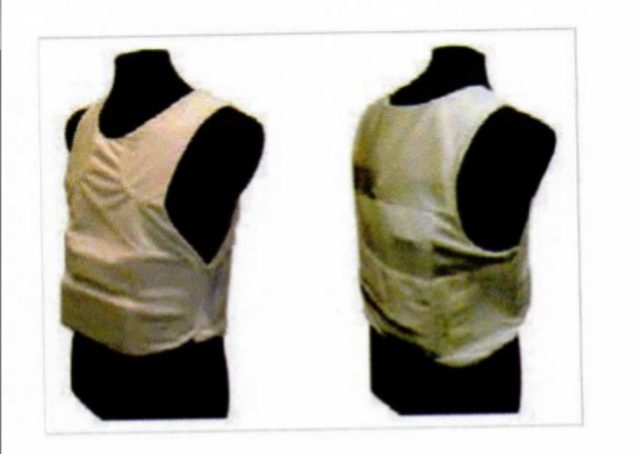
ACLU's Chris Soghoian described the feds' deployment of Stingray-type technology (that's a trade name, the technical term is "IMSI catcher") worn by law enforcement as a vest at the conference on Location Tracking and Biometrics, an event Grits attended at the Yale Law School, thanks to with reader support) earlier this year, which was the first I'd heard of it. Now we learn more about the body-worn tech in a new report from Ars Technica ("The body worn 'IMSI catcher' for all your covert snooping needs," Sept. 1), which opened:
Recently leaked brochures advertising next generation spy devices give outsiders a glimpse into the high-tech world of government surveillance. And one of the most tantalizing of the must-have gizmos available from a company called GammaGroup is a body-worn device that surreptitiously captures the unique identifier used by cell phones.

"The unit is optimized for short range covert operation, designed to allow users to get close to Target(s) to maximize the changes of only catching the Target(s') identities and minimal unwanted collateral," one of the marketing pamphlets boasts. "The solution can be used as a standalone device or integrated into wider data-gathering and geo-tracking systems."

At just 41 x 33 x 18 centimeters, the device is small enough to fit under a shirt. It needs from one to 90 seconds to capture the international mobile subscriber identity (IMSI) or international mobile equipment identity (IMEI) of the person being tracked. It works on all GSM-based networks regardless of country and is fully operational even when functioning in a moving vehicle. The same brochure advertises several other varieties of IMSI catchers, including some that work in a totable briefcase and one that receives signals from a covert vehicle roof bar antenna. The James Bond spying tools are sold to government agencies and law enforcement organizations.
Soghoian described experiments by the feds having agents with body-worn IMSI vests walking through crowds at political rallies and recording the ID of every cell phone that pinged,. That gave them a lot of baseline data about who was at the event, how to target their phone if need be in the future, etc., Combined with the rise of license plate readers, continued warrantless access to historic location data (at least for now), a national facial recognition database about to come online, and near ubiquitous surveillance in most public places, the potential uses and misuses of such more-or-less unregulated police technology boggles the mind.

Read the whole thing.

One in 27 Texas adults in prison, jail, on probation or parole

A quick update on an earlier Grits post. I'd estimated that 3.4% of Texas adults were in prison, on probation and on parole as of Aug. 31 2012 based on data from a recent Texas Criminal Justice Coalition report (pdf). Looking back, to complete the picture I should have also included the 67,000 people locked up in Texas county jails. Adjusting the calculation thusly, around 3.7% of Texas adults were under control of the Texas justice system in 2012, not including those caught up in the federal system. That's about one in 27 adult Texans; still a large number, but down from one in 22 just a few years ago, when the state justice system supervised some 4.6% of Texas adults.

By that measure, the proportion of Texas' adults under control of the justice system has dropped around 20%  [(4.6-3.7)/4.6] in the last five years, with incarceration levels plateauing, then dropping slightly, as the overall state population continued to rise. We still imprison more people than any other state, even California, whose population is much larger than Texas', but the ever-upward trend witnessed over the last two decades has been at least momentarily checked.

The next challenge: Texas needs to direct more funding to diversion programming and adjust sentencing  categories downward for certain low-level nonviolent offenses. The 2007 investments worked but aren't enough by themselves to reduce incarceration further without additional reforms.

Sunday, September 01, 2013

Arguments against warrants for cell-phone location data get weaker with time

Reflecting on the debate at the Texas Legislature this year over cell-phone location data, it strikes me that the main argument put forth by law enforcement opposing a warrant requirement - that cell-phone location data is too inexact to individualize users' historical location - was not just wrong but wrong in a particularly familiar sort of way. I recall making a quite similar case a decade ago in opposition to Texas' compilation of biometric data, including facial recognition data gleaned from driver license photos. At the time, biometrics weren't nearly as robust as they are today. A decade ago it was possible to criticize facial recognition schemes by law enforcement just by pointing to high false-positive rates; the technology just didn't work well enough to endure a rigorous cost-benefit analysis. Today, facial recognition systems are on the verge of becoming far more robust and civil libertarians must confront the full, real-world implications of such technologies, not just the idea of them.

Texas Western, Southern Districts lead way in prosecuting immigration violators

While routine immigration violations are generally a civil offense, there is a category of federal prosecutions - for "illegal reentry" - that are explicitly criminal charges. The US Sentencing Commission prepared this fact sheet (pdf) summarizing data regarding prosecution of illegal reentry, the main criminal charge filed against repeat offenders. Texas' Western (3,664) and Southern (3,387) Districts had the second and third most cases among all US Attorney divisions behind Arizona (3,873) in 2012. The fourth ranked District, New Mexico, prosecuted  fewer than 2,000 cases. Overall, the charges do not appear to be targeted at serious criminal offenders. "Fewer illegal reentry offenders were also assigned to the highest Criminal History Category (from 9.4% in fiscal year 2008 to 5.4% in fiscal year 2012)."

Via the US Sentencing Commission and Doug Berman.

Is Texas' 'improper photography' statute unconstitutional?

Somewhere, Mark Bennett must be smiling after the Fourth Court of Appeals declared Texas' "improper photography" law unconstitutional. Now the Court of Criminal Appeals will be asked to resolve differing opinions among Texas appellate courts, reported KSAT out of San Antonio (Aug. 30):
The Fourth Court of Appeals declared the Texas Improper Photography Statute unconstitutional on Friday.

District attorneys say Section 21.15 of the Penal Code, known as the Improper Photography statute, makes it a state jail felony to visually record or photograph another person without their consent to arouse or gratify the sexual desire of another person.

"I was very surprised this has proven to be an important statue in what I could call the digital age this is the kind of statue that prevents someone from photographing under a woman’s skirt,” said First Assistant District Criminal Attorney Clifford Herberg Jr.
The defendant in the case was arrested for taking pictures of children in their swimsuits at Sea World. He filed a pretrial habeas corpus writ challenging the constitutionality of the statute. "Thompson argues innocent photographers run the risk of being charged with violating the statute because the government is attempting to regulate thought, a freedom protected by the First Amendment," said the appellate ruling. The court found that the "location identifier" in the statute — "at a location that is not a bathroom or private dressing room — is so broad the statute seems to criminalize conduct in areas where individuals have no expectation of privacy," including public spaces like an amusement park.

See the Fourth Court's opinion (pdf). H/T: PetaPixil.

MORE: From Eugene Volokh.