Showing posts with label wiretapping. Show all posts

Monday, September 02, 2013

Body-worn IMSI catcher takes covert phone snooping to next level

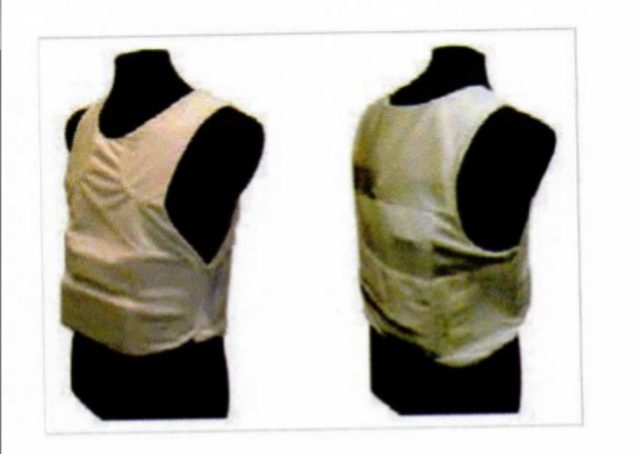
IMSI catchers, known more commonly by the biggest selling trade name, "Stingray" devices," are fake cell-phone towers that police use to capture nearby cell traffic and fool it into running calls through a police-operated device small enough to deploy in a squad car. Now they're big enough to wear as clothing.

ACLU's Chris Soghoian described the feds' deployment of Stingray-type technology (that's a trade name, the technical term is "IMSI catcher") worn by law enforcement as a vest at the conference on Location Tracking and Biometrics, an event Grits attended at the Yale Law School, thanks to with reader support) earlier this year, which was the first I'd heard of it. Now we learn more about the body-worn tech in a new report from Ars Technica ("The body worn 'IMSI catcher' for all your covert snooping needs," Sept. 1), which opened:
Recently leaked brochures advertising next generation spy devices give outsiders a glimpse into the high-tech world of government surveillance. And one of the most tantalizing of the must-have gizmos available from a company called GammaGroup is a body-worn device that surreptitiously captures the unique identifier used by cell phones.

"The unit is optimized for short range covert operation, designed to allow users to get close to Target(s) to maximize the changes of only catching the Target(s') identities and minimal unwanted collateral," one of the marketing pamphlets boasts. "The solution can be used as a standalone device or integrated into wider data-gathering and geo-tracking systems."

At just 41 x 33 x 18 centimeters, the device is small enough to fit under a shirt. It needs from one to 90 seconds to capture the international mobile subscriber identity (IMSI) or international mobile equipment identity (IMEI) of the person being tracked. It works on all GSM-based networks regardless of country and is fully operational even when functioning in a moving vehicle. The same brochure advertises several other varieties of IMSI catchers, including some that work in a totable briefcase and one that receives signals from a covert vehicle roof bar antenna. The James Bond spying tools are sold to government agencies and law enforcement organizations.
Soghoian described experiments by the feds having agents with body-worn IMSI vests walking through crowds at political rallies and recording the ID of every cell phone that pinged,. That gave them a lot of baseline data about who was at the event, how to target their phone if need be in the future, etc., Combined with the rise of license plate readers, continued warrantless access to historic location data (at least for now), a national facial recognition database about to come online, and near ubiquitous surveillance in most public places, the potential uses and misuses of such more-or-less unregulated police technology boggles the mind.

Read the whole thing.

Monday, May 27, 2013

Wiretapping bill dead mainly because Dallas cop was a jerk

Image via Emergent Chaos
The bill Grits put the most effort into killing this session was SB 188 by Huffman (and its companion, HB 530 by Fletcher) expanding authority of local PDs in big cities to engage in wiretapping. It was a bad bill but no one opposed it in the Senate. And Grits probably wouldn't have stuck my nose into the fray if it weren't for the untoward behavior of one of the bill's most prominent backers.

The two main proponents of the wiretap expansion bill - Det. Jimmy Taylor from the Houston PD and Frederick Frazier from the Dallas Police Association - were also the individuals most prominently opposing HB 1608 by Bryan Hughes requiring warrants to obtain cell-phone location data. Det. Frazier had been particularly hostile and abusive toward Rep. Hughes' poor, unsuspecting staffer assigned to the bill, who'd never before been on the business end of such vitriolic police tirades. ("Welcome to my world," I told her.) One day I came into the office and she was on the phone with Frazier holding the receiver a foot away from her ear with an aggrieved look on her face as he screamed into the line. I could hear him halfway across the room.

Grits is not a fan of such bullying behavior, particularly when it's aimed at a well-intentioned twentysomething staffer from my hometown who's working her butt off for my bill! So in retaliation, I authored an op ed against his wiretap expansion bill in the Houston Chronicle and shared it with the House Criminal Jurisprudence Committee staff, submitted written testimony against the bill at the public hearing on the House side, and visited with committee members' offices behind the scenes to scuttle Frazier's pet legislation. To be sure, members of that committee weren't hard to convince and perhaps the bill would have perished anyway, but there was no other public opposition. By the time I made the rounds after the hearing I could count at least six (out of nine) votes against it. Despite a 30-1 vote in the Senate (and btw, kudos to Craig Estes for opposing it), the bill never made it out of committee on the House side.

My purpose was not just to kill a bad bill, which is always a plus, but also to send a message to Mr. Frazier and his ilk: Next time be more polite, pick on somebody your own size, and if you decide to launch an all-out war against reform bills you dislike, keep in mind that strategy may come back to bite you on your own legislation. It did on SB 188.

Wednesday, May 08, 2013

Op-ed: Don't needlessly expand local police wiretapping authority

The Houston Chronicle today published an op ed I wrote in opposition to legislation expanding authority of large Texas police departments to perform wiretapping. Grits readers have seen most of the arguments before, but for those interested, see it here. The column concluded:
This bill amounts to a solution looking for a problem. If HPD had received judicial approval for a wiretap and DPS was unable to implement it, that'd be one thing. But if it's just to give them a leg up in some bureaucratic turf war with the feds or to keep from having to involve DPS, those don't seem like very good reasons to let the big local law enforcement agencies have this expanded authority.

The reason past legislatures centralized wiretapping at DPS wasn't because locals couldn't operate the technology but because they judged that it's better to keep such authority in one place to make it easier to regulate. That logic hasn't changed, and with the volume of requests so low, there's just no pressing need for the changes sought in SB 188. The Texas House should reject the legislation.

Tuesday, May 07, 2013

Wasteful police spending, Big Brother, and prison stories

Here are a few brief items that caught Grits' attention but didn't make it into independent posts:

Eliminate waste rather than throw money at new police hires
The Austin PD is requesting nearly 100 more uniformed officers in the next city budget. As Grits has argued many times, instead of hiring ever-more officers the agency should eliminate waste by requiring burglar alarm companies to implement a verified response system, calling the police only when a crime has actually been committed. Austin doesn't need more police officers it needs to be a lot smarter about using the ones they've got.

More exposure on wiretap expansion bill
The Austin Chronicle has a brief item highlighting the bill expanding wiretapping authority to local police in big cities that Grits discussed here, here, and here. I'm a bit surprised the issue hasn't drawn more attention.

'Lawsuit targets prison company over records request'
See the story at the Texas Tribune.

Letters from La Tuna
The El Paso Times has an interesting pair of stories about and by former businessman Bob Jones, who was "Once one of the most powerful people in El Paso, a larger-than-life figure who traveled in his own private jet" but "is now just another inmate in the federal system." See their feature article and an essay by Jones about his first six months in the federal La Tuna prison in which he describes life in solitary confinement and his experience almost dying from near-fatal E. coli infection. Interesting stuff.

IRS using Big Data for tax enforcement
This is creepy and before long every law enforcement and regulatory agency in the country will probably have similar  capabilities.

Do young people care about online privacy?
Turns out, more than you think.

Thursday, May 02, 2013

Electronic privacy roundup: Hating on the drone bill and other downers

Here are a few electronic privacy issues that caught my eye:

Cell phone triangulation now as accurate as GPS
So much for the idea that cell-phone location data is less accurate than GPS, see "Cell phone network upgrades make location tracking almost as precise as GPS." Said an expert quoted in the story, "It is no longer valid to assume that the cell sector recorded by the network will give only an approximate indication of a user's location," See Slate's coverage of the recent Congressional hearing on warrantless cell-phone tracking.

Publisher contests use of wiretapped conversation with journalist as evidence
A judge will not suppress a wiretapped conversation between a south Texas reporter and a state district judge but has not yet decided whether it may be used to prosecute corruption charges against a former Cameron County District Attorney. Sounds like a quagmire. Also sounds like wiretap tools were available when they were needed.

Hating on the drone bill
Law enforcement doesn't like Rep. Lance Gooden's drone bill HB 912, reported the Texas Tribune. They want a complete exemption for their own uses. Grits has suggested cops should have to get a warrant to use drones for surveillance targeting an individual. That said, while I think drone regulation is appropriate and important, Gooden's bill, regrettably, is the wrong approach. One cannot conduct aircraft regulation primarily through the use of misdemeanor criminal penalties,which is how HB 912 is structured. It's a classic example of overcriminalization - using criminal laws to address civil, regulatory questions. Grits sympathizes with Rep. Gooden's intentions and I even think there's a way to craft a state-level drone bill that satisfies stakeholders and protects privacy. HB 912, though, as written fails to accomplish that ambitious goal. RELATED: Aggie drones. What could go wrong?

'US gives big secret push to internet surveillance'
Read the full story here.

'The Public-Private Surveillance Partnership'
Bruce Schneier, as always, rocks. His latest essay suggests:
In a few years, the whole notion of a government-issued ID will seem quaint. Among facial recognition, the unique signature from your smart phone, the RFID chips in your clothing and other items you own, and whatever new technologies that will broadcast your identity, no one will have to ask to see ID. When you walk into a store, they'll already know who you are. When you interact with a policeman, she'll already have your personal information displayed on her Internet-enabled glasses.

Soon, governments won't have to bother collecting personal data. We're willingly giving it to a vast network of for-profit data collectors, and they're more than happy to pass it on to the government without our knowledge or consent.

Tuesday, April 30, 2013

Written testimony against expanding local PD wiretap authority

Read written testimony your correspondent submitted on his own behalf to the Texas House Criminal Jurisprudence Committee asking them to reject HB 530 by Fletcher and its senate companion SB 188 by Huffman expanding the authority of the largest police departments to perform wiretapping without Department of Public Safety oversight. Right now when local PDs want to use wiretaps they must get DPS to perform the actual interception or else partner with the feds. Grits readers have seen much of the detail before but I didn't want the bill to make it through committee and to the floor without somebody at least registering opposition. Here are the main points from the written testimony:
  • Wiretaps are seldom requested by local PDs
  • Agencies saying they want them rarely ask
  • Texas maintains greater accountability by keeping invasive surveillance technology at one agency
  • There's no harm in the feds doing most of the wiretapping
  • Don't expand authority before updating laws to account for 21st century technology
As I told Rep. Allen Fletcher and his chief of staff yesterday when I stopped by their office to give them a copy of the testimony before the hearing, I've been opposing this bill since it was John Whitmire and Debbie Riddle carrying it, and possibly before then. So just as there's no pressing need for this bill, with so few agencies requesting wiretaps each year, there's also no rush. If the committee shoots it down, it'll be back again next session.

MORE: From the Dallas Observer's Unfair Park blog.

See past Grits posts related to the bill:

Saturday, April 27, 2013

Local police want to bypass DPS on wiretapping but rarely use labor-intensive tactic

Earlier, Grits complained at length about a bill passed out of the Texas Senate, SB 188, by Sen. Joan Huffman, expanding wiretapping authority and on Monday its House companion HB 530, by Rep. Allen Fletcher, will be heard by the House Criminal Jurisprudence Committee. The legislation would let the six largest police departments and the Harris County Sheriff engage in wiretapping on their own authority. Under current law, when local prosecutors get wiretap orders they must be implemented by DPS officers. The argument by bill proponents last week, and in prior committee hearings, was that DPS was too overwhelmed to handle wiretapping duties. But here's a table Grits compiled of the total number of wiretapping requests by local Texas agencies since before the turn of the century.

Wiretap orders issued by
Texas state district judges: 1997-2011
2011: 2
2010: 1
2009: 0
2008: 2
2007: 4
2006: 2
2005: 4
2004: 0
2003: 4
2002: 2
2001: 1
2000: 0
1999: 4
1998: 5
1997: 0
Source

Why do local agencies need this authority when right now they hardly ever use wiretaps? At last week's House Criminal Jurisprudence meeting there was a telling exchange when the committee heard essentially similar legislation to SB 188 from state Rep. Gene Wu. Committee member Matt Schaefer asked a Houston police detective, who said this bill would let him do more wiretaps, how many times HPD had requested a DPS wiretap last year. He replied that HPD had not requested any because they knew DPS was too "busy." DPS, however, has never turned down an agency that asked them to perform a wiretap if they've got the proper orders from their local judge. The argument seems to be, "If we didn't have to go through DPS we'd do more of them." But why? Can they credibly say that without having even tried going through the existing legal mechanisms?

The other big complaint was that, right now, local PDs often have to ask the feds for assistance when they need a wiretap. But so what? Is that really a terrible thing? Let the feds do their thing. They're a lot better equipped to do those sorts of labor-intensive investigations, anyway. But if Texas agencies aren't even using their current wiretapping authority, why expand it?

This bill amounts to a solution looking for a problem. If Houston PD had received judicial approval for a wiretap and DPS was unable to implement it, that'd be one thing. But if it's just to give them a leg up in some bureaucratic turf war with the feds, or to keep from having to involve DPS, those don't seem like very good reasons to let the big local PDs have this authority.

MORE (Monday, April 29): See written testimony I submitted to the committee against the bill.

RELATED:

Monday, April 08, 2013

If it ain't broke ... no need to expand wiretap authority to local PDs

Grits has already decried the pointlessness and potential pitfalls of SB 188 expanding the list of Texas law enforcement agencies authorized to perform wiretapping to include the larger municipal PDs. That bill has now come over from the Senate and been referred to the House Criminal Jurisprudence Committee. Let's hope, in that small-government bastion, proposals to expand the surveillance state won't go over quite as easily as in the Texas Senate. Rep. Allen Fletcher is carrying the House companion.

Local control has its place but IMO the proliferation of invasive surveillance technology isn't one of them. Presently, the Department of Public Safety is the only non-federal agency authorized to perform wiretaps in Texas and from 1997 to 2011 (see the annual reports), they were never asked to do so more than five times in a year, a high set back in 1998. Some years, as in 2009, the number was zero. (See the chart in this post.) Though I understand through the rumor mill 2012 saw a bump (the data has not yet been reported publicly), the bottom line is Texas prosecutors seldom request wiretaps. Bill proponents are full of stories about dangerous Mexican drug cartels, but surprisingly short on examples when they needed a wiretap and DPS or a judge wouldn't oblige them. There's just no documented need to expand the number of agencies performing wiretaps.

To me, it's better to keep wiretapping authority in one place - at DPS - to make it easier to regulate. For that matter, the same can be said for use of Stingrays and similar fake cell-tower devices - which employ man-in-the-middle attacks on cell-phone customers and essentially intercept their signals. Just like wiretapping equipment, state law should limit those tools to DPS and let the locals call in the state police - with a judicial order in hand - if and when they need that functionality. If the practice becomes decentralized, with local agencies training their own personnel to operate invasive surveillance equipment, the potential for abuse grows as does the difficulty of exercising meaningful oversight. The volume of wiretapping work just isn't high enough to warrant changing the law. If it's needed, let DPS do it.

Saturday, March 30, 2013

Feds say 'Stingray' use is 'very common practice'

Since Grits had written about Stingray technology following the Yale Law School's conference on Location Tracking and Biometrics, I thought I should point out this item from the Washington Times ("Can you hear me now? Feds admit FBI warrantless cellphone tracking 'very common'," which opened:
FBI investigators for at least five years have routinely used a sophisticated cellphone tracking tool that can pinpoint callers’ locations and listen to their conversations — all without getting a warrant for it, a federal court was told this week.

The use of the “Stingray,” as the tool is called, “is a very common practice” by federal investigators, Justice Department attorneys told the U.S. District Court for Arizona Thursday, according to the American Civil Liberties Union.

Installed in an unmarked van, Stingray mimics a cellphone tower, so it can pinpoint the precise location of any mobile device in range and intercept conversations and data, said Linda Lye, staff attorney at the ACLU of Northern California in a blog post about the case.

In a rare public discussion of federal electronic surveillance capabilities and authorities, Justice Department lawyers told the court hearing that, instead of a warrant, the FBI operates Stingray and other cellphone-mimicking technology under the authority of “pen register” orders. These court orders, also known as “tap and trace” orders, are generally issued to allow investigators to collect only so-called “metadata” — like all phone numbers calling to or called from a particular number.

But Stingray collects much more than just phone numbers and also “sweep[s] up the data of innocent people who happen to be nearby,” according to the ACLU filing.

Given the broad nature of the information Stingray collects and its ability to eavesdrop on conversations, many federal judges insisted that they should be told when its use was envisaged under a tap and trace order, the ACLU filing says.
Here's the blog post from ACLU on the topic titled "DOJ emails show feds were less than 'explicit' with judges on cell phone tracking tool."  That exact same lamentation was expressed by federal Magistrate Judge Brian Owsley (Texas Southern District - Houston) at the Yale conference, who said, to an untrained eye, orders for Stingrays look just like those for much-less invasive pen registers. He thought he'd only ever seen two Stingray requests, but in retrospect said he's not completely sure for exactly the reasons described above: They're frequently presented as workaday trap and trace orders. A judge can't oversee activities about which s/he is never told. In Judge Owsley's cases, the federal prosecutors themselves did not understand the technology for which they were requesting an order.

Fort Worth PD owns a Stingray device but little is known about what other state or local agencies in Texas have them. Mostly local agencies purchase them with DOJ or DHS grants. To me it seems like wiretap equipment that they shouldn't possess, at least unless the unnecessary and ill-considered SB 188 passes. That bill, which gives wiretapping authority to the state's largest municipal police departments without DPS as their intermediary, cleared the senate last week. Detectives I've spoken to from the largest departments expect a sharp increase in the number of wiretap warrants requested statewide if SB 188 passes. At that point, you can be sure they'll all want a Stingray device.

MORE: From Simple Justice.

Saturday, March 16, 2013

Lege shouldn't needlessly expand wiretapping authority

Legislation expanding the authority of local law enforcement in Texas cities with more than 500,000 people to perform wiretaps passed out of the Senate Criminal Justice Committee this week. The bill is SB 188 by state Sen. Joan Huffman; its companion, HB 530 by Fletcher, has been referred to the House Criminal Jurisprudence Committee. Sen. Huffman suggested the legislation would allow for "more efficient" investigations but the bill amounts to a solution in search of a problem and should be roundly rejected. As Grits reported last summer, local prosecutors in Texas rarely seek wiretaps, which right now under state law must be conducted by the Department of Public Safety, so there's no pressing need to expand the number of agencies who perform them.
According to The Crime Report, nationally "Wiretap applications were far more likely to go through state courts than federal courts in 2011." In Texas, though, the opposite is true: State judges approved just two wiretaps in Texas in 2011, according to the most recent data reported in the United States Courts 2011 Wiretapping Report: Both were in Travis County involving drug cases. (See here, p. 298, large pdf.) One of the two wiretaps in Travis cost $104,934 and resulted in 14 arrests. Costs for the other, which lasted 30 days, were not reported and no arrests attributed to it.
You can watch the brief public hearing here (beginning at the 3:06:53 mark), though the discussion barely scratched the surface of the issue since nobody testified against it. This legislation is a repeater: It's something the Texas Legislature has rejected session after session but which local police departments and prosecutors inexplicably continue to push, despite the fact that local agencies have never employed the tactic often. None of the senators asked at the hearing how often wiretaps are used and law enforcement didn't offer up the information, but Texas must report to the feds how often wiretap orders are approved by state district judges. Here's how often Texas judges issued such orders in recent years:

Wiretap orders issued by Texas judges: 1997-2011
2011: 2
2010: 1
2009: 0
2008: 2
2007: 4
2006: 2
2005: 4
2004: 0
2003: 4
2002: 2
2001: 1
2000: 0
1999: 4
1998: 5
1997: 0
Source
So somebody please explain why there's a pressing need to take Texas wiretapping out of the hands of DPS, which has successfully performed this function for years, if prosecutors seek wiretapping authority so infrequently? Certainly that question wasn't answered, or even broached, at the hearing.

Detective Jimmy Taylor from Houston PD argued that law enforcement technology lagged behind that used by criminals but that's an absurd statement given the rise of Stingrays and other invasive surveillance devices. It would be foolhardy to approve wider wiretapping authority before the Legislature finds ways to regulate such new, invasive technologies.

Taylor's main concern appeared to be that, when the feds engage in wiretapping (which happens much more frequently), they don't always share the information. That implied to me that Houston PD wants to engage in duplicative, redundant wiretapping because of turf battles with the feds. For my part, though, Grits doesn't care who gets credit for a bust as long as the crimes are being investigated. If the full Senate doesn't vote against SB 188, hopefully the House will find itself less disposed to needlessly expand the scope of police surveillance.

Friday, March 08, 2013

Preview: Full slate of bills at first Senate Criminal Justice hearing next week

The Texas Senate Criminal Justice Committee has finally posted the agenda for its first meeting of the 83rd Legislature. They're getting started late (because most of the committee members have been tied up with the budget) so it's quite a long agenda. Here are a few items that jumped out at me:

Innocence, prosecutor misconduct bills
A couple of good reform bills are on there: SB 344 allowing habeas writs based on false or discredited forensics, which was the subject of an excellent recent story by Maurice Chammah at the Texas Tribune, and SB 825 making grievances related to prosecutorial misconduct public records and extending the statute of limitations for State Bar sanctions when prosecutors hide exculpatory evidence. See the discussion in this Grits post.

Felony for use of unsecured wi-fi?
State Sen. Dan Patrick has a rather odd bill up, SB 249, that on its face appears to potentially criminalize getting onto someone else's unsecured wifi. Currently Section 33.02(b-1) of the Penal Code makes it a state jail felony Class B misdemeanor if, with intent to "defraud or harm another, or alter, damage, or delete property, the person knowingly accesses a computer, computer network, or computer system without the effective consent of the owner." (Ed. note: It's a state jail felony if you've been convicted twice before or the network belongs to the government.) To that list, Patrick's bill would also criminalize accessing a system to "obtain a benefit." Since accessing the internet for free is a benefit, and effective consent is defined in the penal code as "consent by a person legally authorized to act for the owner," on its face accessing someone's wi-fi without their express permission would be a crime. Personally, I consider leaving wi-fi unsecured simply common courtesy, though internet service providers would like to restrict it for their own commercial benefit. As far as I'm concerned, criminalizing a neighbor using my wi-fi is akin to criminalizing their reading by my porch light. People can always restrict access if it bothers them. I don't think Sen. Patrick has fully thought through the unintended consequences this legislation. (MORE: From the Dallas Observer's Unfair Park blog.)

Introducing prior bad acts in guilt phase of sex-offender trials
A bill by Sen. Joan Huffman which Grits criticized last session, this time styled SB 12, is back again for a repeat: The bill would upend rules 404 and 405 of the Texas Rules of Evidence in trials of alleged child molesters, allowing evidence of past crimes in lieu of provable facts in the current case. When it came up last session, state Sen. Robert Duncan, a Lubbock Republican, expressed concern that it would allow juries to consider "allegations that have not even been vetted by a grand jury." Sen. Royce West argued strongly on the Senate floor the bill would result in "more wrongful convictions." The philosophy behind this bill was articulated by the Vichy policeman in the movie Casa Blanca: "Round up the usual suspects!" If you were guilty before, obviously you must be guilty this time. The bill analysis says the legislation would "provide prosecutors with a much needed tool" to win cases, but a prosecutor's duty is to seek justice, not convictions. See excellent Houston Chronicle coverage of the version that passed the Senate but died in the House Criminal Jurisprudence Committee in 2011.

Needless expansion of wiretap authority
Another bill by Huffman, SB 188, would expand the array of law enforcement entities authorized to perform wiretaps.This is a solution looking for a problem. Presently local agencies that want to perform wiretaps must have the Department of Public Safety do it, a system which has worked fine for many years. Indeed, local law enforcement agencies rarely use wiretaps, which are mostly performed at the federal level. In 2011, for example, there were just two wiretaps performed on behalf of local Texas agencies - both in Travis County. Given that incredibly low volume there's just no need to delegate additional authority to the locals.

Make counties report case disposition data
Sen. Huffman also has a good bill up, SB 262, which would codify successful incentives informally imposed by the Governor's office to make counties report case disposition data to the state. Lots of problems occur because arrests or indictments may be reported but dispositions, including acquittals, dismissals and reductions of charges frequently fall through the cracks. Under the bill, before counties could receive grant money from the Governor's Criminal Justice Division they'd have to certify with DPS that they'd reported 90% of case dispositions in the previous year. While arguably reporting rates should be even higher, 90% is a far cry from where many counties were at just a short time ago.

Prostitution prevention
Chairman Whitmire has another bill on the agenda, SB 484, which would create mandatory specialty courts related to prostitution prevention and diversion (see the bill text for more details) in counties with more than 200,000 people, but only if they are able to secure state or federal grant funding. They could also charge fees to defendants not to exceed $1,000, but many will be indigent and anyway that's likely not enough by itself to cover the costs. Dallas pioneered this model and by all accounts it has worked extraordinarily well. Counties that refuse to apply for grants for that purpose would lose all their state support for their local probation departments, which is a pretty darn strong incentive. One potential problem: Many of those federal grant funds may dry up if the sequester remains unresolved.

Regulating specialty courts, excluding violent felons
Sen Huffman has a bill, SB 462, which, according to the bill analysis, "consolidates Texas statutes by creating a new Subtitle K within the Government Code where all relevant specialty court provisions can be easily located; improves oversight of specialty court programs by requiring them to register with the criminal justice division of the Office of the Governor and follow programmatic best practices in order to be eligible to receive state and federal grant funds; and changes the composition of the Governor's Specialty Courts Advisory Council to nine members and requires the council to recommend programmatic best practices to the criminal justice division." It would also exclude defendants from participating in specialty courts if they'd been previously convicted of serious, violent (3g) offenses. The number of specialty courts in the state has ballooned but their day to day practices vary from judge to judge, so Grits understands the desire for greater uniformity and oversight. But excluding past 3g offenders may be a mistake. If the new offense was minor enough to otherwise qualify for participation in a specialty court, IMO strong probation closely supervised by a judge is more likely to rehabilitate than a relatively short prison stint.

Providing punishment for 17-year old capital defendants in legal limbo
Yet another bill by Huffman, SB 187, aims to fix the legal limbo that presently exists for 17-year old capital murder defendants, for whom the US Supreme Court has eliminated all legal punishments under Texas law. (See prior Grits coverage.) Seventeen year olds are adults under Texas law but juveniles according to the US Supreme Court, which has eliminated the death penalty and life without parole for juveniles. (States can still offer LWOP sentences, but it cannot be the only alternative.) Huffman's bill would create two sentencing options for 17-year olds, life and life without parole. IMO a regular "life" sentence would be perfectly acceptable for 17-year olds. Paying for a 17 year-old to stay in prison till they're 90, at $18,000+ per year, would cost more than $1.3 million in 2012 dollars. Allowing such youth to become eligible for parole after 30 or 40 years - and of course the parole board can always keep them in longer if their behavior in prison warrants it - makes a lot more sense to me. Another way to go, though with much more sweeping consequences, might be to simply change the state's definition  of a juvenile for criminal justice purposes to comport with interpretations by SCOTUS. Either way, the state has to do something on this issue. Right now there are no legal sentences for 17 year old capital defendants in Texas.

There is a lot more on the agenda so go here to see the full list of bills the Senate Criminal Justice Committee will hear on Tuesday.
Monday, November 26, 2012

'Standing up for Mr. Nesbitt,' tracking the cell-phone trackers, and other digital forensics stories

Electronic privacy continues to gain more attention in the wake of the Petraeus scandal and other recent revelations about the scope of law enforcement snooping around people's electronic communications. Here are a few more recent tidbits that caught Grits' eye:

Monday, July 09, 2012

What limits should exist on police use of personal cell-phone records without a warrant?

Grits was admittedly surprised at how few wiretaps were being approved in Texas state courts, but I'll bet this news explains where Texas agencies are going for detailed information about suspect phone records. The story in the New York Times (July 8) opened:
In the first public accounting of its kind, cellphone carriers reported they responded to a startling 1.3 million demands for subscriber data last year from law enforcement agencies seeking text messages, caller locations and other information in the course of investigations.

The data, which come in response to a congressional inquiry, document an explosion in cellphone surveillance in the past five years, with wireless carriers turning over records thousands of times a day in response to police emergencies, court orders, law enforcement subpoenas and other requests.

"I never expected it to be this massive," said Rep. Edward J. Markey, a Massachusetts Democrat who requested the data from nine carriers, including AT&T, Sprint, T-Mobile and Verizon, in response to an article in April in The New York Times on law enforcement's expanded use of cell tracking. Markey, who is the co-chairman of the Bipartisan Congressional Privacy Caucus, made the carriers' responses available to The Times.

Though the cell companies did not break down the types of law enforcement agencies collecting the data, they made clear that the widened cell surveillance cut across various levels of government — from run-of-the-mill street crimes handled by local police departments to financial crimes and intelligence investigations at the state and federal levels.

AT&T now responds to 230 emergency requests a day nationwide — triple the number it fielded in 2007, the company told Markey. Law enforcement requests of all kinds have been rising quickly among the other carriers as well, with annual increases of between 12 percent and 16 percent in the past five years. Sprint led the way last year, reporting more than 500,000 law enforcement requests for data.

Under federal law, the carriers said they generally required a search warrant, a court order or a formal subpoena to release information about a subscriber. But in cases that law enforcement officials deem an emergency, a less formal request is often enough. Moreover, rapid technological changes in cellphones have blurred the lines on what is legally required to get data — particularly the use of GPS systems to identify the location of cellphones.
The Wall Street Journal mentioned the particular concern regarding "cell tower dumps," which are "requests that carriers provide all the phone numbers of cell users that connect with a tower during a specific period of time. Those phone numbers could include suspects as well as ordinary people making calls in the same area."

At a minimum, Grits thinks cell phone users should be notified when law enforcement access their personal data without probable cause. And given their ubiquity and the amount of personal information on them, searches of seized smart phones should require a warrant. I've not thoroughly thought through, though, every nuance of what that would entail or what other protections may be necessary. Lately it seems like privacy advocates have been playing defense more often than not, fighting intrusive legislation instead of proposing new protections. There's been less discussion, that I hear, anyway, about what new protections are needed.

Written in the 18th century prior to the existence of municipal police forces, much less modern technology, the Fourth Amendment to the US Constitution offers flimsy protection at best from governmental (much less corporate) intrusions into personal privacy, which can be breached by technology much more rapidly, it seems, than the law can react to protect it.

The federal courts have all but abandoned the Fourth Amendment as a legal doctrine that meaningfully constrains government, which means in the near term we must rely - God help us - on the legislative branches, national and state, to limit abuses which would have seemed in the realm of science fiction back when today's Supreme Court justices were in law school. Unfortunately, legislative trends lately have run the other direction. (As the Journal reminded us, "In August 2007, Congress revised national-security surveillance statutes to allow the government to wiretap electronic communications without a warrant as long as one party is overseas.")

That puts the ball in state government's court, and leaves this writer wondering what legislation  might (or should ) be filed at the Texas Legislature to restrict or at least document the nature and scope of law enforcement monitoring of personal phone records.

Thursday, July 05, 2012

Texas bucks national trend on state-level use of wiretaps: Feds do 98% of them

According to The Crime Report, nationally "Wiretap applications were far more likely to go through state courts than federal courts in 2011." In Texas, though, the opposite is true: State judges approved just two wiretaps in Texas in 2011, according to the most recent data reported in the United States Courts 2011 Wiretapping Report: Both were in Travis County involving drug cases. (See here, p. 298, large pdf.) One of the two wiretaps in Travis cost $104,934 and resulted in 14 arrests. Costs for the other, which lasted 30 days, were not reported and no arrests attributed to it.

In contrast, by Grits' count federal judges approved 104 wiretaps in Texas during calendar year 2011, of which 102 were narcotics cases and two related to "corruption." About four in 10 (41) federal wiretaps in Texas resulted in arrests, but several involved dozens of people. The largest, out of Texas' Northern District, resulted in 41 drug convictions. Motions to suppress wiretap evidence succeeded just six times and were denied 16 times.

In all, federal authorities arrested 411 people in Texas in 2011 based on wiretaps resulting in 164 convictions, including 29 arrests and 21 convictions in corruption cases. (Data compiled from these tables, pp. 90-99, large pdf.)

I'm not sure why Texas judges are bucking the national trend of approving more wiretaps than the feds, but by these data the feds in Texas are making up quite a bit of the difference, particularly in the Western District on narcotics cases.

RELATED: Via TDCAA, see "A primer on wiretaps, pen registers and trap and trace devices," which provides a bit of additional process detail regarding state-level wiretaps. "Each of Texas’ nine judicial regions has a designated district court judge authorized to sign interception orders. Statutorily, our ability to seek a wiretap is limited to the offenses of capital murder, murder, child pornography, and felony drug offenses other than possession of marijuana," wrote Fort Bend ADA Jeff Strange in 2009.

Friday, June 08, 2012

Don't look now, the government is watching ... do you feel safer?

According to Men's Health magazine, four of the 15 American cities under the most government surveillance are in Texas:
  • Houston (2)
  • Dallas (6)
  • Austin (7)
  • Corpus Christi (13)
  • El Paso (26)
You might expect more of El Paso would be under surveillance more than other cities because of military and border security installations and concern over feuding drug cartels in Juarez, but they're relatively far down the list. As per the question in the headline, to folks in Houston, Dallas, Austin and Corpus: Does so much surveillance make you feel a) more safe, b) less safe, or just c) like the government wasted your tax dollars on something pointless? Tell us in the comments, or feel free to suggest your own "d."

Monday, April 02, 2012

Police quietly expanding warrantless cell phone tracking

The New York Times this weekend had a feature on the dramatic growth in cell-phone tracking by law enforcement based on thousands of pages of documents obtained by the ACLU from local police departments, reporting that:
While cell tracking by local police departments has received some limited public attention in the last few years, the A.C.L.U. documents show that the practice is in much wider use — with far looser safeguards — than officials have previously acknowledged.

The issue has taken on new legal urgency in light of a Supreme Court ruling in January finding that a Global Positioning System tracking device placed on a drug suspect’s car violated his Fourth Amendment rights against unreasonable searches. While the ruling did not directly involve cellphones — many of which also include GPS locators — it raised questions about the standards for cellphone tracking, lawyers say.

The police records show many departments struggling to understand and abide by the legal complexities of cellphone tracking, even as they work to exploit the technology.

In cities in Nevada, North Carolina and other states, police departments have gotten wireless carriers to track cellphone signals back to cell towers as part of nonemergency investigations to identify all the callers using a particular tower, records show. 

In California, state prosecutors advised local police departments on ways to get carriers to “clone” a phone and download text messages while it is turned off.
At the end of the story, there's a brief discussion about pending reform efforts:
Congress and about a dozen states are considering legislative proposals to tighten restrictions on the use of cell tracking.

While cell tracing allows the police to get records and locations of users, the A.C.L.U. documents give no indication that departments have conducted actual wiretapping operations — listening to phone calls — without court warrants required under federal law.

Much of the debate over phone surveillance in recent years has focused on the federal government and counterterrorism operations, particularly a once-secret program authorized by President George W. Bush after the Sept. 11 attacks. It allowed the National Security Agency to eavesdrop on phone calls of terrorism suspects and monitor huge amounts of phone and e-mail traffic without court-approved intelligence warrants.
Clashes over the program’s legality led Congress to broaden the government’s eavesdropping powers in 2008. As part of the law, the Bush administration insisted that phone companies helping in the program be given immunity against lawsuits.

Since then, the wide use of cell surveillance has seeped down to even small, rural police departments in investigations unrelated to national security. 

“It’s become run of the mill,” said Catherine Crump, an A.C.L.U. lawyer who coordinated the group’s gathering of police records. “And the advances in technology are rapidly outpacing the state of the law.”
This is an issue I'd like to see the Texas Legislature address in 2013, preferably creating a warrant requirement for obtaining personal information including location from people's cell phones. This practice will be abused without rigorous court oversight and strong laws protective of personal privacy.

As an aside, the Times continues to misstate the effect of a recent SCOTUS ruling on police placing GPS trackers on cars, insisting the court found "that a Global Positioning System tracking device placed on a drug suspect’s car violated his Fourth Amendment rights against unreasonable searches." In fact, SCOTUS ruled only that placing a GPS tracker on your car is a search, and did NOT go so far as to say it was an unreasonable one. The ruling was exceptionally narrow in that regard, and for some reason most of the media have overstated what the court actually said.

MORE: See ACLU's writeup of documents they received under open records.

Tuesday, November 29, 2011

Surveillance Tech: Fantasies of tin-foil hat crowd coming true

Examining the array of high-tech gadgetry available to law-enforcement to monitor people, Wired magazine identifies "Nine reasons Wired readers should wear tinfoil hats." They are:

• Warrantless Wiretapping
• Warrantless GPS Tracking
• Tracking Devices in Your Pocket
• Fake Cell Phone Towers
• The Border Exception
• The “6 Months and It’s the Government’s” Rule under ECPA
• The Patriot Act
• Government Malware
• Known Unknowns

License plate readers coupled with roadside cameras would've made my Top 9 list, but it's hard to fault these choices. Problem is, Fourth Amendment issues are a political nightmare, with a sturdy bipartisan consensus among  elite circles for gutting its protections like a fish. For those who think voting Democrat will save you from such abuses, please read this paragraph from the Wired story carefully:
The Obama administration claims Americans have no right to privacy in their public movements. The issue surfaced this month in a landmark case before the U.S. Supreme Court to determine if law enforcement agents should be required to obtain a probable-cause warrant in order to place a GPS tracking device on a citizen’s car. The government admitted to the Supreme Court that it thinks it would have the power to track the justices’ cars without a warrant.
As for Republicans, short of a Ron Paul upset victory in the primaries, I doubt any current presidential candidate would be better than Obama on the subject and some would be much worse. So in the near term we're not going to vote our way out of this.

In the government arena, that leaves the courts (which are sharply divided on the subject), or else constructing bipartisan legislative coalitions on narrow, popular elements of a Fourth Amendment reform agenda. Examples that might have legs could be: Rolling back routine TSA frisks at the federal level, requiring warrants to access cell-phone data (which the states could do), or empowering drivers at traffic stops to refuse searches and avoid arrest for fine-only offenses (bills passed by the Texas Lege that Rick Perry vetoed).

Grits also continues to believe that the market may provide better short-medium term preventives than the courts to abuse of such technologies as detection devices become cheaper and more widespread.

The kinds of technologies described by Wired concern me, but such controls can only go so far. Think of a game of chess: Both players can see all of the other player's pieces, but unable to peer into your opponent's mind, it's still easy to be defeated. Besides, all these new technologies are labor intensive: They mainly generate mountains of data that some government employee (or these days, perhaps a private contractor) must sort through then presumably do something with. In an era of government downsizing, there's a limit to the amount of resources which can be applied to such endeavors. So surveillance has practical limits and its wide application is antithetical to popular calls for budget cutting and government efficiency. That's the good news.

The bad news, says Wired: "a tinfoil hat won’t help you at all." Via FourthAmendment.com.

See related Grits posts:

Friday, June 08, 2007

Secrecy bill for search affidavits deserves Governor's veto

Governor Perry should veto legislation pending before him that allows prosecutors to temporarily keep secret critical public data about police searches. So many different people rely on this information besides police and prosecutors, the change would inevitably spur unintended consequences that reduce accountability and public oversight of police and prosecutor misconduct. Jennifer Lafleur, who writes the Citizen Watchdog column for the Dallas Morning News, reminded me of SB 244 in a recent column, declaring:

A bill awaiting the governor's signature would allow sealing of search warrant affidavits for up to 60 days – 30 days with a possible 30-day extension. Sealing is not automatic. A prosecutor must ask a judge to seal an affidavit if disclosure would jeopardize confidential informants, if it would harm a continuing investigation or if it contained information from an unexpired court-ordered wiretap.

Historically, such affidavits were open to allow public scrutiny of law enforcement activities. In cases where names of confidential sources needed to be protected, they were redacted.

This was a solution looking for a problem, more about managing public relations than protecting sources. The Governor should give it the axe.

Search warrant affidavits are key public documents in criminal cases that have been public records since time immemorial. The subject of the search typically knows the cause and protections already exist to preserve informant confidentiality, so the only folks kept in the dark by SB 244 are the press and the public. That should not stand.

Mr. Governor, please veto SB 244!

Go here to let Rick Perry know if you agree.

MORE
: Don't conceal search warrant affidavits!

Tuesday, May 22, 2007

Wiretapping out, secrecy provisions remain in homeland security bill

I was glad to see Rep. Lon Burnam successfully use his point of order (discussed here) to negotiate the expansion of phone surveillance out of Senate Bill 11 - the House and Senate authors both agreed to a deal to cut out the entire wiretapping section. (See coverage from the Texas Observer and the Fort Worth Startlegram.) But Burnam did not get Chairman Corte to remove the provisions I disliked making emergency plans and "security audits" secret. As I've written previously:
Keeping emergency plans secret will only mean that in crunch time the public doesn't understand the plan or what they're supposed to do. Keeping security audits secret means that when security problems are identified, politicians will experience no public pressure to fix the problems, so they may not. Secrecy in these contexts isn't just unnecessary, it's counterproductive - harmful to the goal of ensuring public safety.
I wish Ray Allen were still at the Legislature because he was the only member of either party who ever really understood this, though anybody who witnessed the abusrd attempt to evacuate Houston before Hurricane Rita in 2005 can see how silly it is to keep emergency plans and security flaws secret. After 9/11, this idea was debated ad nauseum at the Texas Lege and ultimately withdrawn because stakeholders realized it could not be justified from a safety perspective. It can only be justified from a CYA perspective.

Now the bill heads to a confererence committee - it's much improved, but in this writer's opinion the secrecy surrounding audits and emergency plans would be too detriminetal to public safety. If the conference committee doesn't fix it, to my mind that provision should merit a veto, though I won't be holding my breath.

Friday, May 18, 2007

Texas Joining Wiretap Nation

I don't get it. How did we get past the post-9/11 session in 2003 without expanding wiretap authority (at the time David Dewhurst declined to pursue it saying he wanted to respect civil liberties), but NOW in 2007 it's urgent Texas do so?

Not only has the Legislature sent a bill to the Governor letting local yokels run wiretap operations instead of the Department of Public Safety, but another homeland security bill on today's major state calendar in the House, SB 11 by Carona, would expand the crimes where wiretapping could be used and allow "roving wiretaps" like those in the federal PATRIOT Act. (See prior Grits coverage.)

Like SB 823 before it, there's no urgent or identified need to expand wiretapping in Texas - judges approve just a handful of phone surveillance warrants statewide every year. Apparently our elected officials want them used a LOT more often, but for the life of me I can't understand why.

The worst aspect of the bill, though, from a public safety standpoint, would have to be provisions that make emergency plans and meetings about them secret. This is the Cold War era "security through obscurity" paradigm that's as outdated today as rhetoric bashing Communism. As I wrote previously:
Computer security experts like Bruce Schneier preach incessantly that "open source" approaches - or making public security problems instead of concealing them - over time enhance security. The same is true for things like evacuations or responses to bioterrorism incidents. Keeping emergency plans secret will only mean that in crunch time the public doesn't understand the plan or what they're supposed to do. Keeping security audits secret means that when security problems are identified, politicians will experience no public pressure to fix the problems, so they may not. Secrecy in these contexts isn't just unnecessary, it's counterproductive - harmful to the goal of ensuring public safety.
Texas rejected all of these ideas immediately after 9/11, but the political interests who want greater secrecy and more domestic surveillance power kept coming back, and apparently this is the session lawmakers, for whatever reason, decided to cave. For my part, I agree with Fort Worth Startlegram columnist Bob Ray Sandes who wrote last year,
With all due respect to the late Don Knotts, who was one of my favorite comic actors, to give officials here more authority to wiretap people would be like giving Deputy Barney Fife a second bullet. And letting him put both in his pistol at the same time.
Please, Texas House members: Don't give Barney Fife another bullet! I hope SB 11 dies by hook or by crook, whether through sound arguments that covince members or a point of order that saves everybody a lot of time and protects safety and liberty more efficiently - I don't really care which but I hope it doesn't pass.

UPDATE: Rep. Burnam called a point of order on the bill that made me go "Duh!" - the bill addresses more than one topic. SB 11 was pulled down and postponed until Monday morning, which may mean the POO is sustainable (I'd hope so, it's entirely valid - the bill's a hodge podge). If so, that give Rep. Burnam and other critics leverage to negotiate, but this story is far from over. The Texas Observer has more.