Showing posts with label Unmanned Spy Drones. Show all posts

Wednesday, October 15, 2014

Roundup: Of drones, drugs, and DA elections

Here are several items that merit Grits readers attention but haven't made it into individual posts:

Craig Watkins' fumbling Dallas DA campaign
Grits mentioned earlier that the Dallas, Harris and Bexar County DA's races interested me as potentially close, competitive toss-up races, in Bexar because a single donor dropped $600K on the Democratic challenger. In Dallas, where I'd already thought the race would be close, Gromer Jeffers at the Dallas News reported that challenger Susan Hawk has out-fundraised Craig Watkins roughly 5-1 and is running TV ads, which are "a rarity for a countywide race, and will be following up with direct mail and other contacts to nudge voters to go to the polls. She’s actively trying to peel Democratic voters away from the incumbent." Meanwhile, Watkins team "lacks a professional campaign manager and field director, perhaps because there is no money to pay them." In 2010, Watkins raised $750K and won by about 5,000 votes. He appears more vulnerable now and I wouldn't be surprised to see Hawk upset the favored incumbent.

Corrupt cop escorted drug loads in Houston
A former Houston police officer, Marcos Carrion, pled guilty to escorting drug shipments through town on behalf of a drug cartel, the Houston Chronicle reported. See an FBI press release and the plea agreement.

Montgomery Sheriff will drone again
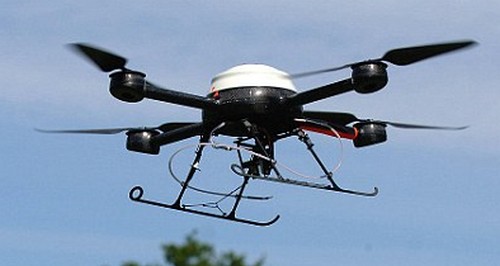
The Montgomery County Sheriff's Office will replace the quarter-million dollar drone they sank in Lake Conroe with insurance money. This was the second time they'd crashed the thing in as many years.

Listen to Texas Tribune crimjust panels
I'd neglected to link to the Texas Tribune's online postings of two criminal justice related panels at their recent festival on criminal justice reform and the death penalty (because we don't talk about that enough!). Go here to listen.

5th Circuit Judge: Innocents executed analogous to collateral damage from drone strikes
A complaint against 5th Circuit Court of Appeals Judge Edith Jones for alleged has been dismissed by her fellow 5th D.C. Circuit jurists, which doesn't seem like the most impartial group to evaluate the challenge to one of their peers. Reported the Houston Chronicle:
the dismissal order released this week says Jones herself admitted to describing mental disability as a "red herring" in death penalty appeals, though it is a defense approved by the U.S. Supreme Court.

She admitted she used an analogy to drone strikes in rebuttal to the argument "that the death penalty kills innocents."

She agreed she'd said something about how Mexican nationals might prefer American death row to prison in their own country, even though Mexico does not have capital punishment, and that she said both blacks and Hispanics sadly "seem to commit more heinous crimes."

But none of those comments were considered misconduct by the investigating judges.
Private foundations fund police surveillance tech
Police departments are looking to private foundations to pay for Stingray surveillance devices and other equipment they don't want to have to justify through the formal budgeting process, reported ProPublica

Thursday, May 01, 2014

Montgomery Sheriff crashes drone, again, this time sunk in Lake Conroe

When the Montgomery County Sheriff first purchased a quarter-million dollar drone for law enforcement use, they crashed it into a SWAT vehicle during a training run. They repaired or replaced it, but last week they crashed it again, this time sinking it into Lake Conroe. On Monday, a department spokesman told reporters, "Divers did go down to look for it. They are still looking. It went down in deep water where there is a rocky bottom. Visibility is also a problem because of sediment at the bottom of the lake."

I hate to indulge in schadenfreude, but that cracked me up.

The UAV was covered by insurance, but after crashing it twice, one suspects their carrier may consider raising their rates.

Thursday, April 24, 2014

Debating drones: Texas EquuSearch case shows why bans were unwise, premature

Does it constitute "surveillance" to use drones to look for missing persons and/or the people who may have taken them? ¿Quien sabe?

The Houston Chronicle reported that "Texas EquuSearch filed suit Monday against the federal government to overturn the grounding of its fleet of aerial drones used to search for missing people." Regular readers know the Federal Aviation Administration won't come out with regulations for civilian drone use until 2015.

But the truth is EquuSearch's use of drones for this purpose by a private actor may also be banned under Texas law. HB 912 passed last session allowed law enforcement to use drones to search for missing persons, but it made no exception for nonprofits like this organization.

This is another example why Grits and many national experts considered Texas' "drone bill" banning video recording by unmanned aircraft to be misguided. Drones have a plethora of legitimate uses, many of which have yet to even be imagined yet. Blanket bans - whether by the Texas Legislature or the FAA - preempt many cool and useful things this technology can do before people can even try them. I agree with the FAA that Texas EquuSearch's drones are probably covered by the ban on civilian use until 2015, and even if they weren't their use would likely be prevented by Texas' HB 912, strictly interpreted. I don't agree, though, that banning them best serves the public and there are many other legitimate uses that should also be allowed.

MORE: See a letter (pdf) to the FAA from Texas EquuSearch arguing why the FAA ban on civilian drone use shouldn't apply to them.

CORRECTION: I was wrong about Texas' law. It allows someone under the direction of law enforcement to look for missing persons with drones so Texas EquuSearch could legally do so at the behest of law enforcement.

Saturday, March 01, 2014

Drone Civil Disobedience?

Image via Wikipedia
Regular readers will recall Grits was no great fan of Texas' new statute regulating unmanned aircraft passed in 2013, which is so poorly written that nobody including police and prosecutors really have a clue what's legal or illegal. So I had to laugh when I saw that MAKE magazine is sponsoring an event during SXSW dubbed a "Fly-in" (like a "sit-in" in the sky) that, I suppose, could be viewed as a de facto act of drone-based civil disobedience.

Texas' new law stipulates that "A person commits an offense if the person uses an unmanned aircraft to capture an image of an individual or privately owned real property in this state with the intent to conduct surveillance on the individual or property captured in the image." The term "surveillance," though, is undefined in the statute. Most of these unmanned aircraft will inevitably be equipped with cameras that may capture "an image of an individual or privately owned real property" as they fly around. But while there are many exceptions in the statute to for law enforcement, utilities, oil and gas companies, etc., there's no exception for simple hobbyists like most of the folks who'll be attending the SXSW event.

I doubt law enforcement will come out to arrest DIY drone flyers at the Austin "Fly-in," but the fact that in theory they could shows why the statute was misguided, over-broad, and premature. When the law passed at the Texas Legislature, prosecutors predicted no one would ever be charged under it because the statute is too vague and contains many, often confusing caveats and exceptions that no one - either in the public or among law enforcement - really understands.

Arguably, DIY drones aren't engaging in "surveillance" but "sousveillance," or the recording of an activity by a participant in that activity. Texas' statute doesn't make such a distinction, but the realities of unmanned aircraft and the rapidity of their adoption for innumerable legitimate uses, many of which involve photography, show why the law as written really isn't ready for prime time.

Thursday, January 16, 2014

Roundup: Too crazy to drive? ... and other stories

Here are a few odds and ends that haven't made it into their own, individual posts but deserve Grits readers' attention:

Drivers license application includes pointless, invasive mental health question
The Houston Chronicle today reported on criticism of a question on the Texas Department of Public Safety driver's license application asking, "Within the past two years, have you been diagnosed with, been hospitalized for or are you now receiving treatment for a psychiatric disorder?" The question has been on the application since the 1970s, but "Gyl Switzer, public policy director for Mental Health America of Texas, said the mental health questioning should be purged from applications." In 2012, 242 applications were flagged for review by an advisory board at the Department of State Health Services. Of those, 102 "did not forward information from their doctor so their applications were tossed out. The board recommended 32 people be denied a license."

Travis jail eliminates in-person visitation, profits from video contract
The Travis County Jail has switched exclusively to video visitation, eliminating face-to-face visits with inmates by friends and family, reported the Austin Statesman. Now, only attorneys can meet in person with inmates. Notably, the jail is making money off the deal. "Securus Technologies Inc. installed the system at no cost to the county last year. Securus charges outside callers $20 for a 20-minute conversation with an inmate and gives the county $4.60 from each call." County commissioners, though, weren't told when the deal was approved that face-to-face visits would be eliminated. Notably, the Prison Policy Initiative last month called on the FCC to regulate charges for video visitation, complaining that the elimination of in-person visits often resulted from "perverse incentives" created by such contracts.

Metal detectors installed to prevent cell-phone smuggling in Bexar Jail
The Bexar County Jail has installed metal detectors that all staff are now required to pass through in order to combat contraband smuggling after they found a smuggled cell phone, reported the SA Express-News. "In October, inmate Paul Reyes was caught with a cellphone after photos of him in jail surfaced on Facebook."

'The Real Victims of Satanic Ritual Abuse'
An article from Slate with the same title as this subhed explored the Fran and Dan Keller case out of Travis County.

Frisco man arrested for sign warning drivers of speed trap
Another arrest for contempt of cop.

SAPD may test "feasibility" of body cameras
San Antonio is considering a pilot program to test the "feasibility" of police officers wearing body cams, reported the Express-News. I'm a big fan of this idea. A New York Times story on the topic last year said departments using body cams saw dramatic reductions both in citizen complaints and use of force incidents. (Note to Adafruit and other wearable tech producers: Don't let Taser International corner this market!)

Border Patrol lending drones to local law enforcement
The Border Patrol has been using drones on behalf of local law enforcement agencies, including along the Mexican border, though they won't say which ones. Reported the Washington Post, "there is a huge, unfed appetite among police agencies for drones and their powerful surveillance tools, which include infrared cameras and specialized radar."

Friday, December 20, 2013

Debating drones

A few stories related to drone surveillance caught my eye and may interest Grits readers:

The city of Alpine in Presidio County rejected a proposal that would have made it one of six FAA testing sites for drones. Reported a local TV station:
Alpine was designated as a possible launch and recovery site last month but city council members voted against it.

Pilots in the area, including Kevin O'Cuillin, were worried about safety.

"It's a very dangerous situation. A drone can't see us. As we learned earlier, there is no air traffic control," O'Cuillin said.

Residents in the tri-county area do feel better. Oscar Cobos started a petition against drones in Alpine and talked with Presidio County about taking measures to prevent a testing site.
Meanwhile, down south, "The U.S. Border Patrol will evaluate the use of three helium-filled surveillance balloons along the Texas-Mexico border that were originally used by the Department of Defense in Iraq and Afghanistan," reported AP. See earlier Grits coverage of surveillance blimps on the Texas-Mexico border.

Finally, at Slate, Nabiha Syed discusses why the FBI thinks warrantless drone surveillance is legal. Regular readers know that, after the passage of HB 912 last session, state and local law enforcement in Texas must now get a warrant to use drone surveillance, and the new statute includes a super-tough exclusionary rule when agencies use them without one.

Wednesday, October 30, 2013

Are we on the verge of a Fourth Amendment revival?

Former Williamson County DA John Bradley has been keeping a low profile since voters ousted him from office last year, at least everywhere but the Texas District and County Attorney Association user forums where he remains a prolific contributor. I may often disagree with him, but Bradley's a smart guy and last week he posed an interesting question that merits Grits readers attention:
When SCOTUS decided the Jones case and said placing a GPS device on a car was a search, the Court did not decide whether a warrant was required. Texas law has not required a warrant. But here is one federal court that has said a warrant is required:

Details.

Given the SCOTUS requirement for a warrant in the McNeely blood draw case, is the national trend toward requiring warrants?
He could have added the example of the Texas Legislature becoming the first state to require a warrant for law enforcement to access cloud-based emails. Moreover, legislation with 107 joint and co-authors in the Texas House, which received 126 votes as an amendment on the House floor, would have required warrants both to place GPS devices on vehicles as well as to access people's cell-phone location data if procedural machinations hadn't kept the amendment off the final bill. (Maine and Montana passed similar legislation this year.) Also, Texas' new law regulating drones requires law enforcement to secure warrants to use them for investigative purposes, even tacking on a powerful exclusionary rule if drones are used without them.

I think JB's right that we're witnessing a "national trend toward requiring warrants" and, moreover, Texas has been a leader in that trend as it regards electronic privacy issues. The Fourth Amendment has been so battered in recent decades by judicial-manufactured exceptions that significant factions in both political parties are beginning to endorse its revival through the legislative process. Hell, it's one of the few issues that seems capable of drawing bipartisan support even in Washington, D.C..

Perhaps that's just false hope and/or wishful thinking on my part, but clearly Grits isn't the only one observing these changing trends. IMO there's a window opening over the next few years during which the opportunity to bolster the Fourth Amendment will re-assert itself. The question will be whether judges, politicians and advocates can discover the courage and wherewithal to seize the moment.

Sunday, August 18, 2013

Drones, federalism and the First Amendment

If you've got a spare 18 minutes to spend on the subject, Margot Kaminski has an excellent podcast up at DroneU.org on "Drone Federalism." She succinctly lays out the First Amendment implications of private drone regulation, as opposed to regulating their use by the government, as well as anyone I've seen. She describes five axes of drone use around which lawmakers must craft drone regulation, only one of which (use by law enforcement to monitor the public) lends itself to a clean, obvious solution (a warrant requirement).

Around the 11:30 mark she points out that Texas' new drone law as written would likely criminalize the drone photographer who captured pig blood being dumped into the Trinity River by a meat packing plant in Dallas which has since faced a crackdown from the EPA. Margot, who your correspondent was privileged to meet at a conference on electronic privacy at the Yale Law School earlier this year, is perhaps the sharpest thinker I've run across on the subject of drone regulation. I still wish our friends at the Texas Lege had consulted her and the other experts at DroneU.org before passing Texas' ill-considered "drone bill," HB 912. Given Texas' mess of a statute, I couldn't agree more with Kaminski's point about drone federalism. Prosecutors have said our homegrown bill is unenforceable and the Texas Lege would definitely benefit from allochthonous approaches.

See related Grits posts:

Thursday, July 25, 2013

Texas policymakers need to up their game on drone regulation

In retrospect, Grits considers Texas' drone bill (HB 912) arguably the weirdest,  most surreal piece of criminal-justice legislation passed this session. It's already routinely cited as a national example of how NOT to craft drone legislation. It was one of those "only in Texas" moments. What other state would put county misdemeanor prosecutors, justices of the peace, and municipal court judges in charge of aircraft regulation? Have you ever sat through JP or municipal court?

The problem with banning drones is that they're awesome. Even if you worry about privacy, who doesn't want to fly one of these bad boys? Then, once folks get into it, or once a business finds they fulfill some core need, there's always one more sensor or gadget to add. There are too many cool things you can do with them - from the mundane to the ridiculous, from the utterly practical to the absurd and artistic - to simply ban the technology altogether. And cameras are too fundamental to how drones operate and the things people do with them to apply a blanket ban on photography, even with HB 912's litany of exceptions. You can't anticipate every use, good or bad, and wouldn't want to. Part of the beauty of the current technological revolution is its open-ended nature. Nobody can say for sure where it's taking us, just that we're moving awfully fast. But the answer is to cautiously apply the brakes on the curves, not to derail the train.

I mention this to promote an opportunity for involved parties and opinion leaders to add new tools to their collective toolboxes, and perhaps to figure out when and how to use different ones. Check out this conference in October on Drones and Aerial Robotics; it should be a must-attend affair for everyone in and around the Texas capitol associated with Texas' "drone bill," including state Rep. Lance Gooden, his principal co-conspirators, and their staff but perhaps also representatives from the leadership, too. They let this bill happen, now they need to develop some expertise on their staffs to clean it up the next time.

The speakers list at the NY conference includes most every expert I've run across as Grits researched the questions surrounding Texas' bill during the 83rd session. It includes several people (like Margot Kaminski) who have forgotten more about drone tech, law and policy than anyone involved in the Texas legislation ever appeared to know.

Our drone bill was developed within Texas politics' own little bubble. If a special interest complained, they got a "carve out" so the bill didn't apply to them. Texans for Lawsuit Reform signed off on the bill only after including a highly restrictive damages cap. Anybody with sufficient clout to snuff the bill - which turned out to be a lot of people - got special provisions written in for them. The result made the ban on drone photography look like Swiss cheese. prompting the lobbyist for the prosecutors' association to predict that the new offense would never be successfully prosecuted in Texas. The only functional part of the bill is the strong exclusionary rule for law enforcement.

This isn't a knock on Rep. Gooden, his staff, or any other legislators closely involved with the bill. This stuff is hard. There are complicated considerations across the technical, legal, and political fronts, each of which pose dilemmas that would stump Solomon. Nobody's regulated  an emerging personal transportation technology like this since since the first automobile statutes proliferated. It's difficult to know even where to begin. Still, Texas did a big thing badly. The result could harm innovation in Texas industry potentially for years to come in an area where experts say the state is poised to dominate.

The Speaker of the House and the Lt. Governor haven't yet announced Interim Charges for the standing committees but Grits hopes one or both of them include a charge to study the implementation of HB 912 and to recommend improvements to the law. The FAA won't allow drones in commercial airspace until September 2015, so there's still time for Texas to fix this before it really becomes harmful to the state's economic competitiveness. But Texas lawmakers must up their game. HB 912 became such a mess mainly because its proponents and opponents alike lacked a basic understanding of the issues or a clear vision for a sensible path forward. In 17 months when the Lege re-convenes for the 84th session, it would be nice to see the debate over drones occur at a more sophisticated level.

Monday, June 17, 2013

Rick Perry, drones and an odd endorsement of the exclusionary rule

Regular readers are aware that Grits thought HB 912, known as Texas' "drone bill," contained too many practical flaws for me to support. But the bill did place significant restrictions on use of drones by law enforcement, which is far and away the most significant aspect of the legislation. So, when can law enforcement - or people under contract with or acting on the direction or authority of law enforcement - utilize drones under HB 912? Here are the circumstance under which Texas law enforcement can use aerial drones beginning September 1st.
  • Pursuant to a valid search warrant,
  • In immediate pursuit of a fugitive felon,
  • To document a felony crime scene,
  • To document crime scenes involving human fatalities, fatal motor vehicle accidents, and any motor vehicle accident on a state highway or federal interstate,
  • To search for a missing person,
  • When conducting a "high-risk tactical operation that poses a threat to human life,"
  • Surveying the scene of a catastrophe for purposes of determining whether an emergency should be declared,
  • To preserve public safety, protecting property, or surveying damage or contamination during a lawfully declared state of emergency,
  • Within 25 miles of the Mexican border, and
  • With consent of the property owner.
The Department of Public Safety has been charged with developing administrative rules for use of drones by law enforcement based on the strictures in the bill.  Bizarrely, in an era when tuff-on-crime demagogues have spent decades eviscerating the exclusionary rule, the drone bill contains the most extreme version of one your correspondent has ever seen a legislative body endorse in my lifetime. Under the statute, video collected by law enforcement outside the above circumstances (or even drone video taken by civilians in violation of the statute):
(1) may not be used as evidence in any criminal or juvenile proceeding, civil action, or administrative proceeding;
(2) is not subject to disclosure, inspection, or copying under the Public Information Act; and
(3) is not subject to discovery, subpoena, or other means of legal compulsion for its release.
Unless it falls under one of the listed exceptions (which admittedly are myriad), the only thing drone video can be used for in court will be to prove up Class C misdemeanor charges of improper drone use. That's true even if the video happened to capture images of a murder, rape or kidnapping.

Honestly, I thought that'd be a deal killer. It's flat out stunning that Gov. Rick Perry endorsed such a sweeping exclusionary rule when, in the past, he's threatened to veto legislation (e.g., Texas' eyewitness ID legislation from 2011) if the exclusionary rule was applied. One imagines this was a one-off and not an indicator the Governor has now embraced the exclusionary rule as a valid means to regulate illicit law enforcement behavior. We can hope, though.

Grits doesn't expect ever to see a single prosecution under the criminal portion of the drone statute, nor do I anticipate anyone will successfully sue over tort violations in the bill (the amounts are too small to make it worth an attorney's while). In the end, restrictions on police and exclusion of video evidence in the courts will be the biggest effect of this odd piece of legislation.

Monday, June 03, 2013

Does this count as a 'drone'? If cell-phone towers can fly, why not a 'Stingray'?


Via Ars Technica
Does a flying cell-phone tower count as a drone? You decide. The bill Texas just passed that's awaiting a decision by Gov. Perry would regulate images captured by "unmanned aircraft." And under that statute, " 'image' means any capturing of sound waves, thermal, infrared, ultraviolet, visible light, or other electromagnetic waves, odor, or other conditions existing on or about real property in this state or an individual located on that property." So arguably this use would be illegal under Texas' bill. Should it be? Grits is not so sure. I'm less concerned with cell-phone companies using drones this way than, say, if law enforcement were to install a Stingray device on an unmanned aircraft. The latter should be outright banned. The former may be perfectly appropriate in a regulated environment and could be a tremendous boon to rural areas with poor cell-phone coverage.

Grits believes there are a vast number of potential uses for "drones," far more than most people, and certainly most Texas legislators, have properly considered. The Texas bill's principle saving grace is that, even if Gov. Perry signs it into law, it'll be a couple of years before the Federal Aviation Administration allows civilian drones in commercial airspace. So Texas will get another chance to get it right in 2015.

MORE: From EFF: How we need to regulate drones.

Related:

Thursday, May 30, 2013

National expert laments Texas drone bill

Though I hate to say it, if I were Governor Perry, Grits would veto HB 912 - the "drone bill" - and request in the veto message that the Lt. Governor and Speaker of the House appoint a joint, select committee to develop better legislation in the interim. Indeed, make me philosopher king and I'd hire Margot Kaminski to figure out how to reasonably govern this technology at the state level, and not just because I enjoy her company more than Lance Gooden's staff. (Kidding guys!) Grits met Margot at the Yale Law School conference I attended earlier this year and she's thought longer and more deeply about these questions than anybody I've met involved with Texas' drone bill. In a tweet lamenting the passage of HB 912 she recommended this recent paper championing "drone federalism" as an explanation for "why this kind of bill threatens free expression and is not a good idea." Like Margot, I think there's a role for state-level drone regulation. This bill, regrettably, isn't up to snuff.

RELATED: See Grits' critique, "Top Five Things Wrong With Texas' Drone Bill."

Monday, May 20, 2013

Droning On: Senate amendments worsen drone bill

Senate amendments attached last week to Texas' "drone bill" created even more exemptions to criminal and civil penalties for photography by unmanned aircraft. See coverage of the bill from Computer World,  the Austin Statesman, and the Texas Tribune. Regrettably, Grits continues to see too many problems with the legislation to support it in its current form, with the Senate amendments only exacerbating its shortcomings. The legislation heads to conference committee amidst predictions from Forbes magazine that Texas stands to be one of the states that benefits most from a "drone economy" because of the aerospace and defense industries here.

Tuesday, May 14, 2013

Top Five Things Wrong With Texas' Drone Bill

The road to hell, they say, is paved with good intentions, but apparently airspace will also get you there.

Thursday, May 02, 2013

Electronic privacy roundup: Hating on the drone bill and other downers

Here are a few electronic privacy issues that caught my eye:

Cell phone triangulation now as accurate as GPS
So much for the idea that cell-phone location data is less accurate than GPS, see "Cell phone network upgrades make location tracking almost as precise as GPS." Said an expert quoted in the story, "It is no longer valid to assume that the cell sector recorded by the network will give only an approximate indication of a user's location," See Slate's coverage of the recent Congressional hearing on warrantless cell-phone tracking.

Publisher contests use of wiretapped conversation with journalist as evidence
A judge will not suppress a wiretapped conversation between a south Texas reporter and a state district judge but has not yet decided whether it may be used to prosecute corruption charges against a former Cameron County District Attorney. Sounds like a quagmire. Also sounds like wiretap tools were available when they were needed.

Hating on the drone bill
Law enforcement doesn't like Rep. Lance Gooden's drone bill HB 912, reported the Texas Tribune. They want a complete exemption for their own uses. Grits has suggested cops should have to get a warrant to use drones for surveillance targeting an individual. That said, while I think drone regulation is appropriate and important, Gooden's bill, regrettably, is the wrong approach. One cannot conduct aircraft regulation primarily through the use of misdemeanor criminal penalties,which is how HB 912 is structured. It's a classic example of overcriminalization - using criminal laws to address civil, regulatory questions. Grits sympathizes with Rep. Gooden's intentions and I even think there's a way to craft a state-level drone bill that satisfies stakeholders and protects privacy. HB 912, though, as written fails to accomplish that ambitious goal. RELATED: Aggie drones. What could go wrong?

'US gives big secret push to internet surveillance'
Read the full story here.

'The Public-Private Surveillance Partnership'
Bruce Schneier, as always, rocks. His latest essay suggests:
In a few years, the whole notion of a government-issued ID will seem quaint. Among facial recognition, the unique signature from your smart phone, the RFID chips in your clothing and other items you own, and whatever new technologies that will broadcast your identity, no one will have to ask to see ID. When you walk into a store, they'll already know who you are. When you interact with a policeman, she'll already have your personal information displayed on her Internet-enabled glasses.

Soon, governments won't have to bother collecting personal data. We're willingly giving it to a vast network of for-profit data collectors, and they're more than happy to pass it on to the government without our knowledge or consent.

Friday, March 29, 2013

A path forward for state-level drone regulation

I listened today to the Texas House Criminal Jurisprudence Committee's surprisingly lively hearing in the middle of the night sometime Wednesday morning. That's when HB 912 by Lance Gooden criminalizing photography by drones finally came up. I'd already gone to bed after the debate on the cell-phone location tracking bill ended around 1:35 a.m., so thank heavens they webcast and archive these things. Go here to watch the hearing (it begins at the 6:46:18 mark) which started sometime just shy of three a.m. before an increasingly groggy but still engaged committee. I've also obtained a copy of the committee substitute language. It's not yet available on the capitol website so I uploaded a version here.

Sophisticated surveillance drone.
There's a civil section to the bill, explained Rep. Gooden, saying you can't take photos from a drone over someone's private property, with a penalty of up to $1,000 per picture. That's the piece which brought professional photographers out of the woodwork. For videographers, that per picture liability may be multiplied by 24 frames per second. Similarly, news photographers may take hundreds of photos on a shoot. The bill also creates criminal penalties, Class Cs and Bs, for drone photography of private property. Police officers who've obtained warrants are one exception to the criminal prohibition, including for pursuits, border security, when someone's life is in danger. Gooden said the Legislature had an obligation to regulate new technology, adding that, "If Bryan Hughes would have told you five years ago he'd be filing his GPS bill you'd have thought he was crazy. Some people think I am."

Grits increasingly likes Rep. Matt Schaefer the more I see of him - not just because he says things I agree with and asks good questions, but also because he's a home-town boy, representing the district I grew up in and where my father still resides in Tyler. He laid out parameters that also reflect my preferences: Stay out of the criminal statutes and cap damages on the civil side until we really understand all the stakeholders and everything that's going on.

Rep. Burnam interjected to say that Gooden had worked diligently with committee members and stakeholders, but that didn't mitigate the wave of often legitimate criticism that dominated most of the rest of the hearing. There was a consensus among speakers that a warrant standard for police was a good thing but there needed to be protections for filmmakers, hobbyists and press.

Alicia Calzada, an attorney with the National Press Photographers Association, nervously spoke against the bill. Her group opposes bills in general that criminalize or impose civil penalties on press photography, she said, and this bill does both. Drones are cheaper than helicopters and safer for operaters, she said. Aerial photography is powerful media tool. She complained the bill is content based, with the crime or civil penalty based on what's in the picture. Regulating content, she said, "requires a compelling state interest" that's not present as the bill's currently drafted.

There was a poignant moment when Rep. Schaefer asked a fellow from Texans for Lawsuit Reform, "do you agree we have some privacy issues?" Yes, the TLR lobbyist muttered. "Would you prefer we deal with those in civil court or criminal court?" "Criminal court," was the reply, as the audience twittered with laughter. Said Schaefer: "Why is that not surprising?" If you ever wonder why Texas too often uses criminal law in lieu of regulation or civil courts, that legislative moment sums it up. TLR has been and is a powerful voice under the pink dome.

Rep. Steve Toth from Montgomery County, where the local Sheriff bought a drone with grant funds and promptly crashed it into a SWAT vehicle, asked, "Should you be able to fly over my property and see my wife sunbathing?" Calzada meekly replied that it depends.  Toth asked, "Should you be able to fly over a wedding to see who is there?' Calzada answered only with a long silence, followed by mumbling. Toth continued, "How about a little kids' camp?" Taking a deep breath and regaining her composure, Calzada responded, "Well, can you see it from a helicopter? Can you see it from a 20-story building?"

She continued to point out that "This bill doesn't differentiate between when you do and don't have a reasonable expectation of privacy." Content based restrictions require a compelling state interest, she said, and  more narrowly crafted exemptions than were in the committee substitute. The bill needed to contain explicit exceptions for "serious literary, artistic, political or scientific expression," she said. Grits would have gone so far as to add that not just serious but "light-hearted, silly or fanciful" expression also deserved protection.

Brent Byler, of drone maker DGI Innovations described more positive uses of the technology: "Movie and television filming, agriculture, disaster management, thermal and infrared powerline surveys, aerial imaging and mapping, news coverage, environmental monitoring, oil and gas exploration, and real estate." He added, "Drones don't spy on people, people spy on people. He cited F1 races and SXSW as examples where drones were used because they're safer to use these than helicopters. But in a large crowd setting like that you can't get permission from everybody. Drones make high-quality media cheaper, he said, costing little to operate compared to helicopters which cost $15,000 per day. It's "not in the spirit of Texas to run off businesses," said Byler. Rep. Moody asked, if there is a way to "carve out  incidental image capture"? Byler replied probably.

Documentary film producer John Downer testified against the bill. Something must be done to protect privacy, he agreed, but under the bill as drafted he can't do the shots he needs so they would probably just go to California or shoot somewhere else. When a filmmaker flies a camera-laden drone down the street then pauses, hovering on a house where they're shooting, right now they get permission and pay for use of the one house. But it's not economically feasible, he said, also to pay every homeowner and bystander captured as they fly down the street. Directors who wanted such shots would have to  film somewhere else. At 24 images per second, at $1,000 per image the penaltie would quickly get out of hand. Mark Easterbrook, National Press Photography Association, called the legislation "just dumb," imploring the committee, "Don't be that state."

Other media reps tried to make clear that there are nearly unlimited uses for drones - which are much cheaper than photography from a helicopter at $300 per hour - for everything from sports and traffic coverage to an array of other uses that have traditionally been held to be constitutionally protected. A hobbyist came down from Fort Worth and, testifying at about four in the morning, told the committee he didn't want them to make something illegal that didn't hurt anybody and that he really loved to do. "I just want to fly my planes," he told the committee. A couple of speakers suggested there should be some sort of mens rea, or "ill intent" required before criminal or civil penalties kicked in.

Anyway, you get the gist. Quite an animated discussion considering how late it occurred.

A Path Forward
To me, the drone debate is the culmination of an increasingly bad policy trend that's infected the Texas penal code for at least two decades - using criminal laws as commentary on social trends and a substitute for meaningful civil-side regulations, which is how you get seven, or 11, or 16 oyster-related felonies, depending on who's counting. With all due respect to Rep. Gooden, trying to engage in aircraft regulation primarily through the use of misdemeanor criminal penalties is just a wrong-headed approach.

Here's my preferred solution: The FAA won't begin to license private sector use of drones until 2015, meaning for now the main users that need regulation are all in the government. So implement a warrant requirement for law enforcement to use drones on a particular investigative target (perhaps with exemptions for traffic monitoring and emergency response), and limit regulatory uses, but for now, leave private-sector use alone. The model language I took Rep. Gooden's staff from the ACLU's national model drone privacy bill included a warrant requirement for police and the following restriction on non-police UAVs (ignore, if you can, the annoying double negative in the first sentence):
Exception for non-law enforcement operations - It shall not be unlawful under this chapter for an agent of the state or any political subdivision thereof to operate an unmanned aerial vehicle and for information from such operation to be disclosed if no part of any information and no evidence derived from such operation may be received in evidence in any trial, hearing, or other proceeding in or before any court, grand jury, department, officer, agency, regulatory body, legislative committee, or other authority of the [State] or a political subdivision thereof, or for any intelligence purpose.
Under that language, the government could use drones for constructive purposes but not for "gotcha" type investigations. A pipeline company or one supposes, the state, might use drones to monitor for leaks, for example, but TCEQ couldn't use a drone for regulatory enforcement. Moreover, even with a warrant or under other exceptions, according to that model language, "Neither facial recognition nor other biometric matching technology may be used on non-target data collected by an unmanned aerial vehicle." We know that much is legal. The state can limit the activity of state and local law enforcement, state agencies, and their agents. Let's start there.

Grits would rather Texas actually pass a meaningful drone privacy bill limited to restricting government instead of one that's overbroad, violates First Amendment precedents, and is destined to get thrown out in federal court. Regrettably, I'm not sure this bill is fixable without rethinking its approach from first principles. In part because of its inappropriate use of criminal law to address a regulatory question, Gooden's current language governing legitimate government uses IMO both goes too far and not far enough. Limiting its scope to government - and getting rid of the criminal penalties entirely - would avoid First Amendment court challenges and allow some version of the above language to address the main non-law enforcement uses of unmanned aircraft.

As for private drones, the Texas Legislature will meet again in 2015 before the first private drones are licensed by the FAA that September. By that time, other states will have taken a stab at these thorny issues and the federal government will likely have passed more legislation on the topic. In the meantime, why not restrict drone use by the government, which is already being licensed to use this technology?

See prior, related Grits posts:

Monday, March 25, 2013

Arlington PD embraces drones, gets FAA clearance - what limits will the Lege impose?

The Arlington PD's recent FAA licensure of a pair of unmanned drones coupled with Rep. Lance Gooden's HB 912 regulating drone photography coming up on the House Criminal Jurisprudence Committee agenda on Tuesday has resulted in a spate of recent news coverage on the topic of unmanned surveillance drones, see:
Notably the makers of police drones are openly worried that the first person to shoot one down will be considered a "hero" and, said US News and World Report, "According to a Reason/Rupe poll conducted last month, nearly half of Americans believe that they have the 'right to destroy' a drone that flies too close to their house. Nearly two thirds of Americans said they'd be worried about local police drones invading their privacy." The over-the-top public reaction to drones makes me think the time is ripe for legislation to regulate them. But the bill as filed was too sweeping, potentially impacting even university researchers, hobbyists, and other legitimate users.

Since the FAA won't be licensing private drones until September 2015, I'd prefer to see the focus for now remain on a warrant requirement for police surveillance and curtailing their regulatory use by government. By 2015, the issues surrounding private use of drones will be in sharper focus, the issue will be more ripe for legislation, and there is still time to enact it before the FAA approves private use use of drones in their airspace the following September. Today, in 2013, the goal should be to limit their use by state and local government which, as in Arlington, is the main consumer at the moment of privacy invading drone technology. Here's a picture via NBC of the Montgomery County Sheriff's SWAT team posing with their drone:


Last year the Montgomery Sheriff's drone program made headlines when they crashed their drone into a SWAT truck during a practice run.

Saturday, March 23, 2013

Discovery, drug policy, drones and more: Packed agenda for House Criminal Jurisprudence

The Texas House Criminal Jurisprudence Committee has a packed but interesting agenda on Tuesday, March 26. Not only is Rep. Hughes' bill on cell phone location tracking on the agenda (its companion, SB 786 by Juan "Chuy" Hinojosa is on deck in the Senate Criminal Justice Committee on the same day), an array of other big items dot the day's landscape.

Discover this: House and Senate to debate Brady, discovery
In both the House and the Senate, "reciprocal" discovery bills are up on Tuesday. In the House, bills by Moody and McLendon are on the agenda, while in Senate Criminal Justice, Rodney Ellis' SB 1611 comes up to bat. All are likely to have new "committee substitute" language, but the defense bar seems pretty dug in. After Tuesday, I suppose we'll discover whether these bills will move forward regardless, without their consent. Should be quite a show.

Reducing less than a gram penalty range, defining trace cases
Rep. Senfronia Thompson has a pair of bills up, HB 1417 and HB 2914, the first of which would reduce possession of less than a gram of a controlled substance from a state jail felony to a class A misdemeanor, and the second of which would eliminate "trace" cases from the felony docket by requiring there be .02 grams or more of substance to qualify for a state jail felony offense. Readers may recall that one-term Harris County DA Pat Lykos stopped charging "trace" cases as a felony, contributing to reduced jail crowding, but her opponent in the GOP primary, the current DA Mike Anderson, ran on a platform of charging those cases as felonies again. Most other large jurisdictions treat the same type of cases as Class C paraphernalia charges. Thompson, a Houstonian and chair of the House Local Consent Calendars Committee, finds her interests on this momentarily aligned with Republican District Judge Michael McSpadden, who has made it a biennial ritual to round up fellow district judges from Houston to sign on to a letter calling for reducing less-than-a-gram cases to Class A status. His main goal is to relieve the district courts of petty cases he doesn't believe warrant a felony charge. Not the first time this has been proposed, but it's a moment when Houston in particular needs the law adjusted if the DA's Office intends to go back to the bad old days of overcharging petty drug cases.

Honing in on drones
The committee will consider HB 912 by Gooden, which in its original form would have criminalized drone photography generally with a handful of specific exceptions. I understand the committee substitute may look quite different, but whatever it says, it's up on Tuesday. See related, recent Grits coverage.

Time to talk: Regulating pretrial defense-victim communication
There's a bill up by Rep. Charles Perry that would allow victims to decline contact with a "victim outreach specialist" if that person is employed by  defense attorneys for the accused, but by doing so make the DA's "victim service provider" that person's sole point of contact, whose decisions will be relayed to the defense through the DA's office. Seems like they're trying to streamline the cabining of prosecution witnesses into a formal process. With the defense bar there for the discovery debate, I suppose somebody in the room may have something to say about that. By contrast, HB 167 by McLendon would expand victim-offender contact through voluntary, pretrial mediation.

Meet Texas' Spring winner of 'Most Likely to Be a New Crime'
And the winner is, "Voyeurism," a proposed new Class B misdemeanor! See the filed bill text for details, just don't look too close! Committee member Jeff Leach filed HB 2371 and four committee members are joint authors, making it perhaps the most likely bill on the agenda to make it out of committee.

Regulation can be liberating, if you're a prosecutor
HB 1849 by Sterfani Carter, who's vice chair of the Criminal Jurisprudence Committee, would clarify language in the DAs' asset forfeiture statute that set limits on what the money can be spent on but in a way that gives prosecutors maximal discretion as well as legal certainty for all the ways they're currently spending the money. The question arises, is it wise to endorse this whole "eat what you kill" environment? Does it create perverse incentives to allow prosecutors to generate these sometimes sizable slush funds? I think this bill would be fine except, if I were made philosopher-king, the money would go to the county treasury and they should be the ones who decide which "law enforcement purpose" to spend the money on.

Sunday, March 17, 2013

Location Tracking and Biometrics conference: Roundup of Grits posts

Thanks to readers who donated for Grits to attend the March 3 conference on Location Tracking and Biometrics at the Yale Law School and especially to the Texas Civil Rights Project for a particularly generous contribution. It took two weeks, but today I finally finished the last two posts summarizing my notes from panels at the conference. Here they are all in one place for easy reference:

Debating Drones: Final panel from Yale Law School conference

SCOTUSBlog contribuor Nabiha Syed and ACLU attorney Catherine Crump spoke on drones at a brief, final session of the March 3 Location Tracking and Biometrics Conference at the Yale Law School.

Syed argued that drones are the culmination of all other electronic privacy issues. She traced the idea to Jon Silva in 1956, a TV broadcaster who wanted more market share and realized Los Angeles PD had copters to watch traffic. He rented a helicopter from the Army, mounted 2,000 pounds of camera equipment onto it, and in 1958 launched the first traffic helicopter. LAPD now has largest fleet of traffic helicopters in the nation. She cited Silva's innovation ans an example of how it's not always obvious how private sector affects law enforcement. Broadcasting from a helicopter is mobile, happens in real time (think: O.J.), is airborne, and can capture images beyond where a person can go on land.

There are ways drones are different. First, they're unmanned. Instead of pilots incidentally seeing what's going on, capturing images is their purpose for news organizations. Second, you won't know drones are there compared to helicopters because they're quiet and often relatively small. Third, and perhaps most importantly, is the lower cost. You can buy large drones for $20,000 that fly for 1,600 hours, but smaller ones are operated by tinkerers, private companies and public institutions. The FAA has prohibited commercial use of drones till 2015. but they're already used for lots of things and the FAA does nothing about it, including using drones for news gathering: Even if drones aren't technically legal, there's no real way for the cops to stop it. She mentioned the Drone Journalism Lab, which focuses on the “expressive use of drones” We will see unconventional use of drones, said Syed, which will initially involve a variety of uses by third parties with no legal infrastructure to guide them.

Crump argued that there are beneficial uses of private drones. ACLU is putting out white paper later this year grappling with the First Amendment issues. The debate over drones, she said, highlights why "privacy advocates need to win every battle about tracking and government only needs to win once." We've not previously seen technology inspire as much opposition as drones, she noted. Why is that? First, the default setting is different. The public doesn't know they're being used until they've already been integrated into law enforcement practices. Most metropolitan police already have many cameras around town, but unlike CCTV affixed to a lamp post, drones can follow you around.

The FAA has largely prohibited use of drones so far, putting the onus on those who want to use them to make a case for them. For once, that gives us a chance to have a debate up front, reminiscent of the Swiss system. (She was referring to an example from an earlier panel: Police in Switzerland can't engage in surveillance practice until the legislature has regulated it. The United States, by contrast, has the opposite system: Police can do virtually anything until they're stopped.)

The public has mainly seen them in war footage from Afghanistan and Pakistan. TV likes them because they produce good video. Opposition so far has primarily come from conservatives. Drones were addressed in many state GOP platforms and 29 states have introduced drone legislation. Some states want warrant requirement. In a 2011 report, ACLU argued for “reasonable belief” standard for drone use, while the Tea Party mostly wants probable cause warrants. Law professor Ryan Calo has called drones the leading edge of privacy movement.

These issues are mostly being confronted at the state level, not by the feds. Crump thinks  maybe the "privacy community" (whatever that is) is making a mistake by focusing on feds, suggesting advocates should target 10-15 states to pass model legislation. The key constitutional questions surrounding drones relate to First Amendment questions and the third-party doctrine exception to the Fourth Amendment, she said, as the day drew to a close.

In the Q and A session, Kevin Bankston of the Center for Democracy and Technology recommended the fiction book,“Kill Decision,” on autonomous drones integrated with facial recognition and other privacy invading tech.

See prior Grits posts from the conference:
And, see prior Grits drone-related coverage: