Showing posts with label overcriminalization. Show all posts

Thursday, February 11, 2021

Texas oyster crimes are no joke and a symptom of broader problems

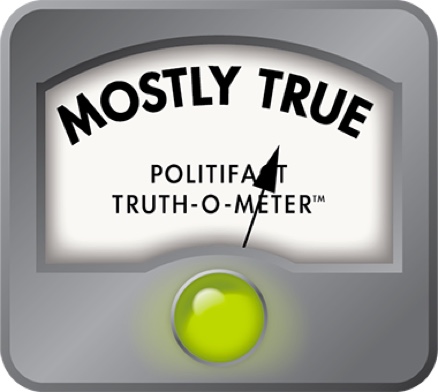
This blog has spent an inordinate amount of time over the years focused on Texas' array of oyster-related criminal offenses, to the point that Politifact once did a fact check on my claims. They found them "Mostly True," with the "mostly" caveat being that one source put the numbers even higher than I'd said!

Marc Levin, who recently left the Texas Public Policy Foundation to become general counsel at the new Council on Criminal Justice, first launched this meme as a way to critique overcriminalization, highlighting the fact that Texas has so many felony statutes on the books it's difficult even to count them.

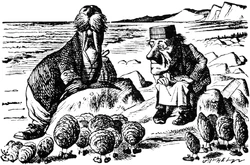
Your correspondent played into the gag, wondering aloud how many crustacean-related crimes are sex offenses and counting the number of oyster-related felonies in "The Walrus and the Carpenter."

Over the years, however, Grits has come to realize Texas' "oyster crimes" aren't just a silly government foible to be mocked at conservative conferences. (TPPF for years held a panel at their biennial legislative conference highlighting "overcriminalization" and featuring this example.) Rather, they're illustrative of some of the core challenges involved in disentangling criminal law from regulating non-criminal behavior in a society organized around what Jonathan Simon has called "Governing through Crime."

Texas has so many oyster crimes on the books for two, fundamental reasons: Scorn for regulation and the environment. Harvesting native oysters is terrible for the latter and the Legislature prefers criminal law to the former.

Including misdemeanors, Texas has dozens of oyster-related crimes on the books, all because the state uses criminal law to regulate unwanted business practices that other states manage through non-criminal regulatory enforcement.

In most other coastal states, civil regulators enforce rules about oyster harvesting. In Texas, it's game wardens and prosecutors. This leads to a spotty patchwork of enforcement dependent on some random lawyer elected DA knowing and caring about the topic and/or being willing to ignore local donors who might object.

For years, the prosecutors' association scoffed at the oyster-crime depiction, insisting such cases were rarely prosecuted. An old college pal of mine who's written their law books for the last couple of decades said the same thing on Twitter when the oyster-crime meme arose this week. But if that was ever true, it's not any longer. 

Hurricane Harvey disrupted the unfettered harvesting of native oysters, requiring more robust state regulation for the industry to survive. Texas A&M Professor Joe Fox noted in 2019, “Due to overfishing, excessive freshwater inflow and loss of infrastructure mainly due to hurricanes, Texas oyster harvests have been trending downward and have experienced a 43% loss in the past three to four years.”

That's what's generating the push for greater enforcement. Without it, the industry could vanish. But prosecutors aren't regulators. Their job is to prosecute crimes, not regulate aquatic industries, even if the latter task de facto falls to them under Texas' absurdist system.

Even if you took these criminal laws off the books, state intervention would be needed for this industry to exist. Otherwise, overharvesting would wipe out the native oyster population in short order. In the 4-day sweep in December, game wardens restored 48,000 pounds of illegally harvested oysters to the bay. In a similar sweep in 2018 netting twice as many cases, "Some of the violators intercepted had cargo consisting of up to 35 percent undersized oysters."

So it's not that the criminal laws governing oyster harvesting are unnecessary. The government has a role to play here. But criminal statutes are a blunt instrument for regulating fishermen. That's the wrong tool for the job. 

To disentangle criminal law from shellfish regulation requires a big picture view that embraces property rights and responsibilities. Decriminalize, regulate, and let people who want to farm oysters grow their own in designated areas. Just letting rapacious private interests plunder a resource till it's gone makes no environmental, moral, nor economic sense.

Texas could wipe out most oyster-related criminal offenses if it 1) banned harvesting native oysters, 2) fostered a transition to (recently legalized) privately managed beds, then 3) regulated the industry under civil instead of criminal law. That'd be better for the environment and the industry long term, and take law enforcement mostly out of the equation.

Wednesday, June 20, 2018

Going soft on crustacean crime?, or, Counting crimes: Texans can commit either 3, 7, 11, 13, or 16 different felonies with an oyster

A scene from the greatest oyster-
related crime in history.
How many felony offenses are there in Texas? How many angels can dance on the head of a pin?

Ultimately, nobody knows, but every once in a while somebody takes a shot at an estimate.

The latest such official guess on the number of Texas felonies comes from the Texas Legislative Council, best known for being the official drafters of bill language during Texas legislative sessions. They've produced their first report in five years to count the number of felonies in all of Texas law and compile an "inventory."

They came up with an estimate of 749 different felonies on the books statewide.

By contrast, the Board of Pardons and Paroles has an "Offense Severity" list - which they use to assign risk levels to potential parolees - that counts well over 2,500 felonies. Here's the current iteration.

Our pal Marc Levin from the Texas Public Policy Foundation a few years ago counted around 1,700 felonies in various codes, somewhat splitting the difference.

Why are there so many estimates?

Because what counts as a separate crime may depend on the eye of the holder, and distinctions are inevitably subsumed within whatever (inevitably somewhat arbitrary) nomenclature and categorizations which drive the analysis.

To think about this, let's consider oyster-related felonies. A few years ago, Politifact fact-checked a statement I'd made that there were eleven felonies in Texas you could commit with an oyster. They rated it "Mostly True," commenting, "He could have said 16." But three of them appeared to be duplicates, so the reporter estimated 13. Politifact also found a lawyer from the Parks and Wildlife Department who said there were, broadly, seven distinct oyster felonies.

(For more background, see, "Oyster-related crime and its absurdist consequences.")

Which leads us to ask, how many felonies can Texans commit with an oyster under the TLC's nomenclature? A measly 3!

What's going on? Has Texas suddenly gone soft on crustacean-related crime? How will the state respond to the threat of felonious bivalve behavior rising like a tide upon our shores? Will Texans soon find ourselves overrun by malicious mollusks, wicked whelks, or calumnious clams? Perhaps the Governor should respond with a DPS "surge" along the beaches on the Gulf?

Fear not! Two of the TLC's oyster categories are "certain oyster license offenses," and thus subsume multiple different violations which were spelled out in more detail in the other counts.

Indeed, when we speak of "license" violations, that gets us to the criminalization of regulatory violations, which are more common in the federal system but also something that occurs under Texas law.

Some of what's going on here may be explained by Texas' historical antipathy to business regulation. Nobody in the Legislature wants to create new government agencies or responsibilities, much less fund enforcement. So when business practices arise that they dislike, Texas legislators typically react by passing a criminal law that punishes business violators with the same sanctions faced by people who rape or rob.

Whether there are eleven felonies Texans can commit with an oyster ... Or sixteen. Or thirteen. Or seven. Or three ... matters less than the fact that there probably shouldn't be nearly so many criminal penalties related to shellfish at all.

District Attorneys aren't the right people to be prosecuting regulatory violations, so often they don't get prosecuted at all until somebody gets seriously hurt, which is pretty much the opposite of what prioritizing public safety should look like.

One of the criticisms of creating a civil penalty for low-level marijuana possession during the 2017 session was that Texas doesn't have civil penalties for anything, including license violations related to oyster harvesting. But to me, the substance of that criticism doesn't argue against a civil penalty for pot, but instead for reviewing how criminal law is used in Texas as a third-rate substitute for business regulation.

Regardless, the fact that well-intentioned, highly informed people come up with such widely disparate estimates on the number of felonies tells you there are literally, at this point, too many to count.

If you have ever wondered why the number of people prosecuted in the 21st century continued to rise long after crime declined in Texas, this proliferation of misplaced criminal laws is a contributing factor.

Wednesday, September 30, 2015

Blaming over-aggressive prosecutors for mass incarceration

Following Prof. John Pfaff of Fordham University, New York Times columnist David Brooks laid blame for mass incarceration primarily at the feet of prosecutors for harsher charging decisions related to low-level offenses.

Grits agreed with much of his analysis and have made similar observations myself. But I'm less willing to dismiss out of hand the role of the drug war and longer sentences in expanding mass incarceration.

For example, while it's true that a relatively small percentage of prisoners are incarcerated for drug crimes (in Texas, 16% of prisoners as of 8/31/14), a significant portion of violent crime is related to smuggling and drug sales as a result of privatized protection services for participants in an illegal market. We're talking about vendors who would be protected - as are, for example, Budweiser, Miller, or Corona - if they sold a different product. (The TV show The Wire depicted the relationship between drug crime and murder rates pretty graphically over its 5-season run.)

You'll frequently hear local law enforcement claim all or nearly all crime they see is related to drug addiction - e.g., burglaries to pay for drugs, etc. - to the point where Grits considers such comments overstated, especially when estimates of drug-caused crime top 80 or 90 percent. But there's little question that the drug trade is responsible for layers of criminality beyond the 16 percent of Texas prisoners locked up solely for drug possession or sales.

Our pal Adam Gelb from the Pew Charitable Trust corrected another overstated element from Brooks' column in a comment at Sentencing Law and Policy:
time served did increase substantially. Our Time Served report found that across all crimes it rose from 2.1 to 2.9 years (36%) from 1990 to 2009. For violent crimes, it went from 3.7 years (37%); property crimes 1.8 to 2.3 years (24%), and 1.6 to 2.2 years (36%) for drug crimes. This doesn't mean longer time served is the only or even the most important factor in prison growth. It's one of many, and can't be ignored.
Similarly, neither can any data-driven analysis, certainly in Texas, ignore the role of the drug war when it comes to low-level offenders cycling in and out of county jails. A column in the Houston Chronicle today titled "Harris County should stop jailing small-time drug offenders" isn't wrong that drug-addicted offenders, along with the mentally ill and those with "dual diagnosis," in the bureaucratic lingo (both drug addicted and mentally ill), soak up a huge proportion of local criminal justice resources when at root what's needed to reduce addiction and low-level criminality is more akin to social work than traditional punishment.

Check out a new, related report from the Baker Institute at Rice University and the Texas Criminal Justice Coalition detailing "the economic and social benefits of expanding drug diversion programs in Harris County."

My own view is that, just as the big-picture reduction in crime over the last two decades has many causes, there are many reasons, not just one, that incarceration rates have remained stubbornly high and not declined as much as overall criminality. One reason is longer sentences, another is the war on drugs, another is more aggressive prosecutors, another is the substitution of criminal law for civil regulation, another is the generally low quality of indigent defense, and there are several other candidates besides. None of these are mutually exclusive. Rather, it's the confluence of multiple factors that makes the mass-incarceration nut so tough to crack.

MORE: From Doug Berman.

Saturday, July 18, 2015

Texting ban proponent: If new laws don't improve safety, at least they make people 'feel weird'

Better late than never, the Dallas Morning News' Tom Benning offered up an assessment of research regarding the public safety benefits, or rather the lack of documentable safety benefits, from municipal ordinances banning texting and cell phone use, titled, "Do cities' texting-while-driving bans reduce crashes? ¯\_(ツ)_/¯" (July 17). In a nutshell:
Texting or talking on the phone while driving is demonstrably dangerous — a fact that’s backed up by reams of research. There’s no denying either that cellphone use while driving can cause accidents — Austin, even with flaws in the data, saw 70 of those wrecks in 2014 alone.

But banning the practice doesn’t necessarily reduce accidents.

A Dallas Morning News analysis of the imperfect crash data in 12 Texas cities with cellphone rules found no consistent reduction in distracted driving wrecks after cities enacted bans. And that follows equally mixed reviews found by scientific studies on statewide bans on texting or hand-held cellphone use while driving in other states.

“It’s not clear the bans in place have had the desired effect,” said Anne McCartt, senior vice president for research at the Insurance Institute for Highway Safety. “There are a lot of issues related to enforcement, data and other things, but that’s the bottom line.”
Regular readers may recall past analyses of traffic accidents in states with texting bans. The story goes on provide this sumamry of the News' research, and others:
To see what impact these ordinances might be having, The News analyzed Texas Department of Transportation crash data for a dozen cities that have passed them. The data focused on wrecks in which cellphone use or distraction was a contributing factor.

But the statistics, which rely mainly on driver accounts from the scene of a crash, raised more questions than they answered.

Several cities saw the crash rate for cellphone-involved wrecks drop after implementing either a texting or a hands-free ordinance. But many of those same cities saw distracted driving crashes, which include the cellphone incidents, actually increase.

Did the ordinance actually reduce cellphone use? Or did it just make drivers even more leery to admit that they had been using their phone? Or did the elimination of one distraction behind the wheel simply lead to others?

Then some cities saw crash rates increase after implementing new rules. Some saw those rates go up and then go down. And some indeed saw an apparent drop in both crash categories.
But there are many variables at play.

In Corpus Christi, for instance, a police spokesman explained that his city’s precipitous drop in those crash rates was likely just the result of the fact that the department no longer fills out crash reports on wrecks that don’t cause at least serious injury.

Despite those challenges, some argue that such volatility adds to the need for a statewide ban on texting behind the wheel. That would reduce confusion drivers might face in knowing which cities have ordinances and which ones don’t.

Proving success, however, would still be a challenge.

Scientific studies on statewide bans have relied on insurance claims, hospital visits or crashes overall — and then tried to control for other factors that could affect the data. But that research ends up similarly mixed, with some showing success and others not.
The story concludes by quoting a supporter of texting bans saying that whether they're measurably improving safety doesn't matter. Instead, it's about changing the "culture."
supporters counter that the statistics are just part of the story.

They argue that the push against talking or texting behind the wheel is really about creating a culture change. And for that to take hold, they say, it means setting expectations state by state — and if need be, city by city.

“At some point in the future, it should feel weird and wrong to pick up a phone in the car,” said Beaman Floyd, director of the Texas Coalition for Affordable Insurance Solutions.
Proponents sell these new criminal laws by insisting they'll save lives, and if the data showed an improvement, they'd surely claim credit. But when traffic safety promises fail to materialize, all of a sudden the goal was really a "culture change" - not to measurably improve safety but to make people "feel weird and wrong to pick up a phone in the car."

Making people "feel weird" is not a usual or appropriate function for criminal law if there's no correlated public safety benefit. If changing culture is the goal, enforcement money would be better spent on an advertising/PR budget.

Saturday, March 07, 2015

Don't use criminal law to enforce contract terms

A bill scheduled to be heard in the Texas House Criminal Jurisprudence Committee next week, HB 896 (Hernandez), revives the effort by internet service providers to get law enforcement to enforce their private consumer contracts, much the same way prosecutors did for payday lenders for many years before legislators and the courts (mostly) reined them in.

See the language of HB 896 - subsection 2(B) is the overbroad piece which needs to be deleted. But in years past, the bill's backers weren't willing to accept legislation without the broader provision - criminalizing terms-of-service violations in consumer contracts is really the main thing they're after, not preventing hacking, which is what 2(A) is primarily about.

I'd written about this bill in 2013, so rather than rehearse the arguments again, I'll refer readers to that post. The issues remain the same: Having cops and prosecutors enforce consumer contract terms amounts to over-criminalization and corporate welfare. Here's hoping the bill will be amended or die (again).

Thursday, January 09, 2014

Overcriminalization and tort reform: No easy choices for conservatives

Yesterday, Grits attended a panel at the Texas Public Policy Foundation's annual Policy Orientation (a multi-issue conference sponsored by a conservative think tank in Austin) on the topic of "Overcriminalization." Attendees were treated to one of the more productive, frank discussions of the topic among ideological conservatives I've run across, maybe ever.

Shannon Edmonds of the Texas District and County Attorneys Association said the fundamental problem is that the Texas Legislature is "addicted" to creating new crimes and boosting penalties for existing ones, joking that, “Admitting you have an addiction is the first step on the road to recovery.” Since 2005, he said, the Texas Lege has created 233 new crimes, by his count:

'05: 49
'07: 50
'09: 40
'11: 53
'13: 41
TDCAA doesn't include in that count new ways to commit old offenses or so-called "enhancements" that merely increased penalties. These are all activities that were legal before and illegal now - an average of 47 new items per session. After Texas revamped its Penal Code in 1993, there were 160 enumerated crimes on the books, Edmonds told the audience. Today, there are around 225 crimes in the Penal Code, said Edmonds, and more than 1,500 in other parts of the law. The Occupations Code alone now contains more crimes than did the entire Penal Code 20 years ago. If you want less government, Edmonds told the crowd, the Legislature can't keep giving the government more and more things to do.

Paul Larkin of the Heritage Foundation aptly noted that "overcriminalization" has several components, occurring when there are too many laws, when laws have too severe a penalty, as well as when the state uses criminal law as a regulatory device. In many cases, he said, the state has criminalized behavior that historically society has not considered "blameworthy," often to protect "rent-seeking activity." In essence, he argued, one way to enlarge the scope of your business is to make it a crime for other people to compete with you.

Larkin suggested four, related responses aimed at reducing overcriminalization. 1) Don't pass new criminal laws. 2) Cull unnecessary statutes. 3) Only criminalize "willful" behavior, buttressing the concept of mens rea, or criminal intent. And finally, 4) allow a mistake of law to be raised as a defense in situations where no reasonable person would know a particular act is a crime. For example, he said, everyone knows you can't rob, rape, or murder, but not everyone knows what items they throw in the trash may qualify as hazardous waste.

Problem is, society still needs ways to disincentivize improper disposal of hazardous waste. That essentially leaves two options: Regulatory enforcement and civil litigation, both of which conservatives traditionally have railed against with even more fury than "overcriminalization."

State Rep. Bryan Hughes, while acknowledging that, in the tort-reform era, he was “wandering off into traffic,” proposed what he called a “wonderful solution” to the overcriminalization problem: Bolstering rights under the 7th Amendment to the US Constitution to sue over torts in civil court. Regrettably, there was no one in the room from Texans for Lawsuit Reform to rebut that suggestion, which incidentally was echoed by TDCAA's Edmonds. I'd have loved to hear their reaction to the idea.

There's a certain historical symmetry to the notion of reinvigorating private litigation to reduce overcriminalization. It's a relatively modern concept that, as Edmonds put it, crime victims get "free lawyers," which we call "prosecutors." Under 18th century English common law, as noted by David Friedman, "Prosecution of almost all criminal offenses was private, usually by the victim. Intermediate punishments for serious offenses were strikingly absent" and there were "no public officials corresponding to either police or district attorneys." Though by 1820 most US states had some form of public prosecutor, "privately funded prosecutors constituted a significant element of the state criminal justice system throughout the 19th century," historian Robert Ireland has written. Indeed, he noted, there is evidence that railroad companies hired some of the prosecutors who secured the conviction of Frank James for murder and train robbery.

Certainly the modern practice of having public prosecutors employed by the state evolved for good reasons: For example, public prosecutors are (supposedly) bound to presume a defendant innocent until proven guilty, while private prosecutors were paid to assume the defendant guilty and seek a conviction. But when we're talking about crimes lacking mens rea - essentially torts that have been criminalized - the legacy of private prosecution may still have value. That's especially true in instance where criminal law is used to bolster rent seeking activities and/or commercial interests. Arguably, some of these "offenses" should be handled by private attorneys in civil courts.

Rep. Hughes offered an anecdote showing how the use of criminal law in commercial disputes can distort justice, describing a constituent of his named “Brenda” who bounced a check for $410 in 2004. She was prosecuted, appointed a state-paid defense lawyer, and received deferred adjudication probation, which required payment of probation fees, fines, etc.. In 2008 she lost her job, quit paying her probation fees, and stopped attending required meetings with her probation officer. Her probation was revoked and she was sentenced to 18 months in state jail, Hughes said. The irony, though, was that over course of her sentence she had paid thousands of dollars in probation fees to the state, but none of the money went to the business to whom she bounced the check. (The use of prosecutors' bounced check divisions is particularly insidious when they're employed on behalf of payday lenders, a topic The Texas Observer has explored and this blog has deplored.)

The conservative movement has a fundamental dilemma if they hope to address overcriminalization. Promoting "tort reform" has been a huge source of campaign funds for conservative candidates, who have also historically fought new regulations on behalf of business-oriented constituents. However, that doesn't stop other, more numerous constituents from looking to government for "justice" when they've been wronged, which is why such regulations end up in the criminal code instead of being enforced by regulatory bodies or resolved through civil lawsuits.


Panel moderator Vikrant Reddy mentioned the absurdist Politifact fact check of a Grits for Breakfast claim that there are eleven different felonies in Texas you can commit with an oyster. (Politifact said it was "mostly true" because it might be 16, or seven, depending on how one counted them.) All those oyster laws are items that could and should be handled more effectively either through regulations or in civil court. (Most of them have never been prosecuted.) But when conservative politicians reflexively oppose business regulation and neuter the civil courts, people are going to seek redress somewhere. However absurd and ineffectual, creating new criminal laws allows politicians to claim they're "doing something," even if it's mainly symbolic.

When Republicans were the minority party, they could advocate "less government" as a general meme on all fronts and no one thought much about it. But now that they control all three branches of Texas state government, when the public seeks redress of their grievances, politicians can't say "no" to everything. Sue in civil court? No, we'll limit damages through tort reform. Regulation by state agencies? No, it would make businesses inefficient. So if conservatives also want to fight "overcriminalization," what means are left for government to respond to the concerns of constituents? Incumbent politicians don't get to just tell them, "Sorry, you're screwed." Not if they want to stay in office.

I agreed with almost everything said yesterday about overcriminalization, but in the end conservatives are confronted with hard choices. Government would surely be "smaller" if more disputes were handled in civil than criminal courts. But going that route would inflame powerful constituencies. The principled path is seldom the easiest one.


MORE: See quotes culled from yesterday's event on the Right on Crime Twitter feed.

Thursday, December 26, 2013

Book 'em: New law criminalizes overdue library books

AP reported today on a new crime in Texas that I hadn't noticed during last spring's legislative session:
Call it throwing the book at the bookworms.

A Texas man who was arrested for failing to return an overdue library book ignited an online flurry of snarky comments and headlines about the Lone Star State extending its tough-on-crime bravado to books. But such cases aren't unheard of, and many communities faced with shrinking budgets and rising costs have ordinances calling for fines or even arrest warrants when library property isn't returned.

In Texas alone, the issue has cost libraries an estimated $18 million.

Jory Enck learned that the hard way. He was arrested for not returning a GED study guide that he checked out three years ago in the Central Texas community of Copperas Cove. Enck declined comment to The Associated Press, but he told the Killeen Daily Herald that he wouldn't set foot in a library again: "I think I will probably just purchase a book from Amazon."

A Texas state law took effect in September that defines the failure to return library books as theft. The law, which doesn't trump stricter community ordinances, mandates up to a $100 fine per offense.

Other states also call for fines or even arrest warrants in such cases, including Iowa — where an overdue-book offender was jailed for a week — Vermont and Maine.
Of course, the  US Supreme Court ruled in Atwater v. City of Lago Vista that police can make arrests for fine only offenses, so the new statute won't prevent people for going to jail over library fines. But Grits in the past has suggested a rule which IMO should still apply: Nobody making arrests for overdue library books gets to complain about jail overcrowding.

Monday, November 11, 2013

Big government and the criminal justice system

A blog post today from the conservative blog Red State opens:
The growing role of big government in our lives presents a continual attack on the cherished and hallmark American values of life, liberty and the pursuit of happiness. In no area is this expansion more troubling than the criminal justice system. Actions defined as crimes have proliferated to the point that the average American now inadvertently commits an estimated three felonies a day. This explosion of criminal statutes has little to do with protecting our communities; it is simply another symptom of the expansive reach of big government.
Read the rest here.

Monday, July 22, 2013

Texas criminalized uprooting seagrass, legalized switchblades (but not daggers, dirks, stilettos, poniards, or Bowie knives)

Were you aware that the Texas Legislature this session legalized switchblade knives? Me either, but HB 1862 by Dutton removed switchblades from the list of prohibited weapons in Chapter 46.05 of the Penal Code. However, the Penal Code at 46.01(6) still lists under the definition of "illegal knife" any knife with a blade over five and one-half inches; any hand instrument designed to cut or stab another by being thrown; a "dagger, including but not limited to a dirk, stiletto, and poniard"; a Bowie knife (scandalous in Texas, no?); a sword; or a spear. So a spring-loaded knife with a blade under 5.5 inches is legal so long as it's not a dagger, dirk, stiletto or poniard. Got it?

Where else are you going to get that kind of information? Thanks to the generosity of Grits donors, on Friday I attended the biennial legislative update from the Texas District and County Attorneys Association, which kicked off a statewide tour giving CLEs about changes in criminal law this past session. (To contribute to this sort of coverage, hit one the Pay Pal button in the right-hand column. Between $125 for the training plus a few recent research and travel expenses, Grits' blog coffers are running low.)

TDCAA's Shannon Edmonds put up a telling slide depicting the number of new crimes created by the Legislature each session (excluding mere penalty "enhancements," or increased penalties for existing crimes):

2001: 34
2003: 23
2005: 49
2007: 50
2009: 40
2011: 53
2013: 41

New crimes this year include "Uprooting seagrass plants" (Class C misdemeanor) and "performing device maintenance services without a license (Class B misdemeanor, Class A for a subsequent offense).  Drone fans will recall the new prohibition on "possession, display, disclosure, distribution or use of image captured by unmanned aircraft" (with many exceptions). And it's now an offense for motorcyclists to carry a passenger if their bike doesn't have footrests and handholds. The list goes on.

In addition to 41 new crimes, TDCAA counted 25 new criminal penalty enhancements, including."criminal slander or libel of a savings bank" (now a state jail felony). Perhaps a more important enhancement was to boost the penalty for witness tampering in family violence cases to a second or third degree felony, depending on the circumstances. That one could get used far more often than anyone would ever slander a savings bank. Making, selling or altering a car's airbag without proper credentials can now be a first degree felony if death results. Failure to stop and render aide is now a second degree felony if the person dies. And while prostitutes may be treated more gently under diversion programs the Legislature approved, criminal penalties for pimps were increased all the way up to a first degree felony (5-99 or life) if one or more prostitutes was under 18.

"Horror stories" drive policymaking on criminal justice, prosecutors were told, so if they want their bills to pass they should look for horror stories that exemplify the need for them the way the Michael Morton case drove criminal-discovery reform. (Morton, incidentally, has agreed to be the keynote speaker at TDCAA's annual conference.) For a moment, the group thought the Kaufman County prosecutor murders were going to become that sort of high-profile, policy changing case, they said, but the media and legislators lost interest when it turned out the perpetrator was a former Justice of the Peace and not a member of the Aryan Brotherhood or a Mexican drug cartel.  The Legislature did make birth dates and home addresses confidential on certain public documents for prosecutors and peace officers but not much else was done in direct response to those events, they said.

One horror story from half-a-continent away that did gain traction was the school shooting episode in Connecticut. In response, the Texas Legislature created a new system of armed, undercover school marshals. But the idea is already running into resistance, said Edmonds, because insurance companies don't want to cover school districts employing said marshals, apparently fearing that an anonymous, armed adult on campus might get shot by police responding to a chaotic active shooter situation. I hadn't followed this development; only time will tell how it plays out.

Much attention was paid to the so-called "Michael Morton Act" mandating open files by prosecutors. Kepple said the bill was never run through the Legislative Council so as written it's "a little boogered up." The bill essentially codifies Brady v. Maryland, they said, requiring the state to document what it does and doesn't give to the defense. The defense bar, in turn, can't share that information with third parties, including the media, before it's submitted into evidence. There was some discussion of the lack of penalties if defense attorney abuse open-file privileges. Before this law, prosecutors could threaten to withhold discovery in future cases if defense lawyers released confidential information. Now that's a hollow threat. The law requires disclosure. If they can find the right "horror story," perhaps prosecutors will seek penalties next session for defense attorneys who release information without proper authority. OTOH, Kepple pointed out, there are also no penalties for prosecutors who don't comply with the law, so it's possible they'd be better off leaving well enough alone.

 They mentioned a couple of bills familiar to Grits readers: One expanding access to habeas corpus writs in junk science cases and another requiring warrants for cloud-based email and other digital content. I'm still pretty pleased about both of those.

Judges must now formally ask the state whether they've received a victim impact statement in cases where they're authorized. Apparently 2/3 or more of the time they'll be told "no." Most victims decline to provide them, said Edmonds. Victims can also decline to be contacted by the defense in capital murder cases as part of "defense initiated victim outreach," which Kepple described as a predator "in sheep's clothing." The new statute says victims may designate someone at the prosecutor's office to interact with the defense counsel, though it's not required. If this option is widely used, I bet it's because prosecutors push for it, not victim families.

Edmonds chided the Legislature for continuing to create human trafficking offenses when few if any prosecutors in the field are running across those sorts of cases in their regular practice. He asked the audience if anyone had used the statute and no hands visibly rose. There's a new reporting requirement for prosecutors on human trafficking and a new civil cause of action.

Grits has been attending these post-session TDCAA wrap ups for several sessions and I'll give them credit for consistency. When Texas passed its much ballyhooed Life Without Parole (LWOP) legislation for adult capital cases in 2005 - a bill Grits disliked at the time - TDCAA's Edmonds and Rob Kepple opined that the Legislature could not prevent themselves from expanding the use of the penalty to non-capital crimes, predicting that LWOP sentences would result in a sort of mission creep beyond just its role as an alternative to the death penalty.

That turned out to be prescient. Though LWOP was pitched as an alternative to the death penalty, in 2007, Kepple pointed out, the Lege added LWOP on a second conviction for continuous sexual abuse of a child. In 2011, they created an LWOP punishment for human trafficking and second-offense agg-sex assault. This year they added sexually violent offenses against a child under 14. Now that the penalty exists, Kepple pointed out, politicians of all stripes inevitably will seek to apply it in more circumstances. Though he didn't say so, this sets the state up for our grandchildren to pay for constitutionally required medical care for elderly prisoners the state can't release 40-50 years down the line. It also gives prosecutors enormous leverage to coerce plea bargains in cases where the penalty may be applicable. Along the same lines, the Legislature created several new mandatory minimums including for organized criminal activity and injury to a child, increasing the amount of time before offenders become parole-eligible. One can't expect TDCAA to complain about prosecutors being handed a bigger club, but implicit in Kepple's comments was a sentiment that it's probably not a wise policy choice: Texas' criminal penalties have long been tough enough.

Grits may have more tidbits to come from the "Legislative Update" manual that accompanied the program but those are the highlights from my notes.

RELATED: See the Texas Criminal Justice Coalition's lists of reform-oriented criminal justice bills that passed and bad bills defeated in the 83rd Texas Legislature.

Tuesday, May 14, 2013

Top Five Things Wrong With Texas' Drone Bill

The road to hell, they say, is paved with good intentions, but apparently airspace will also get you there.

Monday, May 13, 2013

Thursday, May 02, 2013

Electronic privacy roundup: Hating on the drone bill and other downers

Here are a few electronic privacy issues that caught my eye:

Cell phone triangulation now as accurate as GPS
So much for the idea that cell-phone location data is less accurate than GPS, see "Cell phone network upgrades make location tracking almost as precise as GPS." Said an expert quoted in the story, "It is no longer valid to assume that the cell sector recorded by the network will give only an approximate indication of a user's location," See Slate's coverage of the recent Congressional hearing on warrantless cell-phone tracking.

Publisher contests use of wiretapped conversation with journalist as evidence
A judge will not suppress a wiretapped conversation between a south Texas reporter and a state district judge but has not yet decided whether it may be used to prosecute corruption charges against a former Cameron County District Attorney. Sounds like a quagmire. Also sounds like wiretap tools were available when they were needed.

Hating on the drone bill
Law enforcement doesn't like Rep. Lance Gooden's drone bill HB 912, reported the Texas Tribune. They want a complete exemption for their own uses. Grits has suggested cops should have to get a warrant to use drones for surveillance targeting an individual. That said, while I think drone regulation is appropriate and important, Gooden's bill, regrettably, is the wrong approach. One cannot conduct aircraft regulation primarily through the use of misdemeanor criminal penalties,which is how HB 912 is structured. It's a classic example of overcriminalization - using criminal laws to address civil, regulatory questions. Grits sympathizes with Rep. Gooden's intentions and I even think there's a way to craft a state-level drone bill that satisfies stakeholders and protects privacy. HB 912, though, as written fails to accomplish that ambitious goal. RELATED: Aggie drones. What could go wrong?

'US gives big secret push to internet surveillance'
Read the full story here.

'The Public-Private Surveillance Partnership'
Bruce Schneier, as always, rocks. His latest essay suggests:
In a few years, the whole notion of a government-issued ID will seem quaint. Among facial recognition, the unique signature from your smart phone, the RFID chips in your clothing and other items you own, and whatever new technologies that will broadcast your identity, no one will have to ask to see ID. When you walk into a store, they'll already know who you are. When you interact with a policeman, she'll already have your personal information displayed on her Internet-enabled glasses.

Soon, governments won't have to bother collecting personal data. We're willingly giving it to a vast network of for-profit data collectors, and they're more than happy to pass it on to the government without our knowledge or consent.

Tuesday, April 23, 2013

Corporate welfare alert: Don't criminalize internet terms-of-service violations

There's a bill up in the House Criminal Jurisprudence today, HB 1064 by Luna Hernandez, which would criminalize accessing an open wi-fi connection without express permission - the new crime would be a Class B misdemeanor, normally, and a state jail felony if the open wi-fi belongs to a government entity. The Senate companion was amended in a way that's equally disturbing, SB 249 by Patrick, is over from the upper chamber and has been amended in ways that apply the same penalties for accessing any computer network in violations of " a contractual agreement," which in practice means a company's "terms of service" agreement.

These terms-of-service agreements have become a joke and criminalizing their violation would create a bevy of pointless prosecutions. A body of contract law already exists; there's no need to use criminal law to bolster it, especially when these "contracts" are so problematic. How many times have you agreed to a site's "terms of service" with just a click of a button that says "Agree" without reading the voluminous, small-print legalese that accompanies it? Everybody has; nobody reads those things.

In 2010, just to reinforce that point, a British gaming firm began satirically including in their "terms of service agreements" language that declared users agreed to literally sell their souls. The agreement read:
By placing an order via this Web site on the first day of the fourth month of the year 2010 Anno Domini, you agree to grant Us a non transferable option to claim, for now and for ever more, your immortal soul. Should We wish to exercise this option, you agree to surrender your immortal soul, and any claim you may have on it, within 5 (five) working days of receiving written notification from gamesation.co.uk or one of its duly authorised minions.
Some 7,500 people clicked "Agree" before the company revealed the joke and removed the language. Reported Fox News, "The terms of service were updated on April Fool's Day as a gag, but the retailer did so to make a very real point: No one reads the online terms and conditions of shopping, and companies are free to insert whatever language they want into the documents." That's precisely why criminalizing violations of terms of service is bad public policy.

As filed, Hernandez's bill that's up today criminalizes those who access someone else's computer network to "obtain a benefit." which would include accessing someone's open wi-fi network. As Grits wrote when the Senate bill was heard, 'Since accessing the internet for free is a benefit and effective consent is defined in the penal code as 'consent by a person legally authorized to act for the owner,' on its face accessing someone's wi-fi without their express permission would be a crime. Personally, I consider leaving wi-fi unsecured simply common courtesy, though internet service providers would like to restrict it for their own commercial benefit. As far as I'm concerned, criminalizing a neighbor using my wi-fi is akin to criminalizing their reading by my porch light. People can always restrict access if it bothers them." This bill is less about protection of the public and more about using law enforcement as corporate welfare to enforce terms-of-service agreements with wireless internet providers.

This is a bad bill. Too many unintended consequences would arise from the House version and the Senate version, which explicitly criminalizes terms of service violations, improperly uses criminal law to enforce private contracts. The legislation is a classic case of overcriminalization, usurping civil and contract law by imposing criminal penalties, including jail time, and shifting the enforcement burden onto the justice system. Both the House and Senate versions and should be roundly rejected.

Friday, March 29, 2013

A path forward for state-level drone regulation

I listened today to the Texas House Criminal Jurisprudence Committee's surprisingly lively hearing in the middle of the night sometime Wednesday morning. That's when HB 912 by Lance Gooden criminalizing photography by drones finally came up. I'd already gone to bed after the debate on the cell-phone location tracking bill ended around 1:35 a.m., so thank heavens they webcast and archive these things. Go here to watch the hearing (it begins at the 6:46:18 mark) which started sometime just shy of three a.m. before an increasingly groggy but still engaged committee. I've also obtained a copy of the committee substitute language. It's not yet available on the capitol website so I uploaded a version here.

Sophisticated surveillance drone.
There's a civil section to the bill, explained Rep. Gooden, saying you can't take photos from a drone over someone's private property, with a penalty of up to $1,000 per picture. That's the piece which brought professional photographers out of the woodwork. For videographers, that per picture liability may be multiplied by 24 frames per second. Similarly, news photographers may take hundreds of photos on a shoot. The bill also creates criminal penalties, Class Cs and Bs, for drone photography of private property. Police officers who've obtained warrants are one exception to the criminal prohibition, including for pursuits, border security, when someone's life is in danger. Gooden said the Legislature had an obligation to regulate new technology, adding that, "If Bryan Hughes would have told you five years ago he'd be filing his GPS bill you'd have thought he was crazy. Some people think I am."

Grits increasingly likes Rep. Matt Schaefer the more I see of him - not just because he says things I agree with and asks good questions, but also because he's a home-town boy, representing the district I grew up in and where my father still resides in Tyler. He laid out parameters that also reflect my preferences: Stay out of the criminal statutes and cap damages on the civil side until we really understand all the stakeholders and everything that's going on.

Rep. Burnam interjected to say that Gooden had worked diligently with committee members and stakeholders, but that didn't mitigate the wave of often legitimate criticism that dominated most of the rest of the hearing. There was a consensus among speakers that a warrant standard for police was a good thing but there needed to be protections for filmmakers, hobbyists and press.

Alicia Calzada, an attorney with the National Press Photographers Association, nervously spoke against the bill. Her group opposes bills in general that criminalize or impose civil penalties on press photography, she said, and this bill does both. Drones are cheaper than helicopters and safer for operaters, she said. Aerial photography is powerful media tool. She complained the bill is content based, with the crime or civil penalty based on what's in the picture. Regulating content, she said, "requires a compelling state interest" that's not present as the bill's currently drafted.

There was a poignant moment when Rep. Schaefer asked a fellow from Texans for Lawsuit Reform, "do you agree we have some privacy issues?" Yes, the TLR lobbyist muttered. "Would you prefer we deal with those in civil court or criminal court?" "Criminal court," was the reply, as the audience twittered with laughter. Said Schaefer: "Why is that not surprising?" If you ever wonder why Texas too often uses criminal law in lieu of regulation or civil courts, that legislative moment sums it up. TLR has been and is a powerful voice under the pink dome.

Rep. Steve Toth from Montgomery County, where the local Sheriff bought a drone with grant funds and promptly crashed it into a SWAT vehicle, asked, "Should you be able to fly over my property and see my wife sunbathing?" Calzada meekly replied that it depends.  Toth asked, "Should you be able to fly over a wedding to see who is there?' Calzada answered only with a long silence, followed by mumbling. Toth continued, "How about a little kids' camp?" Taking a deep breath and regaining her composure, Calzada responded, "Well, can you see it from a helicopter? Can you see it from a 20-story building?"

She continued to point out that "This bill doesn't differentiate between when you do and don't have a reasonable expectation of privacy." Content based restrictions require a compelling state interest, she said, and  more narrowly crafted exemptions than were in the committee substitute. The bill needed to contain explicit exceptions for "serious literary, artistic, political or scientific expression," she said. Grits would have gone so far as to add that not just serious but "light-hearted, silly or fanciful" expression also deserved protection.

Brent Byler, of drone maker DGI Innovations described more positive uses of the technology: "Movie and television filming, agriculture, disaster management, thermal and infrared powerline surveys, aerial imaging and mapping, news coverage, environmental monitoring, oil and gas exploration, and real estate." He added, "Drones don't spy on people, people spy on people. He cited F1 races and SXSW as examples where drones were used because they're safer to use these than helicopters. But in a large crowd setting like that you can't get permission from everybody. Drones make high-quality media cheaper, he said, costing little to operate compared to helicopters which cost $15,000 per day. It's "not in the spirit of Texas to run off businesses," said Byler. Rep. Moody asked, if there is a way to "carve out  incidental image capture"? Byler replied probably.

Documentary film producer John Downer testified against the bill. Something must be done to protect privacy, he agreed, but under the bill as drafted he can't do the shots he needs so they would probably just go to California or shoot somewhere else. When a filmmaker flies a camera-laden drone down the street then pauses, hovering on a house where they're shooting, right now they get permission and pay for use of the one house. But it's not economically feasible, he said, also to pay every homeowner and bystander captured as they fly down the street. Directors who wanted such shots would have to  film somewhere else. At 24 images per second, at $1,000 per image the penaltie would quickly get out of hand. Mark Easterbrook, National Press Photography Association, called the legislation "just dumb," imploring the committee, "Don't be that state."

Other media reps tried to make clear that there are nearly unlimited uses for drones - which are much cheaper than photography from a helicopter at $300 per hour - for everything from sports and traffic coverage to an array of other uses that have traditionally been held to be constitutionally protected. A hobbyist came down from Fort Worth and, testifying at about four in the morning, told the committee he didn't want them to make something illegal that didn't hurt anybody and that he really loved to do. "I just want to fly my planes," he told the committee. A couple of speakers suggested there should be some sort of mens rea, or "ill intent" required before criminal or civil penalties kicked in.

Anyway, you get the gist. Quite an animated discussion considering how late it occurred.

A Path Forward
To me, the drone debate is the culmination of an increasingly bad policy trend that's infected the Texas penal code for at least two decades - using criminal laws as commentary on social trends and a substitute for meaningful civil-side regulations, which is how you get seven, or 11, or 16 oyster-related felonies, depending on who's counting. With all due respect to Rep. Gooden, trying to engage in aircraft regulation primarily through the use of misdemeanor criminal penalties is just a wrong-headed approach.

Here's my preferred solution: The FAA won't begin to license private sector use of drones until 2015, meaning for now the main users that need regulation are all in the government. So implement a warrant requirement for law enforcement to use drones on a particular investigative target (perhaps with exemptions for traffic monitoring and emergency response), and limit regulatory uses, but for now, leave private-sector use alone. The model language I took Rep. Gooden's staff from the ACLU's national model drone privacy bill included a warrant requirement for police and the following restriction on non-police UAVs (ignore, if you can, the annoying double negative in the first sentence):
Exception for non-law enforcement operations - It shall not be unlawful under this chapter for an agent of the state or any political subdivision thereof to operate an unmanned aerial vehicle and for information from such operation to be disclosed if no part of any information and no evidence derived from such operation may be received in evidence in any trial, hearing, or other proceeding in or before any court, grand jury, department, officer, agency, regulatory body, legislative committee, or other authority of the [State] or a political subdivision thereof, or for any intelligence purpose.
Under that language, the government could use drones for constructive purposes but not for "gotcha" type investigations. A pipeline company or one supposes, the state, might use drones to monitor for leaks, for example, but TCEQ couldn't use a drone for regulatory enforcement. Moreover, even with a warrant or under other exceptions, according to that model language, "Neither facial recognition nor other biometric matching technology may be used on non-target data collected by an unmanned aerial vehicle." We know that much is legal. The state can limit the activity of state and local law enforcement, state agencies, and their agents. Let's start there.

Grits would rather Texas actually pass a meaningful drone privacy bill limited to restricting government instead of one that's overbroad, violates First Amendment precedents, and is destined to get thrown out in federal court. Regrettably, I'm not sure this bill is fixable without rethinking its approach from first principles. In part because of its inappropriate use of criminal law to address a regulatory question, Gooden's current language governing legitimate government uses IMO both goes too far and not far enough. Limiting its scope to government - and getting rid of the criminal penalties entirely - would avoid First Amendment court challenges and allow some version of the above language to address the main non-law enforcement uses of unmanned aircraft.

As for private drones, the Texas Legislature will meet again in 2015 before the first private drones are licensed by the FAA that September. By that time, other states will have taken a stab at these thorny issues and the federal government will likely have passed more legislation on the topic. In the meantime, why not restrict drone use by the government, which is already being licensed to use this technology?

See prior, related Grits posts:

Wednesday, March 27, 2013

Mostly true: Grits' crustacean crime claim perhaps understated, or not, mostly

Politifact Texas fact checked a claim by Grits regarding oyster felonies, saying my claim in an interview with the Austin Post that there are eleven different felonies you can commit with an oyster is "mostly true," getting a "mostly" because I should have said "sixteen." Or maybe seven. Or something. I'm not sure what answer I'm supposed to have given that would rate a plain old "true," but my apologies for any error.

BTW, since we're fact checking, PolitiFact Texas author Gardner Selby wrote that there are 2,324 offenses in the Texas parole guidelines offense severity list (pdf), when in reality there are more than 2,500. His source for the lower number was a 2007 Grits post, but dozens more offense categories are typically added every legislative cycle.  

UPDATE: Via email, I'm told the "true" answers would have been 16, a number I consider overstated, or seven, which is an estimate never published before Gardner solicited it for his story. I replied that IMO Marc Levin's estimate was "truthier" He was gamely attempting to count felonies across codes using a consistent methodology. The Parks and Wildlife person is a practitioner unburdened by the need to apply consistent categories to accommodate the array of statute types and variations in Texas law beyond just oysters. So how many oyster felonies are there? Seven, 11, or 16. Whatever the number, the fact that different counters can't agree, much less that the offenses are seldom if ever charged, at a minimum is humorous and also shows why the House Criminal Jurisprudence committee should consider and pass HB 990 by Rep. Senfronia Thompson authorizing a comprehensive re-evaluation and cleanup of all these junk enhancements that have accumulated over the years.

MORE: Find below the jump the "mostly true" response I sent to Selby when he questioned the number.

Saturday, March 23, 2013

Discovery, drug policy, drones and more: Packed agenda for House Criminal Jurisprudence

The Texas House Criminal Jurisprudence Committee has a packed but interesting agenda on Tuesday, March 26. Not only is Rep. Hughes' bill on cell phone location tracking on the agenda (its companion, SB 786 by Juan "Chuy" Hinojosa is on deck in the Senate Criminal Justice Committee on the same day), an array of other big items dot the day's landscape.

Discover this: House and Senate to debate Brady, discovery
In both the House and the Senate, "reciprocal" discovery bills are up on Tuesday. In the House, bills by Moody and McLendon are on the agenda, while in Senate Criminal Justice, Rodney Ellis' SB 1611 comes up to bat. All are likely to have new "committee substitute" language, but the defense bar seems pretty dug in. After Tuesday, I suppose we'll discover whether these bills will move forward regardless, without their consent. Should be quite a show.

Reducing less than a gram penalty range, defining trace cases
Rep. Senfronia Thompson has a pair of bills up, HB 1417 and HB 2914, the first of which would reduce possession of less than a gram of a controlled substance from a state jail felony to a class A misdemeanor, and the second of which would eliminate "trace" cases from the felony docket by requiring there be .02 grams or more of substance to qualify for a state jail felony offense. Readers may recall that one-term Harris County DA Pat Lykos stopped charging "trace" cases as a felony, contributing to reduced jail crowding, but her opponent in the GOP primary, the current DA Mike Anderson, ran on a platform of charging those cases as felonies again. Most other large jurisdictions treat the same type of cases as Class C paraphernalia charges. Thompson, a Houstonian and chair of the House Local Consent Calendars Committee, finds her interests on this momentarily aligned with Republican District Judge Michael McSpadden, who has made it a biennial ritual to round up fellow district judges from Houston to sign on to a letter calling for reducing less-than-a-gram cases to Class A status. His main goal is to relieve the district courts of petty cases he doesn't believe warrant a felony charge. Not the first time this has been proposed, but it's a moment when Houston in particular needs the law adjusted if the DA's Office intends to go back to the bad old days of overcharging petty drug cases.

Honing in on drones
The committee will consider HB 912 by Gooden, which in its original form would have criminalized drone photography generally with a handful of specific exceptions. I understand the committee substitute may look quite different, but whatever it says, it's up on Tuesday. See related, recent Grits coverage.

Time to talk: Regulating pretrial defense-victim communication
There's a bill up by Rep. Charles Perry that would allow victims to decline contact with a "victim outreach specialist" if that person is employed by  defense attorneys for the accused, but by doing so make the DA's "victim service provider" that person's sole point of contact, whose decisions will be relayed to the defense through the DA's office. Seems like they're trying to streamline the cabining of prosecution witnesses into a formal process. With the defense bar there for the discovery debate, I suppose somebody in the room may have something to say about that. By contrast, HB 167 by McLendon would expand victim-offender contact through voluntary, pretrial mediation.

Meet Texas' Spring winner of 'Most Likely to Be a New Crime'
And the winner is, "Voyeurism," a proposed new Class B misdemeanor! See the filed bill text for details, just don't look too close! Committee member Jeff Leach filed HB 2371 and four committee members are joint authors, making it perhaps the most likely bill on the agenda to make it out of committee.

Regulation can be liberating, if you're a prosecutor
HB 1849 by Sterfani Carter, who's vice chair of the Criminal Jurisprudence Committee, would clarify language in the DAs' asset forfeiture statute that set limits on what the money can be spent on but in a way that gives prosecutors maximal discretion as well as legal certainty for all the ways they're currently spending the money. The question arises, is it wise to endorse this whole "eat what you kill" environment? Does it create perverse incentives to allow prosecutors to generate these sometimes sizable slush funds? I think this bill would be fine except, if I were made philosopher-king, the money would go to the county treasury and they should be the ones who decide which "law enforcement purpose" to spend the money on.

Sunday, February 24, 2013

Instapundit interviews Levin

Glenn Reynolds of Instapundit fame has an interview up at Pajamas Media from earlier this month with Marc Levin of the Texas Public Policy Foundation on overcriminalization. Check it out.

RELATED: See the latest Right on Crime update.

Friday, February 15, 2013

More than 130 new crimes, penalty enhancements filed so far

According to Shannon Edmonds at the Texas prosecutors' association, of the 2,026 bills and resolutions filed as of yesterday, "78 bills would create new criminal offenses, 55 bills would increase current punishments, [and] 11 bills would decrease a current punishment." While the overcriminalization trend toward higher penalties and more crimes remains troubling, in past sessions the number of bills filed reducing punishments has seldom reached double digits.

MORE: From Paul Kennedy.

Thursday, January 31, 2013

Ham Sandwich Nation: Prosecution in Texas is a growth industry

Crime is at the lowest rate in two generations but Texas can't stop sending more people to prison

A report (pdf) issued this week by the Texas Legislative Budget Board predicted that Texas' prison population will increase over the next several years if policy reforms aren't enacted to reduce incarceration rates. "The correctional institutions population is expected to increase moderately, 3.2 percent over the projection period, from fiscal years 2013 to 2018. This increase is due primarily to increasing admissions to correctional institutions," said LBB. This growth is actually less than the projections from several years ago, thanks to legislative reforms to the state's probation and parole systems, but there's clearly more to be done.

Which felons go to prison, which ones get probation and who is even charged are all local decisions. According to the Office of Court Administration, felony convictions in Texas courts increased by 17.9% in the last ten years, from 92,838 convictions in FY 2002 to 109,487 convictions in FY 2012. Those upward trends jibe neither with declining reported crime (index-crime rates per 100,000 inhabitants down 25% from 2002-2011) nor the public's perception in crime victimization surveys. Instead, Texas DAs are prosecuting ever-more felons despite a reduced pool of criminals. Prosecution in Texas is a growth industry. Welcome to Ham Sandwich Nation.

The Legislature can't control elected DAs and judges, but it does have both direct and indirect means to set the parameters of local decisions. Indirectly, as was done in 2007, the state can provide mostly financial incentives to counties to supervise more offenders on probation instead of sentencing them to TDCJ. The Texas Public Policy Foundation has bandied about suggestions of sharing "savings" with counties for felons supervised on probation instead of being sent to prison. But as long as prosecutors' discretion looms so large, the quickest way to halt increased admissions is to alter punishment levels, which have historically operated on a one-way upward ratchet. The most direct approach would be to ratchet down drug possession penalties one notch and/or index property crime thresholds to inflation, measures that would actually reduce admissions by bringing punishment ranges in line with the relative seriousness of the offenses. It's not impossible, but the status quo is unsustainable.

The Legislature hopes to close two or more prison units this session to cut costs, but unless they find a way to curb front-end increases in the number of felony convictions, they'll need to shop for more bed space just a few years down the line. The LBB report gives them a schedule to meet: The time for dabbling is past.

Sunday, January 20, 2013

On ideology and overincarceration: Explaining conservative support for criminal-justice reform

Reacting to the announcement by Bill Hammond at the Texas Association of Business' that the group will support criminal justice-reform measures this session, the Austin Statesman was quick to point out that:
It’s a welcome message, but it’s not original with Hammond. Former District Attorney Ronnie Earle was delivering that sermon throughout a law enforcement career that spanned three decades.

Asked for his reaction to Hammond’s pronouncement, Earle’s comment was typically pithy: “TAB just affirmed that the world is round.”

Alternatives to incarceration have been a cause célèbre with liberals for years, arguments about the high cost of staffing and operating prisons gained traction with even the most conservative members of the Texas Legislature.
Hammond's message may not be "new" (certainly Grits readers won't find it particularly novel), but messengers matter and among Texas legislators, particularly in the GOP, TAB enjoys a megaphone among both the leadership and newer, conservative members.

Grits would dispute Ronnie Earle's contention, though, that TAB has merely copied liberals, a meme which misunderstands what's going on here. Like the Texas Public Policy Foundation, Hammond and Co. have reached similar policy conclusions to liberals on a narrow range of issues, but based on a quite different ideological basis. That's possible in part because much in criminal-justice policy comes down to math and process. The math of overincarceration doesn't work; that's the "earth is round" part that everybody sees. But conservatives differ from liberals like Earle in how they view the process. After all, the "State" in "State v. Smith" is the same government that grassroots conservatives believe can't tie its own shoes in any other facet of public life.

What's new here is a growing willingness to apply small-government conservative values to criminal justice, which in the past has sometimes seemed exempt from such critiques. This new trend has perhaps been furthered by the rising use of criminal law to replace traditional tort liability and government regulation. But as a representative of some of the state's largest employers, TAB also cares about Texas having an educated and productive workforce, goals that are sometimes hindered by overcriminalization and a byzantine array of occupational licensing restrictions, which was a central issue the group focused on at their announcement. TAB's entry into the criminal justice realm represents both an example of enlightened self interest and the ascendance of conservative ideology to the furthest reaches of state government activity.

There are other dynamics at play that make reform perhaps more likely than in the past. For example, while liberals may tremble at the disapprobation of police unions - a political force which has rebuffed countless reform efforts - to some ideological conservatives they're just another public-employee union at the government trough. And the unions reciprocate their distrust. Last year, the executive director of the Combined Law Enforcement Associations of Texas, John Burpo, referred to grassroots conservatives as the "Forces of Darkness," warning his membership that a "cabal of anti-union, anti-public employee businessmen out of Houston" was out to gut their pensions.

The same goes for prosecutors. Last session, the Texas District and County Attorney Association's Shannon Edmonds lamented what he called the "new math" applied by the Tea Party toward prosecutors: "This session's infusion of Tea Party sentiment in the legislative process has affected the standard law and order calculus that we use to gauge the potential fate of various bills. That 'Tea Party sentiment' can be boiled down to this: 'The government is the enemy. You work for the government. Do the math.'" Whether that's actually reflective of "Tea Party sentiment" remains to be seen - I suspect the paranoid comments about "cabals" and "enemies" are overblown calumnies - but that's how the Texas prosecutor and police-union lobbies perceive the state's new wave of conservative legislators.

The embrace of criminal-justice reform by ideological conservatives doesn't reflect a conversion to liberal views, as Ronnie Earle contended, so much as a serendipitous alignment of interests, driven partially by facts on the ground and partially by the conservative movement maturing to the point where at least some of its adherents no longer feel threatened when their views may lead to strategic collusion with those who believe differently than them. Legislators take hundreds of votes each session. A mature politician understands that, on any given issue, partisan distinctions may not be determinative, and it's been a great achievement of the Texas Legislature since the GOP took over that criminal-justice issues can frequently be approached in a bipartisan, fact-driven fashion, as evidenced by evolving positions in the business community regarding incarceration, its costs and consequences.

RELATED: "Six Impossible Things': Do you believe in a conservative, rational and smaller corrections budget?"