For anyone paying attention a decade ago, news of sex-assault allegations against staff at a Texas youth prison in Gainesville brings on a
deja vu feeling regarding the Texas Youth Commission scandals in Pyote, an episode which ultimately brought down the agency and sent its successor down a tumultuous path toward reducing incarceration levels by 75 percent.
Now, "At least four former staff members at the Gainesville State School, including a woman allegedly pregnant with a youthful offender's child, are facing prison time amid allegations of sexual misconduct at the state lockup for troubled youths,"
reported Brandi Grissom-Swicegood and Sue Ambrose at the Dallas News.
And everyone who was around in 2007 drops their heads and thinks, "Oh no, not again."
These troubles
mirror problems witnessed at the adult system, where sexual misconduct by staff at the Texas Department of Criminal Justice (TDCJ) is a big source of federal Prison Rape Elimination Act violations. The Texas Association Against Sexual Assault has
recommended the Legislature create an independent oversight mechanism at TDCJ comparable to the Ombudsman created for TJJD after the 2007 scandals.
Which brings us to the big difference between this scandal and the last one: The
perpetrators were caught by the government itself, not by reporters following up leads given to legislative staff by family members of raped constituents. And the perpetrators were promptly arrested and prosecuted. The agency culture that tolerated such behavior has shifted dramatically. So that part of the system worked better than last time, one notices.
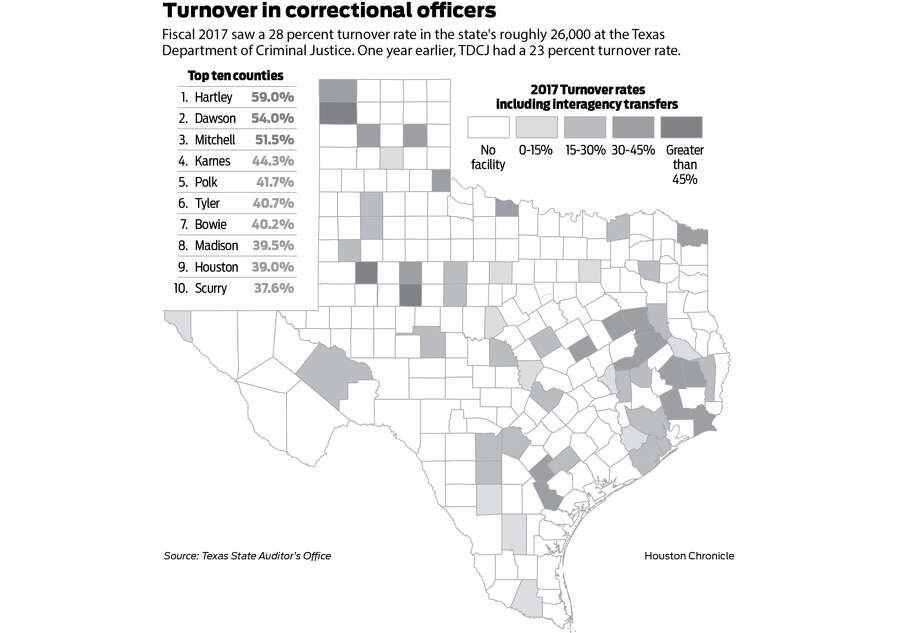
And to be fair, that's really all the Legislature's reforms after 2007 were supposed to do. As the agency reduced the population in youth prisons, it was pressed along the way for commensurate budget cuts, even though most of the facilities are chronically understaffed and suffer from among the highest staff turnover rates of any state agency. That's because of low pay, crappy working conditions, and the location of the facilities in mainly rural areas where the labor pool is either dissipating or otherwise occupied.
As a result, the agency has mainly improved the lot of youth under its care by reducing their number, with the Legislature financing (mostly cheaper) community supervision programming in lieu of housing them in state youth prisons. If those reductions had afforded the agency a chance to improve staff-to-youth ratios more aggressively, or to invest the savings in programming, it would be easier to make a case for them.
But in their current state, it's hard to argue for keeping them around at all. When activists like Angela Davis talk about "abolishing" prisons on the adult side, Grits must admit I roll my eyes. But on the juvenile side, I'm all the way there. Funding community-based programs in lieu of incarcerating youth in state-run prisons empirically has worked. Youth crime in Texas plummeted at even greater rates than crime overall when Texas shifted most offending youth into local systems.
Expanding on that model for the last thousand-or-so kids left in Texas youth prisons would also afford the chance to shift to smaller-scale units run on a more treatment-centric basis. In an ideal world, the Lege would finance locally controlled facilities reconfigured according to best practices like those endorsed a decade ago by a "blue ribbon commission," whose
recommendations the Legislature first eagerly commissioned and then, when they proved inconvenient and expensive, ignored.
The blue-ribbon panel recommended the state move to smaller facilities modeled after Missouri's juvenile system, and put the era of housing juveniles in large units with hundreds of bunkmates behind us. Instead, they depopulated youth prisons, but continued to run the ones that remained on the old, large-scale warehousing model.
The other option floated periodically is to hand the system over to TDCJ to run. But as noted above, TDCJ has trouble preventing inappropriate staff relations and contraband at its adult units, which fails to inspire confidence that they'd do any better running juvenile facilities. Plus, when TDCJ executives were
brought in to run TYC after the original scandals were uncovered in 2007, their skill sets did not translate to the juvenile realm and their leadership was (if we are to be frank) an unmitigated catastrophe. So as solutions go, I see that one as a pig in a poke. It could invite new troubles and wouldn't necessarily solve anything.
Anyway, that's Grits' initial takeaway from this dispiriting news out of Gainesville: The mechanisms the Legislature created to identify, prosecute and punish sexual misconduct by staff actually appear to have worked. But the corrections culture that produces these illicit relationships at TJJD and TDCJ continues to afford opportunities for predatory behavior.
So we're better at catching and punishing predators. What hasn't worked is warehousing youth in large state facilities a decade after the experts recommended breaking them up. Texas was told ten years ago it needed to shift to smaller, treatment-based programs, locally controlled and located near their own communities. And with these problems recurring, maybe it's time state leaders finally heeded those suggestions.