Showing posts with label plea bargain. Show all posts

Tuesday, February 04, 2020

No R-E-S-P-E-C-T: Jury trials not only place for Texas criminal-defense lawyers to shed Rodney-Dangerfield image

"Want to earn a prosecutor's respect?," asked the Texas Criminal Defense Lawyers Association on Twitter. "Beat them in a jury trial."

So how much respect are Texas criminal-defense lawyers earning?

From the 2019 annual statistical report of the Texas Office of Court Administration, here are a few data points on trials I wanted to record for my own purposes. Maybe some Grits readers will also find them interesting.

Overall, reports the OCA, attorneys in Texas are taking about 5% of felony cases to trial. That's more than I would have expected, and as I'll discuss below, may be overstated.

Felony cases go to trial more often than misdemeanor cases, but acquittals in felony cases are rare:

Not as rare as in misdemeanor cases, though.

To be sure, many more cases receive dismissals than acquittals. Indeed, more misdemeanor cases are dismissed across the state than end up with a formal conviction. But apparently, securing dismissals doesn't earn prosecutors' "respect."

As an aside, what does it say about the quality of misdemeanor arrests being made if 43% of the cases are being dismissed?

Notably, when misdemeanor cases do go to trial, several categories of offenses have high acquittal rates:


But it just doesn't happen that often. Juries were selected in only 4,107 criminal cases in Texas during FY 2019: 2,701 in felony cases and 1,406 in misdemeanor cases. That's out of nearly 600,000 total criminal-case dispositions last year. (This is why I question the graphic above that said 2% of felony cases went before a jury; the juries-picked data in the same report comes in at 1.2% of felony cases.)

Regardless, for years I've heard complaints from thoughtful criminal-defense lawyers that TCDLA training and programming too overwhelmingly focuses on trial preparation and execution, even though that's a rather small part of what most criminal-defense lawyers do with their days. This Twitter tip seems indicative of that same attitude.

Grits would suggest to criminal-defense attorneys their higher priority isn't to seek "respect" from prosecutors so much as the best result for their client. Feeling personally disrespected is seldom a good reason to alter one's strategy when dealing with the government, and that goes double for attorneys in criminal court. It's just not about you!

Defendants receiving dismissals are better off than those who must go through a trial to get an acquittal. For my money, their lawyers deserve "respect," too," but apparently they must look for it somewhere besides their professional association.

Tuesday, October 01, 2019

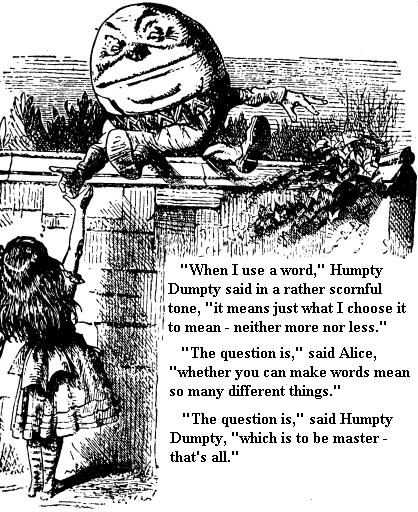
Humpty Dumpty, the Castle Doctrine, and other stories

Here are a few odds and ends that merit Grits readers' attention:

Humpty Dumpty and the Castle Doctrine
The judge in former Dallas police officer Amber Guyger's murder trial for the shooting of Botham Jean gave the jury instructions on the Castle Doctrine defense, despite the fact that Guyger entered Jean's home and shot him, and wasn't defending her "castle." Her lawyers employed this argument as their primary defense (that it wasn't her home was a "mistake of fact," they said) so the judge had no choice but to address it, but Humpty Dumpty would be proud! The claim didn't help Guyger, however. She was convicted, anyway. UPDATE: Guyger was sentenced to ten years.

Death of trailblazing deputy raises difficult, familiar questions
The tragic shooting death of a Harris County Sheriff's deputy - a trail blazing figure who was the first Sikh to work in Harris County law enforcement - raises familiar questions with no satisfying answers. The alleged killer is a severely schizophrenic parolee who had gone off his meds and heard voices telling him to kill people. Is the criminal-justice system the best way to deal with people whose offenses are rooted in severe mental illness? How did this convicted felon and parolee get a firearm? He already was the subject of a warrant for violating his parole, should more resources be allocated to search for high-risk parole violators? His family had told officials he was dangerous and off his meds: Are there "red flag" laws that could have allowed them to act sooner? The circumstances surrounding this awful episode will provide fodder for these and many other debates in coming years. The public dialogue would have been easier, in a sense, if this had turned out to be a hate crime. The issues surrounding mental illness and the politics of gun proliferation are much more complex and difficult to deal with.

Private jail operator keeps screwing up
At the Liberty County Jail, which is operated by the Geo Group, "In the last 60 days, there have been two felony escapes, one of their correctional officers was arrested for stealing from inmates while on duty, and most recently, there are questions surrounding the death of a prisoner who hanged himself while in their custody. Apart from those instances, they have also flunked two jail inspections this year, one on April 22 and the second on June 28," the Houston Chronicle reported. Local officials are considering whether to terminate ties with the private prison contractor.

The economics of high probation fees
Check out a new article from our friend Todd Jermstad, probation director in Bell County, on the history and future of court-imposed fees at Texas probation departments. Especially interesting was his thesis that policymakers should take into account reduced means of Gen X and Millenial defendants, whose economic prospects remain less robust than earlier generations. Grits may delve more deeply into this soon, but for now, here's the link.

Bail litigation roundup
See a write-up from The Appeal of recent bail-litigation news, including from Houston and Galveston. See also related Grits coverage and our discussion of the topic in Just Liberty's most recent Reasonably Suspicious podcast.

Over friggin' pot?
In Hutto, a police officer responding to a call that someone was smoking marijuana beat up a man in his driveway and made false accusations in official documents to justify it. The victim had no marijuana in his possession, and bodycam video proved the cop was lying about the victim pushing the officer before he was attacked. The officer was fired, was indicted in May, and the victim has filed a civil rights suit, reported KXAN-TV.

Homelessness problems and solutions
In the wake of Austin's tendentious debate over homeless policy, I was interested to see this excellent New Republic article on "housing insecurity in the nation's richest cities." When, in the 1990s, my wife and I could rent a dilapidated three-bedroom house in East Austin for $190, homelessness wasn't such a big problem. Now that rents in my neighborhood for similar homes approach $3k per month, it's little wonder more people are on the streets. Meanwhile, Bloomberg News had an informative piece a couple of months back on how Finland all but eliminated people sleeping on the streets by investing in preventive strategies like rent subsidies.

How police misconduct gets covered up by plea bargaining
Here's an excellent analysis from Brooklyn public defender Scott Hechinger of how mandatory minimums and the threat of long sentences help cover up police misconduct that would otherwise come out in court. That's because "victims of police abuse — illegal stops and frisks, car stops and searches, home raids, manufactured charges and excessive force — routinely forgo their constitutional right to challenge police abuse in a pretrial hearing in exchange for plea deals." This is undeniably true. It's only in cases like the episode in Hutto, described above, where victims face no charges that officers can be held accountable through regular court processes.

Financial motive not only reason prosecutors oppose actual-innocence claims
The New York Times published a feature on falsely convicted people who've been exonerated by the evidence but cannot secure an "actual innocence" ruling because prosecutors fear the financial consequences of civil rights lawsuits against local jurisdictions. All of the examples are from other states, but Texas' situation casts additional light on this topic. I was policy director at the Innocence Project of Texas when the Legislature passed the best-in-the-nation compensation package for exonerees in 2009. We hoped to avoid this dynamic by having the state compensate innocent convicts instead of the locals. Indeed, the bill was sold as a form of "tort reform," eliminating local liability for what were seen as systemic flaws causing false convictions. But it turned out, the real, underlying complaints weren't financial. Many prosecutors and some judges on the Court of Criminal Appeals simply don't want to see falsely convicted people compensated, ever, and go to great lengths to oppose actual-innocence claims, despite the fact that locals weren't on the hook. So Grits is skeptical of the article's thesis that the motive behind opposing actual-innocence claims is financial. I think it's more pernicious than that.

Sheriffs and #cjreform
Our pal Jessica Pishko published a New York Times op ed on Sheriff's offices, declaring "The problem of sheriffs is particularly acute in the South and Southwest, where the office has more power and was historically used to prop up white supremacy." She calls for Sheriffs to undertake what amounts to a truth-and-reconciliation process for past wrongs. That sanguine suggestion to me seems unlikely. Texas alone has 254 counties, after all - a few might do that, under the right political circumstances, but most will not. And abolishing the office, as some have called for, doesn't change the fact that someone has to perform those functions. Grits has often thought that sheriffs' jail-management duties should be separated from their responsibilities to patrol unincorporated areas. These are distinct functions involving very different skill sets, and typically those elected to the office only have knowledge of one or the other. Whether Sheriffs should be an elected position is a question for another day.

Deep thinking on sex-offender policies
A recent NY Times piece examined emerging research on people who are sexually attracted to minors, finding that its roots are not genetic, but are "prenatal," and "can be traced to specific periods of development in the womb." And this Marshall Project story looks at evidence-based anti-recidivism programs aimed at people convicted of violent, sexual crimes once their sentence is complete. I found both articles to be thoughtful contributions to the discussion.

Most crime dropping nationally, but look at those rape numbers!
New Uniform Crime Report data is out, and most categories of crime have continued to fall, except rape, which has risen precipitously since 2014. See first-cut analyses from the Brennan Center and the Marshall Project. No one knows for sure what's behind the rise in rape numbers. The feds began using a more expansive definition of sexual assault in 2014, but the numbers increased even using the "legacy" definition. The question arises: Have there actually been more rapes committed over this period, or are we simply now getting a more complete picture of the scope of the problem in the wake of increased reporting thanks to the #MeToo movement? ¿Quien sabe? Regardless, the year-over-year decline in property crimes, murders, robberies, etc., is cause for celebration, while the sex-assault data should contribute to deeper conversations on the question.

Thursday, September 20, 2018

Fifth Circuit: Prosecutors needn't disclose evidence of innocence before plea deals

The Fifth Circuit ruled in a Texas case that the constitutional requirement that prosecutors disclose exculpatory evidence under Brady v. Maryland doesn't kick in until trial, so there is no obligation for the government to tell a defendant about exculpatory evidence when they enter a plea deal. USA Today reporter Brad Heath walked through the details on Twitter. From Judge Costa's dissent: "It is difficult to think of greater deprivations of that liberty than the government’s allowing someone to be held in prison without telling him that there is evidence that might exonerate him." Embarrassing.

This was an en banc decision by the whole court, upholding an earlier ruling by a three-judge panel. See prior Grits coverage here and here, and a discussion of the case on the July 2017 Reasonably Suspicious podcast.

This case stemmed from a 17-year old defendant who was beaten up and choked by a Brownsville jailer then charged with assaulting an officer. He pled guilty to avoid a lengthy prison sentence, but years later, video of the incident showed the jailer instigated the incident and the teen was a victim. A jury awarded the man $2.3 million, but the Fifth Circuit threw that out, insisting the state did no wrong because the prosecutor had no obligation to inform the defendant at the time he pled that the government was in possession of video showing he was innocent.

FWIW, in state-court cases in Texas, the Michael Morton Act now does require prosecutors to disclose exculpatory evidence if the defense requests it, even in the pretrial phase of the prosecution. But that's because Texas has bolstered defendants' position in statute in response to repeated false convictions. The Fifth Circuit has made it clear that, in their opinion, access to that information is not a constitutional right.

The circuits are split on this issue and Grits would love to see SCOTUS take it up, leaving aside who would be the 9th justice to hear it. These innocence issues cut across party lines, and would likely cut across factions on SCOTUS, as well.

Friday, March 30, 2018

March Reasonably Suspicious Podcast: Primary election wrap-up, pushing #cjreform in state party platforms, unconstitutional legal fees, Harris County bail suit update, a stunning judicial power play, and more

Sliding in under the wire at the end of the month, check out the March 2018 episode of Just Liberty's Reasonably Suspicious podcast, covering Texas criminal justice politics and policy. Subscribe on iTunes, GooglePlay, or SoundCloud, or listen to the podcast here:


Here's what my co-host Mandy Marzullo and I talked about this month:

Top Stories
Primary election roundup
  • Recapping Texas contested Texas DA and Court of Criminal Appeals races
  • Comparing "progressive" DA candidates in Dallas and elsewhere to Philadelphia's Larry Krasner
  • Update on Just Liberty's campaign to include criminal-justice reform in both Texas state party platforms. Includes Just Liberty's catchy jingle done by some of the same amazing musicians who performed our original podcast music.
Check in on Texas pretrial reform litigation
  • Harris County bail litigation: Interview with Susanne Pringle, executive director of the Texas Fair Defense Project, regarding the 5th Circuit's ruling in the Harris County bail litigation in which her group is one of the plaintiffs.
  • Travis County plea mill challenged: Local attorneys file a demand letter challenging misdemeanor dockets where lawyers must negotiate plea bargains almost immediately after receiving the file and meeting their clients for the first time.
The Last Hurrah
Find a transcript of the podcast below the jump.

Sunday, December 17, 2017

Executing non-killers, imagining life without plea bargaining, no oversight for forensic hypnosis, and other stories

Here's a brief, browser-tab clearing roundup of items about which I haven't had time to blog, but of which Grits readers should be aware:

Forensic commission can't address 'forensic hypnosis'
First, updating an earlier Grits report, I communicated with Lynn Garcia, General Counsel for the Texas Forensic Science Commission, who informs me that forensic hypnosis does not fall under their jurisdiction, even as a general area they're authorized to study, because it does not involve "physical evidence," which is defined in the statute as something tangible. She said they've received complaints about the practice in the past, including one recently, and agrees it's problematic, but doesn't believe it falls within their jurisdiction. While I understand her legal interpretation, that leads to an unfortunate situation where government-sanctioned junk science (the Texas Commission on Law Enforcement gives out certifications in forensic hypnosis) cannot be evaluated by the state Forensic Science Commission. That should change in 2019.

Maybe they'll listen if they Rangers tell 'em
Governor Abbott has asked the Texas Rangers to investigate sexual abuse at the Gainesville State School. But we've had an Ombudsman complaining about these problems and recommending solutions for years, and for the most part those recommendations have been ignored. Most of the details in the disturbing press reports out of Gainesville came from Debbie Unruh, the TJJD independent ombudsman, and had been included in her prior reports. Why would we imagine state leaders will listen to the Texas Rangers when they haven't implemented the recommendations from Unruh who's been sounding the alarm all this time? The state already knows the solutions here, they just haven't heretofore been willing to pay for them.

Did TDCJ understaffing allow rape of prison teacher?
A teacher at a TDCJ prison blames chronic understaffing for the circumstances that led to her rape. Grits readers know this is a longstanding problem. The solution here is to reduce incarceration levels and close understaffed units. There just aren't enough people in some of these rural areas to consistently staff the prison units there. And the problem will be much-exacerbated at certain South and West Texas units if and when oil prices go back up.

Coverup at TDCJ?
The Texas Department of Criminal Justice allegedly shredded documents they were obligated to turn over as discovery in a federal lawsuit alleging the summer heat in un-air conditioned prisons constitutes cruel and unusual punishment. The warden who approved the shredding allegedly already knew about the litigation. Hard to interpret it otherwise: This smacks of a coverup.

Executing non-killers
Something about executing a person for a murder they didn't themselves commit feels inherently unjust. Even the prosecutor from Jeff Wood's capital conviction, who had 13 months experience as an attorney at the time she was designated shot-caller in the case, has asked the Governor to commute his sentence. Wood's example reinforces Grits' belief that the law-of-parties doctrine is ripe for revision: the concept stems from British common law, but Parliament abolished it in 1957, followed soon thereafter by all of Europe, India, and in 1990, Canada. This is a holdover from a less evolved time.

Paying for public defenders would reduce incarceration costs
Long-time Grits readers are aware that defendants represented by public defenders have better outcomes than those with appointed attorneys. We've seen this both in national data and Texas examples. But a new national analysis suggests that public defenders do such a better job that using them reduces incarceration costs: Using "public defenders reduce[s] the probability of any prison sentence by 22%, as well as the length of prison by 10%."

When your 'tiny house' means a tiny privacy footprint
Here's an unintended consequence to the "tiny house" movement: If your tiny house is on a trailer, your Fourth Amendment rights are likely diminished and the automobile exception will apply to searches of your residence, according to academic from Texas State.

Life without plea bargaining?
For the reading pile: India's court system doesn't do plea bargains. They've tried to implement them in the last decade and it's been a flop. I want to read this new academic article to learn more about the situation.

Tuesday, October 03, 2017

Why an innocent person would plea bargain

The Atlantic has a good roundup of US Supreme Court cases related to criminal justice coming up in the term which just began, and Grits was interested to note Class v. United States (see the SCOTUSBlog preview), in which "the justices will ponder an unusual legal question: If a defendant pleads guilty to a crime, does he or she lose the right to challenge that crime’s constitutionality?"

In an era when 97% or so of criminal cases end in plea bargains, this is a significant question.

In Texas the issue of whether challenges to a conviction may arise from a guilty plea in state court arose in Ex Parte Tuley, a case decided in 2002 and which your correspondent hadn't considered in many years. The Tuley case challenged a conviction in which the defendant was in fact actually innocent, but pled guilty to avoid a much harsher sentence in the face of false accusations of sexual abuse by a child victim. The final ruling included a wonderful passage written by then Court of Criminal Appeals Judge Tom Price:
I think it is colossal hypocrisy to exclaim, “we are shocked, positively shocked,” that a person who has pleaded guilty pursuant to a negotiated plea bargain would never do so unless he were truly guilty and believed himself guilty. Who are we kidding? It is true that Mr. Tuley did sign and swear to a form stipulation that “the following facts [tracking the indictment allegations] are true and correct and constitute the evidence in this case.” He, of course, did not design the form. It is certainly accurate to say that there was some evidence already admitted in the original trial that would support a finding that the indictment allegations were true. 
It is also true that the trial judge asked the magic question:  “Are you pleading guilty because you are in fact guilty and for no other reason?” and applicant responded:  “Yes, ma‘am.” Does this make him a perjurer? A self-admitted liar? 
Suppose Mr. Tuley had been given a dose of truth serum. Now, in response to the magic question, he responds: 
Your Honor, I do not believe that I am guilty. In fact, I know that I am not guilty.   However, the present jury is deadlocked. Some of those jurors may believe that I am not guilty, but others obviously differ. A different jury could conceivably find me guilty and sentence me to life in prison. That is a very serious risk to me. Furthermore, I do not have enough money to pay my lawyer for conducting a second trial. I am worried that I might have to go to jail just to be entitled to an appointed lawyer for a second trial. I have a job. I would lose my job if I had to go to jail for months waiting for a second trial. Quite frankly, I am out of money and out of time. I just want to go home. The State has made a very attractive offer of ten years deferred adjudication. This is an offer I cannot refuse, given the obvious risks I face if I continue to maintain my innocence and insist upon a second trial. So, even though I am innocent of this charge, I want to plead guilty because I am making a fully informed, free, voluntary and rational choice among the alternative courses of action available to me. 
The trial judge, hearing this unusual response, is likely to say something along the lines of: 
How can you expect me to accept your plea of guilty? This is a very serious offense and it carries a potential life sentence if you should violate the terms of your community service. How can you expect me to accept a guilty plea to the first degree offense of aggravated sexual assault of a child if you say you are not guilty, but you want to plead guilty anyway? And besides, I heard the same evidence that the jury heard and I am not fully persuaded that the evidence is sufficient to support a conviction beyond a reasonable doubt. I refuse to accept your guilty plea and we will set this case for another trial. 
Mr. Tuley, then, is likely to say: 
Judge, whose side are you on?   Are you on my side? I just want to plead guilty.   I didn't do it. I know that, but I also know that the prosecution has a child complainant who says that I did. I have a drug problem and a jury is likely to hold that against me, and, frankly, I look dishonest. Nobody is going to believe me. Now, do me a favor and let me plead guilty and get my ten years deferred. This is a good deal. I want to take it. Don't stand in my way. 
But an honorable trial judge might reasonably respond: 
But, if you're not guilty, I cannot take your guilty plea. I am worried about this man pleading guilty to something he is not guilty of. That is just wrong, and I can't allow that kind of an injustice to take place in my court. 
Mr. Tuley's honest reaction might well be:  “Don't be my friend. With friends like you, who needs enemies?” Instead, Mr. Tuley's lawyer would probably yank him off to the corner and after a certain whispering back and forth, Mr. Tuley will see the light He will now respond appropriately to the magic question:  “Are you pleading guilty because you are guilty and for no other reason?” with the right answer:  “Yes, ma‘am.”

Monday, August 15, 2016

'Distortion of Justice: How the inability to pay bail affects case outcomes'

People who can't make bail are 13% more likely to be convicted, with the difference made up of people pleading guilty who otherwise would have been acquitted or had charges dropped, according to an article posted on SSRN last month with the above title by Megan Stevenson of Penn law school. Here's the abstract:
Instrumenting for detention status with the bail-setting propensities of rotating magistrates I find that pretrial detention leads to a 13% increase in the likelihood of being convicted, an effect explained by an increase in guilty pleas among defendants who otherwise would have been acquitted or had their charges dropped. On average, those detained will be liable for $128 more in court fees and will receive incarceration sentences that are almost five months longer. Effects can be seen in both misdemeanor and felony cases, across age and race, and appear particularly large for first or second time arrestees. Case types where evidence tends to be weaker also show pronounced effects: a 30% increase in pleading guilty and an additional 18 months in the incarceration sentence. While previous research has shown correlations between pretrial detention and unfavorable case outcomes, this paper is the first to use a quasi-experimental research design to show that the relationship is causal.

Monday, August 01, 2016

Harris pays more, gets worse safety outcomes from coercing pleas through detention of poor and innocent misdemeanor defendants

This new academic paper focused on Harris County, "The Downstream Consequences of Misdemeanor Pretrial Detention," has implications for innocence work as well as for local officials in Houston with budget-and-public-safety based motives to reduce pretrial detention. Here's the abstract:
In misdemeanor cases, pretrial detention poses a particular problem because it may induce otherwise innocent defendants to plead guilty in order to exit jail, potentially creating widespread error in case adjudication. While practitioners have long recognized this possibility, empirical evidence on the downstream impacts of pretrial detention on misdemeanor defendants and their cases remains limited. This Article uses detailed data on hundreds of thousands of misdemeanor cases resolved in Harris County, Texas — the third largest county in the U.S. — to measure the effects of pretrial detention on case outcomes and future crime. We find that detained defendants are 25% more likely than similarly situated releases to plead guilty, 43% more likely to be sentenced to jail, and receive jail sentences that are more than twice as long on average. Furthermore, those detained pretrial are more likely to commit future crime, suggesting that detention may have a criminogenic effect. These differences persist even after fully controlling for the initial bail amount as well as detailed offense, demographic, and criminal history characteristics. Use of more limited sets of controls, as in prior research, overstates the adverse impacts of detention. A quasi-experimental analysis based upon case timing confirms that these differences likely reflect the casual effect of detention. These results raise important constitutional questions, and suggest that Harris County could save millions of dollars a year, increase public safety, and reduce wrongful convictions with better pretrial release policy.

Thursday, July 07, 2016

Plea bargains sans trials, arsenic and hot prisons, and other stories

On another hot, busy day, here are a few items that merit Grits readers' attention:

Denying jobs for minor offenses
DPS is denying job licenses to applicants for quite-minor offenses, reported Eric Dexheimer (July 3) at the Austin Statesman. He provides several anecdotes suggesting that that "state regulators can zealously apply a law in apparent defiance of common sense."

Prosecutor misconduct alleged in capital case
This headline to a July 4 Houston Chronicle story effectively summed up some remarkable allegations which surfaced this week in Houston: "Prosecutors accused of hiding evidence, inventing testimony in death penalty case: Witnesses say prosecutors coerced them."

Late police officer's chase negligence partly to blame for her death
In an intoxication manslaughter case out of Montgomery County - in which a Patton Village police officer died while chasing a DWI suspect, in an accident that also killed an 11-year old child - DPS investigators determined that the late officer was partly at fault because he "disregarded the red light" and "failed to slow" as he entered an intersection. It's worth mentioning that, last year, we learned high-speed chases are much deadlier than was previously thought. Grits wishes these deaths were tracked as meticulously as the government tracks deaths in custody, and now police shootings.

Arsenic and hot prisons
The combination of heat litigation and the need for arsenic remediation make the Wallace Pack unit 2016's poster child for the ongoing fight over excessive heat in un-airconditioned prisons. See also recent story by Brandi Grissom. As Mother Jones pointed out recently, it's incredibly hard to sue prisons. So the fact the Pack unit litigation has gotten this far means they've overcome some major procedural and evidentiary hurdles. That implies the problems have reached fairly extreme proportions.

Plea bargains sans trials?   
On my short-term to-read list: A new law review article by Penn law prof Stephanos Bibas titled, "Designing Plea Bargaining from the Ground Up: Accuracy and Fairness Without Trials as Backstops."  The premise: American law has largely abandoned "the assumption that grand juries and petit jury trials were the ultimate safeguards of fair procedures and accurate outcomes." So, the plea bargaining system must be designed to stand on its own and re-institute some of the protections lost by eliminating trials for most defendants. From the abstract:
Part I explores the causes of factual, moral, and legal inaccuracies in guilty pleas. To prevent and remedy these inaccuracies, it proposes a combination of quasi-inquisitorial safeguards, more vigorous criminal defense, and better normative evaluation of charges, pleas, and sentences. Part II then diagnoses unfair repercussions caused by defendants’ lack of information and understanding, laymen’s lack of voice, and the public’s lack of information and participation. To prevent and fix these sources of unfairness, it proposes ways to better inform pleas and to make plea procedures more procedurally just."

Tuesday, December 08, 2015

Robot parole boards, an All-American scofflaw, and other stories

Here are few items which haven't made it into individual posts but which merit Grits readers' attention:
  • How overcharging and pretrial detention coerce plea deals: In Waco, a man spent 704 days in the county jail before pleading to a one-year misdemeanor sentence. Recently the Wall Street Journal published a column on "The Injustice of the Plea Bargain System," which Doug Berman excerpted here for non-subscribers. (See related Grits coverage.)
  • The Houston Chronicle examined records surrounding suicides at the Harris County Jail: "In thousands of pages of autopsy reports and internal disciplinary reports, the Chronicle found 35 instances in which jailers skipped required cell checks or faked records to hide skipping them, a pattern that experts called a serious problem at county jails statewide." Further, "Screening and observation failures played a role in nine of the 28 jail suicides that occurred in the eight-county Houston metro area since the Texas Commission on Jail Standards began tracking those deaths in 2009."
  • Not sure how I missed this, but a Houston PD officer was fired in October for pacing motorists' vehicles in his personal car and sending them tickets in the mail.
  • A former Baylor football All-American and Dallas Cowboys draft pick was arrested in Waco with 22 active license suspensions: This is almost certainly a function of the Driver Responsibility surcharge. 
  • Grits is unsure mentoring can solve indigent defense problems created by economics and the self-interest of institutional players. There's a robust mentoring program in Houston but Harris County courts are still essentially plea mills. Regardless, here's a new document from the Task Force on Indigent Defense touting mentoring programs for criminal defense lawyers who take appointed cases. I suppose it can't hurt.
  • An SA Express-News story touts a new book, "Stolen Years: Stories of the Wrongfully Imprisoned."
  • The Texas Observer on Border Patrol corruption: Who could have predicted that?
  • Read a brief history of secret American prisons.
  • Check out 60 Minutes coverage from Sunday on confidential informants and the drug war.
  • Here's an important, seldom-asked question: Why punish drug users at all?
  • While historically fears of robots taking people's jobs centered among the working class, lately automation has also begun to take over higher-skilled intellectual work that's repetitive and routine oriented. Which brings us to the question: Could robots replace judges or parole boards? This article ventures tentatively down the path of considering what that might look like, comparing decisions by the California parole board to outcomes from statistical models.

Wednesday, December 02, 2015

Natapoff: Add plea bargaining to canonical causes of wrongful convictions

Grits looks forward to Sasha Natapoff law review articles with the sort of anticipation which in high school accompanied the release of albums by my favorite bands. Regrettably, unlike those bands, legal scholars have crappy promoters and sometimes I'm late to the show. So Grits was delighted that Doug Berman pointed out her new article, "Negotiating Accuracy: DNA in the Age of Plea Bargaining," in which she declared that, "we should recognize plea bargaining as a source of wrongful conviction in its own right, and add it to the canonical list of wrongful conviction sources such as mistaken eyewitness testimony, lying informants, and bad forensics." Yes, ma'am! Hear, hear!

Noting that, "Fourteen percent of the wrongful convictions listed in the National Registry of Exonerations are the result of a plea" bargain, she suggested the real proportion of false convictions based on pleas is much higher. After all, "it is easier to revisit a conviction where the defendant has maintained his or her innocence and there is a factual record that can be reinvestigated and legally challenged."

"Easier" is an understatement. What students at innocence clinics do with their time is review trial transcripts and evidence for problems or irregularities. No trial? No transcript, no evidence. Unless there's exculpatory DNA evidence sitting around in a lab somewhere, key witnesses recant, or someone else credibly confesses to the crime, there's no record to attack in plea-bargained cases, so there are few viable avenues for proving innocence claims.

Natapoff contends that, “the quest for DNA-like accuracy tempts us to forget that most criminal guilt is negotiated, not 'discovered.'” "In the world of trials and formal adjudication," she observed," accuracy matters a lot. In the plea bargaining universe, accuracy is negotiable and thus matters less. This latter point is on display in two bargaining arrangements that routinely lead to wrongful convictions: informants, where evidence is obtained by bargaining, and the misdemeanor assembly-line process where convictions are obtained by bargaining."

Brilliantly, she contends that, "we should understand the criminal deal itself as a primary source of wrongful conviction, precisely because it commodifies and trades away accuracy—even DNA’s—in exchange for other institutional values." Even so, "the bulk of the innocence movement’s proposed reforms are designed with the trial-oriented evidentiary model in mind." That's exactly right. (See a discussion of the limits of canonical innocence reforms in recommendations from the Innocence Project of Texas to the Timothy Cole Exoneration Review Commission, authored by your correspondent at his day job.) Plea bargaining, combined with the coercive nature of bail-based pretrial detention, contributes to "inaccurate" pleas, in Natapoff's parlance.

She grants that "plea bargaining is often inaccurate for complex, even sound reasons," often to the benefit of the defendant, and the article offers a good discussion of different brands of intentional inaccuracy in pleas. Even so, while fully acknowledging that "accuracy is not the system’s only foundational value," clearly "accuracy still matters profoundly" and "the innocence discourse is an important reminder not to let the cost-benefit instrumentalism of plea bargaining obscure the injustices of wrongful conviction."

These are just a few tasty excerpts, the whole thing is excellent, give it a read. And for those with holiday reading time on your hands, let me suggest that anyone interested in innocence, plea bargaining, or informants should take time perusing her full law-review oeuvre, which includes all sorts of excellent goodies. As far as Grits is concerned, Sasha's a rock star.

Thursday, June 11, 2015

On bail, plea bargains and innocence

Proponents of bail abolition this week found succor in several high-profile national media investigations into the topic, starting on Sunday night with HBO's John Oliver:
And of course, issues surrounding bail are at the center of the mess in Waco regarding the Twin Peaks biker shootout, where it appears likely that innocent people were indiscriminately rounded up and jailed on a $1 million bond. Recent Texas Tribune coverage began:
More than three weeks after Waco police arrested 177 bikers following a deadly shootout at a local restaurant, no charges have been filed in the killings, nearly half the bikers remain in jail on unusually high bonds, and more than a few legal experts — including former prosecutors — are starting to wonder what is going on in McLennan County.
Regular readers will recall that McLennan DA Abel Reyna's super-tough plea policies were already causing jail overcrowding and backed up court dockets in Waco. But this episode takes the cake.

The issues surrounding bail, pretrial detention, and underutilized pretrial services programs are long-time fodder for this blog, dating at least to this series focused on Harris County in 2005. I'm glad to see the subject finally receiving wide attention, and hope it keeps up.

Eliminating bail and replacing it with risk-assessment-based decision making and monitoring by pretrial services divisions would reduce jail overcrowding as well as enhance individual rights, since there would be far less disincentive to waive them in order to get out of jail quickly.

A lot of low-level, less serious innocence cases - where a defendant is actually innocent but pleas guilty because of the rotten cost-benefit analysis associated with going to trial - might be uncovered if we were to change the incentives around jail, bail, and plea bargains. Right now those instances are masked in part because defendants who can't make bail face an overwhelming incentive to plea bargain, whether they're innocent or not.

Monday, May 18, 2015

Ted Cruz: Rein in prosecutor power, lower "draconian" mandatory minimums

Several Texans are featured in a new book by the Brennan Center, "Solutions: American Leaders Speak Out on Criminal Justice."

Regular readers are used to TPPF's Marc Levin's focus on outcome-based supervision policies, as well as Rick Perry taking credit for probation policies he first vetoed then grudgingly accepted. A graph available elsewhere on the Brennan Center site shows why voters might rightly be dubious of Perry's plea to follow the "Texas Model." He's presided over a modest decline in incarceration rates, but Texas remains the nation's incarceration capital, warehousing more inmates than any other state, including much larger California.


We've heard from Levin and Perry before. But Ted Cruz's positions, for me anyway, stake out new territory. His "essay focuses on three vital areas of concern: overcriminalization, harsh mandatory minimum sentences, and the demise of jury trials." On overcriminalization:
The place to start is with incremental reforms aimed at mitigating the harmful effects of overcriminalization. Congress should begin by requiring that all criminal offenses are put into one title of the Code, Title 18, or if that proves too difficult, Congress can enact a law that prohibits criminal liability on the basis of any statute that is not codified or otherwise cross-referenced in Title 18. Having thousands of criminal laws scattered throughout the entire Code works an intolerable hardship on the public akin to Caligula posting his laws high up to make them difficult for the public to see.

To ameliorate the effect of redundant or overlapping criminal laws, Congress should also pass legislation requiring courts to presume that a single criminal act or transaction should be treated as one crime subject to one punishment, even if the act or transaction is punishable under multiple statutes. And to mitigate the consequences of criminalizing regulatory offenses, Congress should repeal criminal penalties for violations of agency regulations. At the very least, it should require that any new regulations carrying criminal penalties be approved by Congress and the president. Perhaps most importantly, Congress should enact legislation that requires the government to prove the defendant knowingly violated the law — or that, at least, allows a mistake of law defense — for certain classes of crimes that have no analog in the common law or that no reasonable person would understand to be inherently wrong. Where the government has criminalized non-blameworthy conduct for regulatory purposes, ignorance of the law should be a valid defense to criminal liability.
He also lamented "the ratcheting up of mandatory minimum sentences over the last several decades" to "draconian" levels, and spoke of "the undeniable costs and dubious benefits of mass, long-term incarceration of nonviolent drug offenders."

Perhaps Cruz's most notable complaint, however, involved the "demise of jury trials." He wrote:
Plea bargaining has become the norm in our criminal justice system, while the constitutional right to a jury trial — which the Founders understood to be a bulwark against tyranny — is now rarely exercised. Contrary to popular perceptions, we no longer have a system where a jury determines a defendant’s guilt or innocence in a public trial. In 2013, 97 percent of all federal criminal charges that were not dismissed were resolved through plea bargains; less than 3 percent went to trial.

In this plea-bargaining system, prosecutors have extraordinary power, nudging both judges and juries out of the truth-seeking process. The prosecutor is now the proverbial judge, jury, and executioner in the mine-run of cases. Often armed with an extensive menu of crimes, each with their own sentencing ranges, federal prosecutors can wield their discretionary charging power to great effect by threatening the most serious charges that theoretically (if not realistically) can be proved. If the accused succumbs to the threat and pleads guilty, which often happens, the prosecutor agrees to bring lesser or entirely different charges that carry a lower sentencing range.

Given the risks involved in turning down a plea offer, it is not unheard of for people to plead guilty to crimes they never committed. Of the 1,428 legally acknowledged exonerations recorded by the National Registry of Exonerations since 1989, 151 (or roughly 10 percent) involved false guilty pleas. It is estimated that between 2 and 8 percent of convicted felons who have pleaded guilty are actually innocent. In a federal prison population of 218,000 — the number at the end of fiscal year 2011 — where 97 percent pleaded guilty, that means that anywhere from 4,229 to 16,916 people could be imprisoned for crimes they did not commit.

The plea-bargaining system is premised on the assumption that there is relatively equal bargaining power between the accused and the state. Nothing, of course, could be further from the truth. Mitigating the coercive effect of the plea-bargaining process will require empowering the defense. And one way to do that is to reduce the informational asymmetry between prosecutors and defense counsel. Plea offers are often foisted upon the accused before the defense has had enough time to investigate the facts, and the longer the investigation takes, the less generous the plea off may become. Congress should pass legislation that requires the government — whether constitutionally required or not — to disclose material exculpatory evidence before the accused enters into any plea agreement. This reform will reduce the risk of false guilty pleas by helping ensure that the accused is better informed before sealing his or her fate.
Very few people in 21st century criminal justice debates have focused on the increasing omnipotence of prosecutors in the process, usurping the role of judges, juries and even legislators thanks to wide discretion and the plea-bargain process. So that's a new an interesting frame for the debate among national GOP leaders. Similarly, a presidential candidate estimating that between 4-17,000 federal inmates "could be imprisoned for crimes they didn't commit" opens up the conversation considerably. Few elected officials in either party are willing to publicly countenance the idea that so many innocent people may be sitting in prison.

This may be the first presidential campaign since '88 and '92 when criminal justice issues come to the fore, and on sharply different vector from the tuff-on-crime fetishism of a quarter century ago. Here's an interesting, related National Journal item on the prospects for federal sentencing reform.

Wednesday, February 11, 2015

Harris DA: Delay pleas on drug cases till lab results are in

Reacting to numerous drug cases where defendants pled guilty to get out of jail and crime labs later returned results saying they'd never been in possession of a controlled substance, overturning their convictions based on "actual innocence," Harris County DA Devon Anderson recently announced a new policy in which prosecutors can no longer agree to a plea in such cases unless final results are back from the crime lab. The only exception is that "a defendant housed in jail [may] receive a term of community supervision with no additional jail confinement as a condition of the community supervision." Here are three, notable discussions of the new approach:
There are a lot of moving parts to consider so I understand Murray Newman's pessimistic view that the policy is unworkable. If lots of low-level drug defendants fill up the jail because they can't make bond (and Harris judges notoriously issue few personal bonds), or if court dockets expand significantly beyond their already very high levels, it's easy to see how there may be pressure on the DA to do things differently.

If local judges would agree to issue personal bonds to these defendants while they await crime lab results, that would make this policy work a lot more smoothly. Without that sort of tacit cooperation, though, it's hard to understand how the approach is sustainable in the long term.

OTOH, the situation described recently by former Texas Court of Criminal Appeals Judge Cathy Cochran surrounding these drug-possession innocence cases is equally untenable. She told Texas Monthly:
speaking of keeping people out of jail, I really think the law needs some help with pre-trial bail, letting people out before the case is sentenced. We’ve had a lot of cases recently where we’ve granted relief because here’s somebody arrested for possession of cocaine or meth or whatever and they plead guilty because they’ve got a job or a family or they just can’t stay in jail for the next six months before trial; they don’t have enough money to make bail, but they plead guilty. Then sure enough six months later the analysis on the drugs comes back and guess what? It’s not a drug.  
There aren't a lot of good answers here. Our friends at the prosecutors' association have suggested boosting crime lab funding, but throwing money at the problem won't change the structural dysfunction created fundamentally by high case volumes and unreasonable bail policies.

Tuesday, February 10, 2015

What jurors need to know during sentencing

Recently retired Texas Court of Criminal Appeals Judge Cathy Cochran told Texas Monthly that jurors should be informed how much prison sentences would cost taxpayers, Grits noted yesterday. That got me thinking about what else jurors might be usefully told to better inform their decision making during the punishment phase.

To me, perhaps even more probative than the cost of a prison sentence (which in the context of government budgets is a bit of an abstraction, anyway), jurors should be informed of the lowest plea bargain offered by the prosecution to the defense pretrial, giving them a baseline to consider for the low end of the punishment range.

That simple improvement would substantially mitigate the "trial penalty" which has radically driven up plea bargain rates in the modern era. If jurors knew that the prosecutor before trial believed that penalty X was sufficient, the temptation to punish a defendant with 6X might be more easily avoided.

Monday, October 06, 2014

Habern: On plea bargains, parole, and the consequences of untested evidence

Long-time Texas parole attorney Bill Habern, whose comments on the Pamela Freeman case Grits appended to this post, followed up with an email pointing out an aspect of the parole process that deserves readers' attention:
One of the big problems with the Board is that 97% of everyone in TDCJ is there by plea bargain. Usually the deal is cut out in the hall just before the plea is entered in many cases. There is no pre-trial hearings relative to the contents of the police report or other allegations as to what the state says are the facts of the case. As a result of that matter way too many parole cases determined  (many years later) on those old police reports which every trial lawyer who ever defended a criminal case knows always contain errors. However, too frequently in plea deals the errors are never even raised or tested under the rules of evidence. Sometimes these are serious errors. Pre-sentence reports do not correct this issue, and in state court too few lawyers fight to correct those errors once the court receives a PSI [ed. note: presumably a pre-sentence investigation file]. After all, the client has entered a guilty plea, he said he did it, lawyers just do not seem to understand how important it is that a plea is based on correct facts.

Fixing those factual problems years later is one of the things that parole lawyers do. The parole board relies on these police reports when voting a case for parole. Thus the factual issues are not really faced until the defendant faces the parole board and learns what substantial errors are found in the police reports. Most of these errors are errors which will make no difference to the innocence or guilt of the offender, but damn sure make a difference to the parole board.

This whole parole system needs to be re-examined. In all the other states I have done parole work in, none of them operate like the Texas system. THIS PROBLEM IS NOT THE FAULT OF THE PAROLE BOARD--IT IS THE FAULT OF THE LEGE. [Emphasis in original.]

Monday, April 21, 2014

Crime lab delays, plea mill culture contribute to drug-war innocence cases

The Court of Criminal Appeals last week granted habeas corpus relief in yet another actual innocence case in which a man named Geary Wilkins from Harris County pled guilty to drug possession only to have a crime lab later find "that the substance Applicant possessed contained no controlled substances." In a report in Sunday's Austin Statesman ("Lab delays create Texas' unknown exonerees") Eric Dexheimer reported on finding 21 such cases in recent years, including Wilkins. In those cases:
After the 14 men and seven women were arrested and charged — typically with possessing a small amount of drugs, many mere dustings — samples of the confiscated substances were sent to public labs for conclusive identification. Before the results came back, however, the defendants pleaded guilty, usually within days, and began serving their jail or prison sentences.

Because of lab backups or delays, the test results declaring them innocent didn’t arrive until months or, in a handful of cases, years later. ...
Prosecutors say there are almost certainly more examples, although no one is keeping close count. (The University of Michigan Law School maintains a nationwide exoneree registry, but it is incomplete.) Though the false-positive drug cases date to 2005, their incidence has accelerated, with 14 of the wrongly convicted earning exonerations within the past two years.
Notably, "Thirteen of the cases identified by the newspaper were handled by the Houston Police Department’s crime lab," Dexheimer reported, while "Eight of the cases used forensic testing facilities operated by the state Department of Public Safety." Though labs are understaffed and wait times can be long - in some of these cases lab results didn't come back for two, four, or even six years, that's not the only driver of this phenomenon. Wrote Dexheimer:
Critics say it would be simplistic to lay the blame entirely on an overburdened forensic testing system. Defense lawyers complain that police share responsibility for making crimes out of inconsequential drug busts. More than half of the defendants identified by the newspaper were charged with possession of barely a gram — the size of a quarter of a teaspoon of sugar — or less of what were thought to be illegal drugs.
Some of these cases involved people arrested for trace amounts scraped from paraphernalia, and in one case a woman was arrested because police thought white crumbs on her face were cocaine. In some cases defendants thought they were guilty and in others, they plead out to avoid spending more time incarcerated, particularly in lower level state-jail cases. Defendants are under tremendous additional pressure to plead out when they're sitting in jail pretrial - particularly if labs may take months or years to come back with results. Wrote Dexheimer:
“If you can get out on a (personal recognizance) bond, then I recommend waiting until the lab results come back,” said his attorney, Ben Sullivant. “But if he’s in jail and can’t get out and it’s a matter of waiting months for the lab, a lot of people are going to want to get out.” ...

Pressure from lawyers on both sides can also push cases to a plea bargain before evidence is returned. More than 98 percent of felony drug possession cases settle before trial, according to the state’s Office of Court Administration, thanks to such deals. Without them, the court system would become swamped and grind to a halt.
Prosecutors have a legal incentive to move what appear to be open-and-shut cases along quickly. When a defendant is held in jail, state law requires that cases be presented to a grand jury for indictment within 90 days. Most prosecutors prefer not to do that without a lab report.

“We encourage people to plead by giving them pretty good deals on the front end,” said Montgomery County’s [Assistant District Attorney Phil] Grant.

Yet that encouragement can veer into coercion. In November 2011, Brunner, who’d left the district attorney’s office for private practice (he became a prosecutor again in 2012), wrote a letter to the Round Rock Leader noting what he today describes as the former DA’s “bullying” tactics.

“It is common practice that many of those felony plea bargains are given to defense counsel and their clients on a ‘one-day only’ basis — meaning take it today, or the deal gets worse,” he wrote. “And that ‘today’ is often the first day the attorney and client have ever been in court … with the veiled warning that if a deal is not speedily taken, the stakes for the client could get much worse.”

The result: “They are made to choose between a plea bargain right now, when I have not had a chance to fully evaluate their case, or suffer a worse bargain later, after I have had the chance to do my ethical best to collect all the evidence in the state’s hands.”

On the other side, defense attorneys — often harried public defenders catching small-time drug offenses — are tempted to accept the deals quickly. “Sometimes, the earlier offers are the best you’re going to get, so you grab it before it gets to the grand jury,” said Cynthia Cline, who negotiated Rosa Sade Bates’ guilty plea in Harris County, 10 months before her drug test came back negative.
There's a lot going on here. (In March we had a good discussion of many of these issues with Shannon Edmonds of the state prosecutors' association in the comments to this Grits post.) While much of the blame may be rightly placed on underfunded crime labs which can't process so many drug cases, and no doubt some of these defendants may have thought they possessed drugs, IMO the main culprit is the plea mill system through which low-level drug cases are processed. The system simply is not resourced - either the labs, indigent counsel, or the courts - to process the massive volume of drug war cases it's currently required to handle in a way that rigorously vets for innocence or protects defendants' rights.

The Dallas "sheetrock scandal" in 2001 was the most prominent Texas example of multiple defendants being convicted via plea deals even though the drug evidence was never tested and turned out to be fake. In that case, nearly two dozen defendants pled guilty faced with absurdly long sentences for possession of large amounts of cocaine that turned out to be fake drugs used by corrupt cops and paid confidential informants to intentionally set up innocent people. While Dexheimer found no overt police corruption in the 21 cases examined by the Statesman, the same pressures described above contributed to that high-profile fiasco.

There are a few potential legislative fixes that might help. For starters, as a number of Harris County judges have long advocated - these less-than-a-gram drug cases shouldn't be felonies, anyway. They clog up the courts and contribute little to public safety. But if they're going to be felonies, perhaps the Lege should require that plea deals not be finalized until lab results come back. Indeed, if lab results take longer than a couple of months on low-level drug cases, the courts should be required to release defendants on personal bond. The urgency to plea these cases out before all the evidence is in stems mainly from the fact that defendants are sitting in jail for months on end pretrial waiting for the evidence to wend its way through the crime lab backlog.

If the state's not going to adequately fund crime labs - and they've massively expanded crime lab capacity in recent years without getting a handle on the problem - then they need to look to relieve pressure on the system in other ways. These 21 cases are symptoms of a much more pernicious disease - drug war overreach. If Texas wants to prosecute the drug war at the levels we do today, it must pay for sufficient resources to handle the volume. At the moment, not just in these innocence cases but generally, the state's drug-war reach exceeds its grasp.

MORE: Dexheimer followed up on this story with a blog post on the Geary Wilkins case.

Thursday, October 03, 2013

Harris Co. public defender achieves much better outcomes than assigned counsel

Tony Fabelo and Carl Reynolds of the Council of State Governments Justice Center have produced a new report analyzing the work product of the Harris County Public Defenders Office, reported the Houston Chronicle yesterday. See a 2-page overview (pdf) and here's the full report (pdf). Summarized the newspaper:
In general, the report found that the public defender's office does more investigation, which leads to better results in court, advocates for the defense bar in community issues and offers free training, mentoring and advice that was not available before.

Those courtroom results include a greater proportion of dismissals, deferred sentences and acquittals. The report also pointed out that the office sees a smaller proportion of "guilty" verdicts than appointed lawyers. Overall, the public defender office secured acquittals at three times the rate of appointed or hired attorneys, according to the report.
The Chron's coverage quoted county GOP Chairman Jared Woodfill criticizing the higher cost per case at the PD compared to assigned counsel, but there are several mitigating factors behind those numbers that weren't fully clarified. First, HCPD enforces caseload caps consistent with American Bar Association guidelines while some assigned counsel far exceed those numbers. Plus, a disproportionate number of HCPD cases involve mentally ill defendants and are typically more complex than the average case. Finally, overhead costs are counted against the PD that are subsumed in judicial budgets for court coordinators, etc., for assigned counsel, making the comparison apples and oranges.

Otherwise, looking through the report, here are a few highlights that jumped out at me:

"[W]ith few exceptions, public defender attorneys delivered better defense results than assigned counsel attorneys."

In Harris County as a whole, "plea bargaining is even more prevalent than elsewhere and sentencing outcomes are more costly for the state, with Harris County overrepresented in prison and state jail commitments and under-represented in probation commitments."

For mentally ill offenders accused of misdemeanors, HCPD's mental health division "achieves significantly higher dismissal rates (38 percent versus 10 percent) and lower conviction rates (70 percent versus 92 percent) compared to assigned counsel."  "Dismissals were five times more likely for HCPD clients than for the match group" of assigned counsel, even though HCPD is assigned "more severe cases" than the typical assigned counsel.

"HCPD's total caseload is set at 5,075 while the total Harris County indigent caseload for FY 2012 was almost 72,000."

On felony cases, "Not only did HCPD clients have fewer findings of guilt than appointed attorneys, the office was far more likely to take its cases to trial than appointed counsel or retained counsel. And once at trial, HCPD clients were more likely to get acquittals for all changes, 22 percent of HCPD clients who were tried were found not guilty and did not face a new trial."

"HCPD and retained counsel are more likely to achieve dismissal of weak cases, where appointed counsel is more likely to plead them down."

"Competent and diligent representation demands more effort than minimal per-case or per-docket payment tends to support. Anecdotal reports suggest that in many court-appointed cases, particularly misdemeanors, counsel reads the offense report and takes a plea offer back to the client. Absent a glaring defect in the state’s case, the attorney recommends, and the client usually accepts, the prosecutor’s offer. Simply calling a witness, or doing some basic legal research, may make the difference between this result and a dismissal, further investigation, or a better plea offer. Small acts of due diligence in defending a case can dramatically change results." (Emphasis in original.)

Among cases processed through the county's "wheel" system, "the top 10 percent of attorneys were assigned over 452 cases annually (with an average of 632 cases and the highest at 952 cases). There were 32 attorneys who received more than 400 cases, 6 of whom received more than 400 in one court." About 45% of assigned cases are handled by attorneys whose caseloads exceed American Bar Association standards. By contrast, HCPD has established caseload caps consistent with ABA standards.

"[T]he public defender office can bring specific, targeted expertise to the table, such as representation of the mentally ill, successful appellate advocacy, advice to the criminal bar on issues such as a conviction's impact on immigration status, as well as the ability to help respond to systemic issues" such as the Jonathan Salvador debacle at the DPS-Houston crime lab.

Harris County pays assigned counsel "considerably less per case than other urban counties in the state," especially for misdemeanors where "the payout per case is about two-thirds of the large county average." Here's a chart depicting rates in Texas' five largest counties.


"Evaluation of assigned counsel is needed," declared the report. While "there has been a marked emphasis on evaluating public defenders, [there has been] very little focus on the workload or performance of the assigned counsel system." Given the preponderance of cases with assigned counsel, their "performance should be subjected to comparable or greater evaluation effort. As stated by Professor Lefstein (see text accompanying footnote 1), 'When adequate oversight of assigned counsel programs is lacking, the lawyers, in an effort to maximize their incomes, sometimes accept too many cases because they are poorly compensated on a per-case basis for their services.'"

"HCPD has presented a total of 63 accredited Continuing Legal Education (CLE) programs since its inception: 7 programs in 2011, 39 programs in 2012 and 17 programs so far in 2013. Total documented attendance at the programs was 1,868 attorneys at no cost to attendees."

Sunday, August 18, 2013

Budget cuts at McLennan DA due to plea-bargain policies, not expert testimony costs

After enduring budget cuts for the second second year, the McLennan County DA Abel Reyna is dipping into his asset forfeiture fund to pay for expert testimony and outside lab testing, reported the Waco Tribune Herald ("DA sees rise in costs for testimony, evidence analysis," Aug. 17).
The district attorney’s original 2014 requested budget was more than $4 million. After the cuts, the proposed budget is 
$3.9 million.

But an increase in costs for evidence testing and professional testimony could drain those accounts and Reyna said using forfeiture money is only a temporary solution to pay for his office.

The Texas Department of Public Safety’s Waco crime lab does all forensic evidence testing for free for the district attorney’s office, but Reyna said the DPS 
also is feeling the strain of budget cuts and sometimes can’t return evidence in time for a trial. This forces Reyna to use a private company in Dallas to 
process evidence.
County auditor’s office spokeswoman Frances Bartlett said the district attorney’s office spent $1,000 on evidence analysis in 2011.

The district attorney’s office didn’t spend any money on evidence analysis in 2012, but already has spent about $8,000 on testing in the 2013 fiscal year.

That amount is expected to increase.

“The law is pretty clear on what you’re supposed to do. The bottom line is, it’s a protection against 20 years later having to get it tested,” Sims said.

County records also show professional testimony expenses have more than tripled since 2011.

The district attorney’s office spent $13,000 for professional testimony in 2011, and $24,000 in 2012. Costs jumped again in 2013 when the district attorney’s office spent almost $42,000 for expert opinions.
Reyna said the jump in these costs is almost entirely from caseload growth.

Because of the rise in trial cases — 46 in 2010 and 70 in 2012 — the need for expert testimonies has increased, he explained.
As Grits pointed out in the comments, while DPS crime labs do face strains from expanding caseloads, it's simply false that the agency's crime-lab budget was cut. In recent years it has dramatically expanded. The real cause of the increased costs for expert testimony and lab work, which seem like small potatoes compared to the department's overall budget, is that final stat on the increase in cases going to trial. Reyna's ill-considered plea-bargain policies boosted costs at the county jail which put the squeeze on the commissioners court to reduce his budget. The McLennan DA has been hoisted by his own petard.

Tuesday, September 25, 2012

Plea bargaining and the innocent defendant

Has the rise of overcriminalization and the ascendancy of plea bargaining heightened the risk that innocent defendants may plea guilty? Those questions were raised in a must-read article published in the Wall Street Journal this week ("Federal guilty pleas soar as plea bargains trump trials," Sept. 23) which explored the likelihood that significant numbers of innocent people are enticed to plea guilty to avoid harsh federal sentencing guidelines. From the story:
The triumph of plea bargaining in the federal system, which has gathered pace in recent years, is nearly complete. Guilty pleas last year resolved 97% of all federal cases that the Justice Department prosecuted to a conclusion. That is up from 84% in 1990. During that period, the number of federal defendants nearly doubled amid a crackdown on crimes ranging from drug trafficking to fraud, while the number going to trial fell by nearly two-thirds.

This relentless growth in plea bargaining has sparked a backlash among lawyers, legal scholars and judges—evidenced by recent federal court decisions, including two from the Supreme Court. Weighing on many critics is the possibility illustrated by the Kassab case: that the innocent could feel pressured into pleading guilty.
One troubling factor is that, when cases are plea bargained, prosecutors aren't forced to actually prove their cases or turn over so-called Brady material. "Among the legal protections given up by a defendant when he pleads is the right to receive evidence from the prosecution that supports a claim of innocence. That means a person might plead guilty to a crime not knowing prosecutors are holding exculpatory evidence."

The Journal attributed the trend to mandatory sentencing regimes in the federal system (and their state-level counterparts) which have given prosecutors extraordinary leverage in negotiating pleas:
Behind the dominance of the plea bargain is the rapid growth in the number of federal criminal laws and the stiffening of sentences by Congress and the U.S. Sentencing Commission, a board created in the 1980s. After scandals at Enron and other companies in the early 2000s, for example, Congress increased the potential sentence for certain types of fraud to 20 years from five years.

Federal guidelines not only toughened punishments but also formalized a system to reward defendants who plead guilty by reducing sentences if they accept responsibility or cooperate with prosecutors, among other things. As part of plea deals, federal prosecutors often drop additional charges that could add years, or decades, to a sentence. Going to trial brings none of those benefits for the accused.
The article cited concerns expressed in:
two related decisions this year by the Supreme Court, which said defendants hadn't been adequately represented by their attorneys during the plea-bargaining process. Plea bargains "have become so central to the administration of the criminal justice system" that defendants should receive the kind of protections associated with going to trial, Justice Anthony Kennedy wrote.
Justice Antonin Scalia dissented from the decisions but wrote that the system encourages a prosecutor to charge an individual with so many criminal counts that it "effectively compels an innocent defendant to avoid massive risk by pleading guilty to a lesser offense."
A sidebar to the story (not available to non-subscribers) cited research by a pair of academics, Lucian Dervan and Vanessa Edkins, to be published next year in an article titled "The Innocent Defendant's Dilemma."  They studied the behavior of students falsely accused of cheating on tests, finding that "more than half of the innocent participants were willing to falsely admit guilt in return for a benefit" of reduced consequences. Their analysis of the implications of that finding deserves exploration in greater detail.