In the world of criminal-justice reform, because there are so many different participants and levels of government involved in how the system operates, reformers must keep available a full tool chest of possible approaches, selecting each one to accomplish a particular task in a given situation.
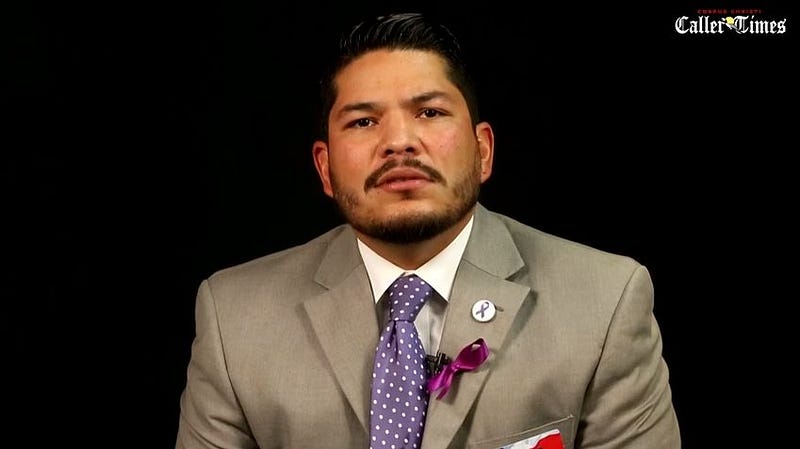 |
| Nueces County DA Mark Gonzalez |
For example, if you want to eliminate money bail, maybe litigation is the only option. OTOH, if one wants to close prisons, that must be done through the Legislature, and in particular the House Appropriations and Senate Finance Committees. Want to oppose local jail expansion? You'll need to lobby the county commissioners court. Or if one wants fewer people shot by police, the policies governing use of force are controlled by unelected administrators at local departments, with only indirect input from city managers or city councils. Each of these issues requires reformers to adopt a tailored approach if they hope to succeed; there's no one tactic which will transform the entire process.
Lately, it has become fashionable to claim that prosecutors are primarily or at least disproportionately to blame for mass incarceration, a view to which Grits only partially subscribes. But the principle champions of this critique have not developed viable visions for how prosecutors' offices might operate in the alternative. And so, the go-to move in the near term has been to run "reformer" DA candidates against incumbents, hoping a change at the top will trickle down throughout the agency.
However, using the electoral process to oust a DA is an expensive and difficult tool to employ among the array of possible options, and in many cases it may have limited practical utility. In some cases it can easily backfire. How can one tell if it's worth it?
Indeed, is it worth it at all? In a post responding to
Josie Duffy Rice titled "'
The Myth of the Progressive Prosecutor,'" Grits recently argued that, "Any differences between electeds play out at the margins of just a handful of individual cases. But the overarching structure and purpose of the institution inevitably remains undisturbed. Even when DAs
take a progressive step, there are almost always pragmatic, internal reasons for it."
That flies in the face of expectations of reform supporters who back DA challenger candidates. Rice's colleague, Carimah Townes, recently
examined the brief tenure of Nueces County DA Mark Gonzalez through the lens of a Disappointed Reformer, but it's unclear what exactly he was expected to do which would have pleased his critics.
Sure, Gonzalez could simply stop taking drug cases or use his discretion more radically to reduce local jail populations and prison commitments.
But to expect him to do so is to expect things he never promised during his campaign.
Which brings us to what he
did campaign on, and what reformers may reasonably expect from successful electoral strategies, particularly in the South. (Caveat: The new DA in Philadelphia appears to have a more visionary agenda, and I'm interested to see how he fares and exactly what he does differently from his predecessors. But none of our "reformer" Texas DAs promised anything close to his
campaign platform.)
During the election, Gonzalez touted his own background as a proud defense attorney and Mexican-American motorcycle enthusiast. In addition, the remarkable "Not Guilty" tattoo across his chest gave voters an impression he would approach the job with a different sensibility. But the job is the job, as
Grits argued in response to Ms. Rice's
column. As long as decisions are being made within traditional frameworks - just by different lawyers - mostly the same outcomes will be reached, with a few differences at the margins whose importance will be magnified by the media beyond their real weight.
So why would one bother with an electoral strategy if that's the best outcome that can be expected? Generally, it's because the incumbent is so zealously "tough on crime" that it clouds their judgment and perspective. That was the case with Gonzalez's predecessor Mark Skurka. It was the case with the predecessors of Craig Watkins in Dallas and Nico Lahood in San Antonio (though both of those men later turned out to present their own problems). The ouster of John Bradley in Williamson County had important ripple effects throughout the state, even though his replacement turned out to be no great shakes and lost when she ran for re-election.
Kim Ogg in Houston is the exception to the only-a-bad-prosecutor trend. Her predecessor Devon Anderson was, relatively speaking, a reformer-Republican, though not as outspoken as Ogg. Her ouster resulted primarily from a partisan sweep that also saw all the judicial races flip and Hillary Clinton carry the county.
In Dallas, the Democratic primary race between John Creuzot and Elizabeth Frizell, who are competing for the right to take on Faith Johnson in November 2018, has
taken on an establishment vs. reformer tone, with Creuzot (who switched parties to keep his judgeship, then switched back when Dallas turned blue) featured as an establishment foil, and Frizell as the ostensible resistance candidate. But Frizell's pitch, like Mark Gonzalez's, at the end of the day is incredibly general:
Frizell said her experience was different that that of Creuzot, who was a judge and prosecutor when Republicans controlled Dallas County politics.
"It's hard to do that when you came up in an era when prosecutors were not reform-minded," she said, adding that she would be a better choice to deal with bail reform and community concerns over police shootings.
That's a promise to have a subtle difference in perspective on the part of the agency's top decision maker, but it's not a promise for radical, progressive reform. She says she'll be "better" on these issues, but doesn't specifically say what she'd do differently.
Which brings me to why our friends at the Fair Punishment Project are inevitably disappointed when they see the elected DAs they supported in action: They've sometimes projected more reformist heft onto these candidates than their campaign rhetoric ever justified, which really isn't the candidates' fault.
Mass incarceration is not a partisan issue and replacing an R with a D, or vice versa, doesn't change much regarding how the justice system operates.
For most of these reformer DA campaigns, and certainly for Gonzalez's, the big pitch was "I'm less of an asshole than the guy who has the job now." IMO, only when that is reason enough - i.e., when the incumbent is so much more actively harmful than is typical that simply removing them from power would improve outcomes - is an electoral strategy justified. That's because such elections can send a political message to pols about voter preferences that other politicians, like state legislators, will notice and heed.
But with less egregious cases, unless one is very clear-eyed regarding the import of potential achievements (e.g., "getting rid of Mark Skurka is a good thing," which it is), electoral strategies targeting DAs will mostly result in disappointment in terms of reducing mass incarceration.
Don't say you weren't warned.



.jpg)