Showing posts with label Collin County. Show all posts

Monday, February 22, 2021

Plano police do best 'Cartman' impersonation arresting black kid for walking home in the snow

If you needed another example why the Texas Legislature should forbid police from arresting people for Class C misdemeanors, here's yet another poster-child case for the history books.

Rodney Reese, an 18-year old black man living in Plano, was walking home from his job at the Walmart during the Snowpocalypse when police officers stopped him ostensibly for a "wellness check." Carrying a plastic bag, underdressed for the cold in a short-sleeve shirt, he told them he didn't want their help and was on his way home. But the cops wouldn't take "no" for an answer and soon told him he was under investigation and being formally detained, eventually arresting him for "pedestrian in a roadway." To their credit, the Plano PD quickly posted the dashcam video. You can watch the video here.

A couple of things stand out. First, despite the police chief saying he didn't believe race was a factor, it's virtually impossible to imagine Plano cops treating a white 18-year old boy in a similar fashion, or for that matter that any Plano resident would have called the cops in the first place if the boy were white. That's just the truth. The chief said he can't know what's in officers' hearts, but their actions revealed more than words could convey short of calling him the N-word. They weren't treating him like a citizen whose wellbeing they cared about - the ostensible purpose of a "wellness check." He was there to play a role, in their minds, and was punished for refusing to go along with the charade.

Second, there was no public-safety justification for what happened. Reese told them he was going home and was under no obligation to talk to police. (One has a "right to remain silent," after all.) He'd done nothing wrong and his incentive to keep moving and not stop in his under-dressed state was obvious; there was nothing suspicious about his behavior. He was arrested because he chose to exercise his rights.

That element reminded me of the episode in Keller, TX with Dillon Puente and his father. There, the cop got upset because Puente said he was afraid of him, citing images of police brutality on television. Rather than try to understand where the kid was coming from, the cop considered his reticence to interact suspicious and ended up arresting him for making a wide right turn. (In that case, officers also pepper sprayed and arrested Puente's father who was shooting video of the episode.)
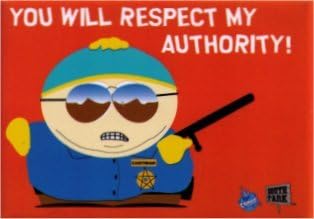
Watching the video from Plano, the male cop escalated the situation unnecessarily. The woman initially approached Reese used a lighter touch, but should have taken "no" for an answer. The male cop, however, exhibited what can only be described as a bout of toxic masculinity, tinged with racial animus. This black boy challenged his authority by ignoring him, and that the cop couldn't abide. It was like watching the character Cartman from Southpark insisting "You will respect my authority!" Same energy, as the kids say.

There likely was nothing this kid could have done to avoid this outcome. The cops weren't sent there to investigate a crime, but invoked their investigative powers the moment he failed to show maximal deference and detained him for no good reason. He was 100% right not to want to engage with them.

Mr. Reese was charged with being a pedestrian in the roadway - a Class C misdemeanor - and hauled off to jail. The maximum penalty for that offense is only a $500 fine, so the arrest punished him to a greater extent than the maximum a jury could have imposed following a guilty verdict.

On Facebook we're told, "The arresting Officer noted in the arrest report that although the subject committed the Class B misdemeanor offense of Interference with Public Duties by resisting Officers efforts to detain and handcuff him, the Officers elected to only charge him with Pedestrian in the Roadway, a Class C misdemeanor." This tells you all you need to know about the officer's mentality, framing it as though he was doing the guy a favor. What "duty" was he performing that Mr. Reese interfered with? Checking on the boy's wellbeing. But the kid already told him he was fine and on his way home. In truth, the officer was violating his duty to respect the lad's rights.

Finally, I should add that the Plano Police Chief, who himself is black, to his credit, immediately ordered charges dropped against the kid and said the arrest should never have been made. And he deserves a lot of credit for releasing bodycam video footage so quickly, that's exemplary police management behavior rarely seen in Texas' larger jurisdictions. But his comments absolving the officers of racial motivations rang hollow: It's not credible to imagine white kids in Plano get treated that way. If they were, likely arrests for Class C misdemeanors would have been forbidden a long time ago.

Thanks to data collected under the 2017 Sandra Bland Act, we now know that 64,100 people were arrested for Class C misdemeanors at Texas traffic stops in 2019, and untold more were arrested on the street for Class Cs, like Mr. Reese. Every one of those arrests was an abuse of police power just as much as this was. It has to stop.

Friday, March 18, 2016

Cause and effect: Veto of Public Integrity Unit funding costing Collin County taxpayers

Grits finds complaints by the Collin County Commissioners Court about paying legal bills for AG Ken Paxton's special prosecutors ironic. A judge dismissed a lawsuit challenging the fees and ordered them to pay the legal tab, which has topped a quarter million dollars. According to the Dallas News:
Collin County commissioners have been vocal about their opposition to the costly Paxton prosecution, saying they have no choice but to pay the amounts ordered by the court. In a blog post on Sunday, County Judge Keith Self called again for the special prosecutors to resign so that another district attorney from the region could be assigned to the case.

“Our taxpayers deserve better,” Self wrote.
Perhaps, if this is such a great concern, Judge Self and the commissioners court should lobby the Legislature next year to reinstate funding for the Public Integrity Unit at the Travis County DA. Former Gov. Rick Perry's veto of their budget is the reason they're stuck with these bills. Before 2013, state taxpayers would have picked up the tab.

Tuesday, July 15, 2014

How long should cops get to jail people without charges?

Here's a messed up story for you. If you've been arrested in Dallas but police haven't told you why, for the past quarter century officers had three business days to "to figure out what to charge an arrested person with and get the paperwork in, not including the day you were actually arrested," according to Amy Silverstein at the Dallas Observer's UnFair Park blog (July 1):
Sure, you can bond out of jail much sooner than three days if you have the money. Giving the cops a deadline, however, helps ensure that all defendants get treated fairly, at least according to the district judges who created and upheld the rule in the first place. "It's just saying you can't hold someone in jail without a case file," explains Judge Rick Magnis, who as presiding judge of the Dallas Criminal Courts has tweaked the three-day rule slightly over recent years, allowing a full 10 days for crimes like murder and assault.

But [in June], the Dallas Police Department famously released a bunch of inmates who weren't supposed to go free, and now Chief David Brown is blaming that deadline policy as part of the problem.

The policy, officially called the dry writ, is putting "a real strain" on officers, Brown told City Council ...
The police department has brought up the same concerns to the District Attorney's Office. "They have expressed to us that they need more time to properly investigate and file cases," county prosecutor Ellyce Lindberg tells Unfair Park in an email.
DPD and Dallas DA Craig Watkins' office want to extend their deadline from three to seven days for all felonies, reported the Dallas News (July 10)  Even if cops miss the deadline, noted Silverstein:
That doesn't mean the cases against those inmates go away. Cops can still take their sweet time to file the charges, even with the inmates out of jail. The deadline is just a way to keep the county from holding broke people in jail indefinitely while cops figure out exactly what those charges are. It's for that reason that defense attorneys say the deadline policy as it stands is a sensible one.

"People that cannot afford to bond out are entitled to get their accusations that they face against them in a timely manner, not just sit there and wait for them to do it at their own leisure," says criminal defense attorney Jose Noriega, describing Brown's recent complaints about the policy as "disingenuous".

It's true that other counties in Texas are more lenient than Dallas, allowing cops more time to hold suspects before filing cases. But outside of the state, the rules are often more favorable to the suspects. In New York State, for example, suspects must be arraigned within 24 hours after their arrest thanks to a 1990 court ruling.
The suggestion that "other counties in Texas are more lenient than Dallas," it should be noted, is not universally accurate. In Houston, for example, charges are filed in a much more timely fashion. Indeed, according to our pal at the blog Life at the Harris County Criminal Justice Center, an officer must phone the on-call Assistant DA assigned to intake, describe the incident and get agreement about the proposed charge up front before even making an arrest. Then, a judge is available 24-7 and defendants are informed of the charges at a probable cause hearing that usually occurs less than 24 hours after being booked into the jail. Austin and El Paso also process cases much more rapidly on the front end.

According to the Dallas News (June 29), though, some other counties allow even longer waits than Dallas:
Fort Worth police, for example, take suspects to their jail and then Mansfield’s jail until the county accepts the charge. The jail charges the department for holding inmates for more than five days without filing criminal charges, Fort Worth police spokesman Sgt. Raymond Bush said. ...

Collin County Sheriff’s Lt. John Norton said the department will notify judges if no formal charges have been filed on felony suspects within 60 days. For misdemeanors, the time frame is 15 days or 30 days, depending on severity.

Bexar County requests case files within 20 days. But it’s not a hard-and-fast deadline, said Cliff Herberg, the county’s first assistant district attorney.
Even so, Dallas' presiding District Judge Rick Magnis told the News (June 23) that
the time-limit policy is “what makes America, America.”

“The law is real simple,” Magnis said. “The Constitution in America says you can’t hold people without charges.”
This is an example of inefficiencies at the beginning of the process creating extra costs throughout the system, from an over-full jail to bloated court dockets. If much-larger Harris County can figure this issue out, there's absolutely no reason Dallas police and prosecutors need seven days to work out charges in routine cases.

Wednesday, June 25, 2014

Some prosecutors demanding waivers from defense before handing over Michael Morton Act discovery

Since Court of Criminal Appeals Judge Barbara Hervey's Criminal Justice Integrity Unit announced it will address issues raised by stakeholders related to the Michael Morton Act at their next meeting in the fall, here's a topic for her list from the Texas District County Attorneys Association's discussion forum: Can/should prosecutors seek waivers from defense counsel for any further discovery of inculpatory evidence when they hand over the information required under the Michael Morton Act?

A prosecutor from Wharton County opened the discussion with this June 10 post:
Our defense bar is very unhappy we are using a 39.14 waiver (which only waives further discovery of inculpatory evidence AND NEVER exculpatory evidence). Anybody else dealing with this? [Ed. note: 39.14 is the Michael Morton Act]

Do we need a waiver?

Should it blow up a plea if counsel won't agree or acknowledge the waiver?

I've also heard some judges won't allow a waiver? Anybody run into this?

I was pretty sure I had thought this all through already, and a waiver was the way to go when we enter a plea. Things are getting messy, though. Anybody out there running into any new related 39.14 issues?
A prosecutor in Collin County said they required a similar waiver. In an additional post, the Wharton County prosecutor clarified, "All we are asking is the waiver of any further right to inspect or copy discoverable items other than Brady and/or subsection (k) items."

I'm not a lawyer so perhaps some defense attorney readers can explain to me: Why would anybody sign that? The prosecution is required to give the defense statutorily required discovery under the Michael Morton Act, whether counsel signs a waiver or not. I understand why the prosecutors might want a waiver, but what's in it for the defense side? Thoughts?

Also, have defense counsel in other jurisdictions encountered similar waivers? If so, please say where in the comments. (In fact, if you're willing, email me examples if you've got them at gritsforbreakfast@gmail.com.)

Anyway, the CCA's integrity unit can add this to the list of Michael Morton Act issues they should delve into this fall. To my knowledge, nobody's really examined closely how the new law is being implemented on the ground. Doing so in a public forum with all the stakeholders in the room will be a mitzvah.

Friday, September 13, 2013

Probation revocations down, but not by much; re-arrest rates among DWI probationers plummets

More evidence that Texas' 2007 probation reforms perhaps contributed less than has been previously estimated to recent prison population declines. The main strategy of the 2007 reforms was to reduce probation and parole revocations to prison by incentivizing diversion and progressive sanctions programs. That's worked better on the parole side than for probation (aka "community supervision"). From the Dec. 2012 "Report to the Governor and Legislative Budget Board on the Monitoring of Community Supervision Diversion Funds" (pdf):
Felony revocations to TDCJ in FY2012 represent a 2.8% decrease from FY2005 (677 fewer felony revocations) and a 1.8% decrease from FY2011 (432 fewer felony revocations). However, the percentage of revocations to TDCJ for a technical violation of community supervision conditions increased from 48.5% in FY2011 to 49.0% in FY2012.
Those are essentially insignificant reductions given the scope of the decline in state prison populations witnessed over the last half decade.* Felony technical revocations among probationers declined 10.9% from 2005 to 2012, TDCJ reported, but they're still awfully high and that small decline was far out-paced by two factors on the parole side: Dramatically reduced parole revocations and marginally increased approval rates by the parole board. Both may be viewed as an expression of legislative policy. Reduced parole revocations stem from greater use of intermediate sanctions facilities (ISFs) and other diversion programs created after 2007. And higher approval rates, particularly for low-risk offenders, resulted in large part from the board finally edging closer to targets under non-binding release guidelines that the Lege mandated they create.

County-level probation revocation trends
By contrast, reducing probation revocations has been a tougher nut to crack, in part because of decentralized local control over the process among various counties and judges. Here are the relative increases and decreases for probation revocations among Texas' largest departments since just before Texas' much-vaunted probation reforms took effect:

Change in Felony Revocations to 
TDCJ among largest counties, 2005-2012

CSCD Percent change in revocations
Dallas -22.8%
Harris -17.8%
Bexar 94.0%
Tarrant -4.3%
Hidalgo -5.3%
El Paso -39.6%
Travis 32.1%
Cameron 22.4%
Nueces 1.8%
**See note below on Collin Co.
.
Travis County's increase in revocations surprised me given their department's reputation for reliance on progressive sanctions, etc.. Cameron County attributes their increase to "more aggressive absconder apprehension and increased monitoring of compliance with community supervision conditions." Otherwise, Bexar County is the most prominent, chronic outlier among large counties, as has been the case since these reports began coming out.

2012 probation revocations compared
to supervised population, large counties

CSCD % 2012 statewide probation pop % 2012 statewide felony revocations
Dallas 13.6% 10.5%
Harris 11.5% 12.4%
Bexar 6.7% 6.8%
Tarrant 4.9% 7.1%
Hidalgo 4.0% 2.8%
El Paso 3.7% 1.5%
Travis 3.4% 3.0%
Cameron 2.3% 1.9%
Nueces 1.7% 2.2%
Collin 1.7% 1.9%

This chart perhaps provides a better sense of relative county practices than the previous one. It compares probation populations and revocations among large counties as a proportion of their statewide total. (See this data for all counties in Appendix C to the report.) Counties in which the right-side number is significantly greater than the left-hand column may be considered more aggressive at revoking probationers than their peers. That differential is especially significant in massive Harris County because of the sheer volume they process. Tarrant's numbers here are especially striking, putting their paltry 4.3% decline from the earlier chart in context. Meanwhile, Travis, Hidalgo, and even Bexar don't appear nearly as problematic on this chart as they did in the first table.

Recidivism among probationers declining, especially DWI
According to the Dec. 2012 report, 71.7% of felony probationers revoked back to prison in FY2012 were convicted of nonviolent crimes - drug offenses (32.2%), property offenses (30.4%), and DWI (9.1%), with the rest coming from violent (17.9%) and other (10.4%) felony offenses.

Remarkably, and for the most part unheralded, recidivism rates for felony probationers have been declining. "The overall two-year re-arrest rate for the FY2005 sample was 34.4% (8,914 offenders). The overall two-year re-arrest rate for the FY2010 sample was 31.8% (8,811 offenders), which was a decrease from the FY2005 sample."

The drop in re-arrest rates for DWI offenders in those two studies was especially striking: 16.9% of the 2005 cohort was re-arrested compared to 11.5% of the 2010 cohort - a 32% drop! That's a success story nobody tells much. Re-arrest rates for probationers convicted of drug offenses declined 13% over this period; 10.6% for property offenders. But DWI stands out. Perhaps new treatment resources aimed at that group are helping.

Sunday, March 13, 2011

Dog on Dog Open-Government Action, the Fiction of the Consensual Police Encounter, and other stories

Here are a few items I ran across recently that deserve Grits readers' attention:

Backstory on breaking Austin open government scandal
Get the full background on the Austin City Council Open Government Scandal when the Jennifer Peebles at the Texas Watchdog interviews Ken Martin at the Austin Bulldog in a TW podcast. That's a lot of dog on dog action. Interesting stuff; Martin dishes a lot of juicy details about who concealed what and how the story was broken. They've stopped the illegal meetings, says Martin, but the City is still concealing emails where City Councilmembers performed city business on their personal email accounts, a clear violation of years of precedent from the Texas Attorney General. Which is probably why, also in violation of the law, the City of Austin did not request an opinion from the Attorney General. They just said "no," like Melville's Bartleby the Scrivener declaring, "I would prefer not to." With no other recourse, Martin has been forced into court for the documents. Honestly, County Attorney David Escamilla is the only one who can crack this nut by bringing charges against those politicians who by all appearances conspired to violate the open records and open meetings acts.

'Perpetuating the Fiction of the Consensual Police Encounter'
The subhed is the title of a post from Liberty and Justice for Y'all criticizing a Texas Court of Criminal Appeals decision that placed the subject of a police encounter in a no-win position. If the defendant had not complied with a police command, writes blogger B.W. Barnett, "there is no doubt the court would now be using his noncompliance to justify a more intrusive search. There is absolutely no way for the defendant to win here."

Latest poster boy for asset forfeiture reform
As if he needed another one after the 2009 Tenaha Scandal, Jim Wells County has offered up a poster boy for Senate Criminal Justice Committee Chairman John Whitmire's asset forfeiture reform bill this session. According to the SA Express News, last week "four-term Jim Wells County district attorney pleaded guilty Monday to a felony count of misappropriating more than $2 million in asset forfeiture funds."

Attitudes toward gays fair game in sex offender voir dire
Attorney Bill Habern pointed out to me an interesting civil ruling from the Texas Supreme Court involving voir dire during civil commitment trials of sex offenders, on a couple of points: Where the case will include evidence that the target is gay, it's permissible to question jurors whether or not they can be fair to a gay person. Also, where a case requires proof of two prior sex-offense convictions, the defense may question whether or not the jurors will require more evidence than the mere fact of conviction in the two cases to determine whether the civil commitment target is "likely to reoffend." The SCOTX held that the judge unfairly limited the defendant's ability to eliminate biased jurors who would not consider the evidence. MORE: From the Supreme Court of Texas blog.

Making (some) sense of Indictment-Fest 2010 in Collin County
I've got to admit, I've never understood the whole brouhaha up in Collin County where the outgoing DA and judges spent their final months in office taking turns getting one another indicted, but several items I read today helped somewhat clear up the bizarre and murky picture. Here's Ed Housewright at the Dallas News framing the story with a journalist's faux balance. More probative, IMO, were attorney Hunter Biederman's excellent offerings at the blog Collin County Observer and on Biederman's own blog, Frisco DWI Lawyer, including juicy links to primary documents. MORE: From the Dallas Observer.

Why don't MSM sites link to primary documents?
Speaking of which, why don't MSM newspaper reporters and editors link to their primary sources in online reporting? I've never understood that. They have access to them, reference, them, quote them. Often they're already available online and only need a link, or are easily uploaded online either onto the media outlets own server or a variety of free alternatives (Google Documents, etc.). I thought about this today reading Brandi Grissom's piece in the New York Times where she quoted Dr. Tony Fabelo from a recent presentation to the Senate Criminal Justice Committee. Grits has quoted the same report, but I linked to a copy [pdf]. It'd pretty much put blogs like Grits out of business if the MSM would do that themselves. Quite often, the main value Grits adds is linking to primary sources for those who want more information (and, having read them for myself, raising any issues the MSM didn't pick up on). The idea of journalists as information gatekeepers is a myth that's been blown sky-high in the internet age. Today the best journalists are information conduits, summarizing the topline, takeaway issues for the masses but also providing access to more detailed information for opinion leaders and others with specialized interests. There's no reason they can't do both and it would make their product more valuable.

Thursday, December 30, 2010

New DA in Waco off to rocky start: Announces new hire who's then indicted

Getting the most possible use of the day pass I bought yesterday to the subscription-only Waco Tribune Herald, I should mention recent news from their District Attorneys office, where 38-year old GOP challenger Abel Reyna defeated longtime Dem DA John Segrest, and wants to model himself on Williamson County DA John Bradley. Reported the Trib:
Reyna said he helped define goals for his office by visiting district attorneys’ offices in Williamson and Collin counties. He said those counties’ prosecutors have tough, take-no-prisoners reputations around the state. He wanted to know why.

“When I got elected, I started digging around to find out what made a great district attorney’s office. Williamson County came up throughout the state as one of the top counties for being tough on crime. I want to surpass that. That became my goal,” Reyna said.
The part that strikes me most about that quote is the sentence, "When I got elected, I started digging around to find out what made a great district attorney’s office." Really? You mean you ran for, and were elected, DA without a clue what it would take to do the job? That's something you started thinking about AFTER election? Yikes!

Reyna wasn't the only one doing some hard thinking after his election. A third of felony prosecutors in the office (8 of 24) resigned immediately, making Murray Newman's complaints of the talent drain at the Harris DA's office seem meager.  Then Reyna announced his first new hires, including a first assistant from Williamson County and senior prosecutor Greg Davis from Collin County, only to have Davis indicted by a Collin County grand jury almost immediately thereafter for tampering with government records, a state jail felony. The Dallas News reported that Davis admitted in court documents to [the DA's Office] altering employee time records to make it appear employees were working when they were not - a charge the DA's office itself had made in gaining indictments against Collin County District Clerk employees. Reyna backed off the decision to hire Davis in light of the criminal proceedings. (Ed. note: The original version made it sound as though Davis himself changed the time records when in fact the News only reported that he filed a motion to recuse the DA's office. I apologize for the misstatement.)

The whole Collin County brouhaha is a complete zoo, with the outgoing DA, the District Clerk, and a district judge in a pissing match that at times has threatened to engulf their whole legal system. Bill Baumbach's Collin County Observer blog is a good place to go to analyze the debacle, since it's one of those instances where you can't tell the players without a program (see here, here, here, here, and here). Given the politicized nature of all of these criminal proceedings - both the ones initiated by Davis and the ones against him - I suspect the charges could be overblown. The incident strikes me as the kind of inevitable, petty infighting that occurs in an environment where Republicans have vanquished all Democrats and begin to turn on one another (witness the Speakers race in the Texas House). Still, Texas' latest John-Bradley wannabe is getting off to a rocky start in Waco.

MORE: See additional coverage of the Collin County indictments from the Dallas News.

Wednesday, April 28, 2010

"What's more compromising than money?"

The title of this post is the headline to a New York Times editorial yesterday scolding the US Supreme Court for not accepting the Charles Hood case. According to the Grey Lady:

The Supreme Court abdicated its responsibility to address fundamental questions of ethics and fairness when it declined to review the case of Charles Dean Hood, an inmate on death row in Texas.

The one-line order, issued without comment from any of the justices, left in place an egregiously tainted 1990 double-murder conviction. Eighteen years after Mr. Hood was sentenced to death, the state trial judge, Verla Sue Holland, and Tom O’Connell, then the Collin County district attorney, admitted that they had had a secret affair that appears to have ended not long before the trial.

After considering these seamy circumstances, the Texas Court of Criminal Appeals last year denied Mr. Hood’s request for a new trial, ruling — incredibly — that he took too long to raise the conflict of interest and should be executed. Yet it took a court-issued subpoena to get the two officials to confirm their long-rumored affair. Their success in hiding their relationship should not count against Mr. Hood. ...

The Supreme Court correctly ruled last year that millions of dollars in campaign spending on behalf of a judge’s election bid created an intolerable “probability of actual bias.” The court decided that Chief Justice Brent Benjamin, of the West Virginia Supreme Court of Appeals, was required to recuse himself from a case involving Massey Energy, one of the country’s biggest coal companies, after Massey’s chief executive spent $3 million to help get Justice Benjamin elected.

The right to a fair hearing, before an impartial judge, is at the heart of the nation’s judicial system. If money raises a serious question about that impartiality, love seems to be at least as worrisome. The Supreme Court, sadly, failed in its duty to clearly draw that line.

Though the Times said the affair appeared to end before the trial, we really don't know. Mr. O'Connell at first said the relationship continued past the trial, then he recanted when Judge Holland insisted it ended earlier. He now says he must have misremembered and agrees with Judge Holland on the timing. However, these are people who violated ethical canons for years to keep from being held accountable. Both say they were in love. Do we really believe their equivocating, self serving declaration that the affair had ended, but they remained close friends thereafter and even traveled together on vacations without any sexual liaison? To me it seems to beggar belief. I'm inclined to believe Mr. O'Connell was telling the truth the first time - that the relationship ended in 1991 or '92. However no one really knows but them.

The Times is right this is a tremendous disgrace. Hood's new punishment phase trial doesn't really mitigate the harm to the judiciary's credibility, but it provides sufficient cover for SCOTUS to ignore the situation for now and lets the Texas Court of Criminal Appeals kick the ball down the road a few years.

See related Grits coverage:

Monday, March 01, 2010

Defendant: 'I plead guilty'; Prosecutor: 'We're going to trial'

If a defendant pleads guilty to all charges without a plea bargain, leaving their sentence entirely to the court, why would a prosecutor ever demand a jury trial?

Bill Baumbach at the Collin County Observer describes a case from his neck of the woods where prosecutors have done precisely that, refusing to accept a guilty plea to insist that the defendant be taken to trial instead. Texas 5th Court of Appeals said prosecutors are not required to accept a guilty plea. Baumbach writes:

Picture this -- a man is arrested for let's say burglary and is brought before a judge who asks him if he understands the charges. "Yes, your honor and I want to plead guilty", replies the accused.

But then the District Attorney jumps up with, "We object. The people demand a jury trial".

"But I'm guilty. I did it and I'll accept my sentence.", replies the accused. "No matter, the State demands a jury trial, and we will have one", the prosecutor declares.

In Texas and especially in Collin County this actually happens. The judge is then forced to send out jury summons to 100 or more citizens, who take time off of work to come to court. A jury is chosen, sworn in and seated. The man is brought back into court and once again says, "your honor, I plead guilty, and I ask that you, the judge, set punishment." The Jury is sent home, and the man sentenced.

Not a very efficient way to run a court, is it?

Last week, in a Collin County case, the Texas 5th Court of Appeals overturned a visiting judge who refused to allow the DA to force a jury trial, when the defendant asked to plead guilty.

In an excellent earlier post, Baumbach suggested an array of possible motives for why prosecutors might do such thing (and perhaps prosecutors reading this blog can suggest others he missed). The judge believed the motive was forum shopping so a different judge would sentence the defendant:

There are several possible reasons. One is exactly what Judge McCraw was charging. That the District Attorney wants to control which judge sets punishment. In Blackburn's case, Judge McCraw, after accepting the guilty pleas, would then set a date for a punishment hearing. The judge at that punishment hearing, and the one who would set punishment, would be Judge Jill Willis. (A jury trial date had already been set - the trial would have been heard by the visiting judge).

So McCraw was accusing the DA of not wanting Judge Willis to determine the punishment. And he was accusing the DA's office of wasting county money, and jurors' time to do so.

The Collin County Observer has talked with several local defense attorneys. They all told the Observer they believe that the Collin County District Attorney does not want certain judges to set punishment. One of those judges is the newly appointed Judge Willis.

Another possible reason for the DA to refuse to permit a bench trial is rooted in the policies of the Collin County District Attorney's office. Sources who know the system have told the Observer that in this county, a prosecutor's performance is rated primarily by one metric -- the percentage of jury trials resulting in a guilty verdict. Any prosecutor who does not maintain at least a passing average, will not be employed by the county for long. Promotions and raises are all largely based on this win percentage of jury trials.

Prosecutors therefore have an incentive to plea bargain the difficult to prove cases and to take to a jury the slam dunk, easy cases -- even if the trial is just a 'sham'.

Earlier this year, Harris County floated an idea that would be another reason for the State to object to a jury trial waiver - they wanted new, young prosecutors to get more trial experience. They wanted to force defendants to go before a jury so that the States attorney could practice on easy cases. That idea was finally shot down after a howl of protests from the defense bar.

In the Blackburn case, Judge McCraw made his opinion clear. At one point he told Mr. Rolater, "I think we ought to clarify it for the appellate court. As I say, if they want to be involved in forum shopping, fine. Let them do it.... I think the Constitution of the United States allows an individual to enter a plea to the duly appointed judge. That's all I've attempted to do here."

I can't think of many reasons beyond those to explain this particular exercise of prosecutorial discretion, and even they're slim reeds to justify such a pointless, extravagant waste of jurors' time, not to mention court and jail resources. The DA should plead the cases before the judges elected to hear them, not manipulate the process to get the judge they want, nor waste the court's time in search of notches on trial lawyers' belt or training baby prosecutors.

I'm sure nobody keeps statistics on how often prosecutors refuse guilty pleas to the charges grand juries bring, but if the courts find no legal requirement that prosecutors accept a guilty plea, perhaps the Legislature should create one.

MORE: See a related string from the user forum of the Texas District and County Attorneys Association on the question of forcing jury trials when a defendant has pled guilty to all charges. Thanks to Jaime Spencer for dredging it up.

Friday, January 08, 2010

Bexar and Collin DA's races: Who gets to wear the bandoliers?

Having recently rounded up some of the more interesting criminal-justice related and appellate judicial elections in the offing in 2010, I should add two District Attorneys' races to the list that I failed to mention:

Bexar County DA: Dems' time?
A couple of different folks have now told me to watch Democrat Nico Lahood out of Bexar County as a strong challenger to incumbent Republican DA Susan Reed. Offhand, his bio looks solid, and from a campaigning perspective, the fact that he sits on a major hospital board and is active with St. Mary's alumni and the local criminal defense bar perhaps indicates he can raise TV money. He'll need it. Susan Reed will be a tough opponent and that would be a big Democratic get in a year when the county party is in disarray. In 2006 Reed won with 60+% of the vote, but she's also taken a few hits since then and the countywide vote tipped consistently Democrat in 2008.

Collin County DA: Who gets to wear the bandolier?
Meanwhile, at Frisco DWI Lawyer we find the most detailed account I've seen of the candidate field for Collin County District Attorney, which is open this year after John Roach decided to call it quits. The GOP primary race looks to be a highly competitive contest: Greg Willis, a Perry appointed judge who resigned to run for DA; Jeff Bray, the senior legal advisor to the Plano Police Department; James Angelino, who is a former ADA from Denton County; and criminal defense lawyer and former Dallas ADA John Reed. Democrats have a pretty qualified challenger lined up in Rafael de la Garza, a former Dallas ADA and Western District Assistant US Attorney, but his candidacy on paper is a longshot; he'd need resources, luck, and maybe help from an inept opponent to win.

Question One to all these Collin County candidates: Do you support incumbent John Roach's efforts to outfit and deploy a DA Office SWAT-like tactical team using asset forfeiture money? Question Two: Will you rescind his decision? Really. That's not a joke or misprint. The outgoing DA is putting together his own tactical team equipped for forced entry for which he recently sought to purchase:
2 DPMS "AP4" 5.56 caliber Panther Carbines
2 Remington Model 870 12 gauge shotguns with 7 round magazines, pistol grips and folding stocks.
2 LED lights for the shotguns
2 Tactical Ballistic shields
10 Ballistic helmets
2 shoulder ammo bandoleers (a la Pancho Villa?)
2 Blackhawk Tactical backpack kits, includes a heavy duty ram, a bolt cutter and a hooligan tool (for breaking down doors).
6,000 rounds of 5.56 caliber NATO ammunition.
etc....
Those are gonna be the best-armed prosecutors I've ever heard of, but it could be the source of intra-office jealousy: Which prosecutors do and don't get helmets? And who gets to wear the bandoliers? I wonder if, for liability purposes, using a ram, bolt-cutter or "hooligan tool" would qualify the DA's office for "absolute immunity"?

The Collin County Observer helpfully provides a link to the relevant agenda item and backup documentation.

Monday, November 02, 2009

Prosecutorial hubris, entitlement on display in recent cases

The National Law Journal published an op ed today by Bennett Gershman criticizing the Texas Court of Criminal Appeals and Collin County prosecutors for using procedural excuses to avoid addressing egregious judicial and prosecutorial conduct in the Charles Dean Hood case, where the judge and prosecutor were engaged in an extramarital affair during Hood's capital murder trial. Gershman says too often prosecutors and judges rely procedural excuses to dismiss legitimate defense claims, even in actual innocence cases:
Of all the gamesmanship that prosecutors routinely play, one of the most alarming is to aggressively raise ­hypertechnical and attenuated procedural obstacles and hurdles that a defendant must overcome in order to get a court to listen to his often meritorious claim that the prosecutor committed misconduct. Indeed, the U.S. Supreme Court has characterized such prosecutorial conduct as "gambling" and "playing the odds" with a defendant's rights, playing "hide and seek" to avoid disclosure of exonerating evidence, and requiring a defendant to engage in "scavenger hunts" to find exonerating evidence of which the prosecutor is secretly aware but has suppressed.

Thus, knowing full well that a defendant's claim is legitimate and meritorious, prosecutors regularly argue that the defendant failed to raise his claim earlier, as with Hood, even though the prosecutor well knew that the defendant could not raise the claim because he did not have the information that, brazenly, the prosecutor had suppressed. Some prosecutors have sought to deflect post-conviction claims of innocence by arguing that the defendant pleaded the wrong theory, or failed to use the correct nomenclature to describe the violation. And too many courts have endorsed the prosecutor's arguments. There are limits to this judicial deference. A few terms ago, in Banks v. Dretke, the Supreme Court reversed the U.S. Court of Appeals for the 5th Circuit, which had endorsed another Texas prosecutor's gamesmanship. In a death penalty case, the prosecutor argued that the defendant failed to differentiate sufficiently between his distinct legal claims — in effect, he "didn't say 'Simon Says.' "

Procedural gamesmanship by prosecutors is not a new phenomenon. But with the increasing demands by courts for enhanced and much more rigorous pleading requirements — for example, the Supreme Court's decision last term in Ashcroft v. Iqbal — defendants like Charles Hood are going to find the gateway to justice littered with procedural hoops and mazes of sufficient magnitude and complexity that a defendant may be barred from establishing on the merits that a prosecutor engaged in prejudicial misconduct, that a fair trial was denied and that the truth was lost. And some prosecutors, like the prosecutor of Hood, will champion this result as a big victory.
Hood's case must be one of the worst examples of prosecutors seeking (and usually, procuring) procedural excuses for tolerating official misconduct, but it's hardly an isolated instance. Later this week the US Supreme Court will hear oral arguments to decide whether there is a "freestanding constitutional right not to be framed," as the Washington Post editorial board put it this morning. Prosecutors in that case say there is not, including the National District Attorneys' Association. (See briefs pro and con on the SCOTUSWiki page.)

These two cases are thematically linked by prosecutorial attitudes of entitlement and hubris. Where are the voices among elected District Attorneys saying this kind of behavior can't be tolerated? Who really believes that prosecutors needn't be held accountable for framing innocent people, or that prosecutors and judges may have sexual relations during trial so long as they successfully conceal it from the defense until years afterward? How can anyone truly trust the justice system when stakeholders routinely defend such corrupt and abusive practices?

Monday, September 28, 2009

Collin 'restitution center' closing as failed experment

Following a statewide trend toward getting rid of them, Collin County's probation department will soon close its in-house "restitution center," reports the Dallas News. Here's how the story opens:

Pay the fine or do the time. That's been the philosophy behind the Collin County Restitution Center.

Here probationers delinquent on court-ordered fees and fines spend nights and weekends in jail until they make regular payments. Currently only four offenders remain in the program, one of only a handful left in the state.

And soon, after a decade in operation, Collin County's will close as well. Officials believe they can collect just as much money from probationers without the expense of keeping them overnight.

"We're going to try this and see if it's more effective ... and saves a little bit of money for the county," state District Judge Chris Oldner said.

In closing the center, situated inside the county's minimum-security jail, Collin is following a statewide trend. Like boot camps, restitution centers gained popularity two decades ago but are now widely rejected as ineffective, officials say.

Dallas County opened its restitution center in 1985 and closed it in 2004, officials there said. Tarrant County operated a restitution center from 1983 to 2001.

Monday, May 04, 2009

Collin County prosecutors could let CCA off the hook for ethical morass in Charles Hood case

National CBS News last evening covered the Charles Dean Hood case, in which a Collin County prosecutor and judge conducted a secret romantic affair during Hood's capital murder trial. (The judge was later appointed by then-Governor Bush to serve on the Texas Court of Criminal Appeals with 8 of the 9 current members who now must decide whether to give Hood a retrial because of her misconduct.) CBS legal reporter Andrew Cohen offered this suggestion how prosecutors could help the CCA save face:
Now that Judge Brewer has found facts that establish the affair, and the efforts of two sworn public servants to hide it, it’s hard to identify a legal theory upon which Texas or its appellate courts could rely in denying Hood a new trial. Is there a more direct conflict of interest, negating the duty of impartiality and integrity in the criminal justice system, than what Holland and O’Connell did? Would you want to be a defendant in those circumstances? Would you trust the judge’s rulings, or the prosecution’s conduct, or the interaction between the two knowing that your adversary and tribune had been shacking up?

It’s possible, I suppose, that the appellate court could reject Judge Brewer’s legal conclusion that Hood’s attorneys can push this matter further even though all of the relevant events took place 19 years ago. It’s even possible, I suppose, that the appellate court will reject the interpretation Judge Brewer gave to the facts before them. But such poor judgments surely would themselves generate an appeal, and another, and maybe even a Supreme Court review. And before you know it we’ll be five more years down the road without any finality or certainty for Hood or the families of his victims, Tracie Lynn Wallace and Ronald Williamson.

Texas might consider doing here what the Justice Department did in the Ted Stevens corruption case. Faced with evidence of prosecutorial misconduct, the feds simply walked away from the conviction they obtained. Texas wouldn’t need to go nearly that far - no one (except for Hood) is suggesting that he ought to be freed or that he is necessarily an innocent man. All Texas would have to do, saving time and money, is agree now that Hood can and should be tried again before an impartial judge and an honest prosecutor. There appears to be ample evidence suggesting Hood’s culpability.

Texas then could use the money it saves fighting against a new trial for Hood on ensuring that its judicial officials understand what a conflict of interest is, and how it can be avoided, why it’s never okay for a judge and prosecutor to be romantically involved when they are working on the same cases together and why, worst of all, it’s never okay to hide such a material fact from opposing counsel. Hood’s judge and prosecutor lied, over and over again, to hide their affair. Any blame for the delay in bringing justice to Hood is their fault, not his, and Texas would be better off acknowledging that now.
Cohen raises a possibility I hadn't considered. Knowing what we now know, the Collin County DA could simply move to dismiss current charges against Hood in the interest of justice and seek to retry the case in front of a new judge, one who hopefully can contain their libido throughout the proceedings this time. That would be the right thing to do and it would spare the CCA the agonizing quandary they face now.

It would also seem anticlimactic. Part of me would like to see the high court forced to make that decision. If there are CCA members who believe it's okay to execute a man even if the judge and prosecutor were sleeping together during the trial, I want them to put their reasons on the record for history to see, and to judge.

RELATED: Rick Casey from the Houston Chronicle has a column on the case.

Monday, January 19, 2009

False confessions here, there, and yon

Our pal Rage Judicata points to a Houston case where new DNA evidence appears to contradict a recanted confession by Charles Raby, who was convicted of murdering 72-year old Edna Franklin in 1994 and currently resides on death row. According to the Houston Chronicle, "recent DNA testing on genetic material found on Franklin’s blood-caked fingernails points to someone else, Raby’s lawyers contend."

In response, Rage poses a question discussed on Grits before, and which I think must bewilder every right thinking person who considers the issue of false confessions:
I just don't understand how someone not guilty of murder could confess to it. Or why he was sent to death row despite a confession--usually that gets you a plea. I can see confessing to theft to get out of jail time, but murder? Of killing a small, frail, woman?
The idea of confessing to such a monstrous act does seem inexplicable. Yet we see false confessions in even the most heinous of crimes.

For example, I couldn't imagine an innocent person admitting to a worse crime than Austin's Yogurt Shop murders, where four teenage girls were raped and murdered and the building torched to destroy the evidence. But some 50 different people confessed to that high-profile atrocity, most of whom police could easily show had nothing to do with the offense.

The reasons vary. Some were mentally ill. Some were weak minded people trying to please authority. And some of them succumbed to harsh or deceptive interrogation techniques, particularly by later-defrocked homicide detective Hector Polanco, who has a history of securing false confessions.

Robert Springsteen and Michael Scott confessed to the Yogurt Shop murders after long, grueling interrogation sessions. (For Michael Scott, it went on 20 straight hours). Those confessions led to their later-overturned convictions after they recanted and the courts wouldn't let the prosecution use their statements against one another. No other evidence implicated the pair.

In the Yogurt Shop case, recently tested DNA ultimately disproved the prosecution's original, convicting theory, and, just as with Raby, points to some heretofore unidentified perpetrator. You could say of the Yogurt Shop defendants, just as Rage said of Raby's case:
It will be interesting to see how the state explains the new DNA results and if their theory at trial was that he acted alone this may be just enough evidence for a new trial--or at least it would be if the CCA didn't allow new theories to be brought up on appeal, which they do in cases like this.
A new theory that explained why Raby's DNA wasn't found on the victim's defensive wounds would likely require the existence of an accomplice, which would contradict the eyewitness who saw Raby, alone, jump a fence (from across a yard, at night) around the time of the crime. In the Yogurt Shop case, I'm not sure what new theory (besides actual innocence) explains why the DNA of a confessed rapist wouldn't match the crime scene rape kit.

These are not isolated incidents. Yet another recent capital murder case, this one a quadruple murder in Collin County, endured an especially tortured investigation process thanks to false confessions by three different, unrelated suspects, none of whom authorities now believe were actually involved in the crime. (They're still in trial; one hopes, now, they've finally got the right guy.)

Like Rage, I think most of us can only shake our heads and admit we "don't understand how someone not guilty of murder could confess to it," though academic research is beginning to provide compelling explanations.

False confessions challenge our core assumptions. When Rage writes, "I can see confessing to theft to get out of jail time, but murder?," he's expressing what's probably most people's common sense reaction.

But in fact, when you look at the likely false confessions in the high profile cases discussed above, it almost seems they're more likely in a heinous case than in a petty theft. After all, nobody's going to spend 20 hours interrogating a shoplifter, so they might never be subjected to the level of coercion and manipulation that cause a murder suspect to succumb.

University of San Francisco law prof Richard Leo suggests recording interrogations would at least provide a record to evaluate later whether a confession was likely false, and certainly in Raby's case it would be nice to go back now - given the conflicting evidence - and hear what he actually told investigators when he confessed, and under what circumstances.

Wednesday, January 14, 2009

Bexar, Collin probation departments thumb noses at state diversion goals

The main reason Texas does not currently face a prison overcrowding crisis right now has been the implementation over the last two sessions of new diversion programs at local probation departments aimed at reducing felony revocations.

Most local probation departments that received new diversion funding have seen their felony revocation rates decline significantly, according to an analysis by the Texas Department of Criminal Justice (pdf), but three counties receiving grants saw increases in revocations (p. 20):
  • Bexar: 79.9%
  • Nueces: 10.7%
  • Collin: 91.6%
Collin and Bexar's numbers, in particular, are as disgraceful as they are untenable. At this point, if they don't improve immediately, the state should take away their grant money.

I don't know why the Bexar County judges keep probation chief Bill Fitzgerald around at this point. Not only has he alienated the bulk of his employees, he's doing an incredibly poor job running the agency as measured by these outcomes. His probationers simply are less successful now than they've been in the past, and that makes everyone in San Antonio less safe.

Other large jurisdictions did much better - both Dallas and Harris Counties saw a double digit decline, and Travis County, which reported no decline in revocations last year, this time around improved their performance and reduced them by nearly 20%

We also discover from this report that caseloads declined and the number of early discharges from probation increased overall thanks to 2007 funding and changes in the law.

Still, I was interested to learn how rapidly the number of probationers is growing statewide given that crime overall is declining. The number of new probation placements in 2008 was 7.7% higher than the statewide number 2005, TDCJ reports, with the largest county departments witnessing even greater increases (p. 18). That makes little sense to me: If there's less crime, why are there more placements?

Also, I'm not sure I understand why Dallas County has a much higher number of people on probation than Harris County, which has a larger residential population. Dallas supervised 31,708 probationers in 2008 compared to 24,456 in Harris. What explains that?

These data tell us that diversion funding is working, but also that there's still much to do. Even with reduced revocations, it's troubling that the overall probation population is growing at such a rapid clip at a time when crime is declining. And while most large counties are using new diversion tools, clearly Bexar and Collin in particular need to either be brought to heel or have their funding reduced.

Saturday, December 27, 2008

On the limits of the justice system as tax collector

"Texas fails to collect $1 billion in fees and fines," a headline in yesterday's Fort Worth Star-Telegram read, and while unpaid college tuition makes up most of that sum, predictably Texas' "Driver Responsibility Fee" was the main criminal justice culprit:

Public-safety and criminal-justice agencies assessed $884.7 million in fees but failed to collect $292.7 million in 2006-07. Of that, $290 million was left uncollected by the Texas Department of Public Safety.

In 2003, a state law went into affect allowing the state to assign points and apply surcharges on drivers convicted of moving violations classified as Class C misdemeanors. Under its driver responsibility program, drivers are fined annual surcharges once they get a certain number of points during a three-year period. The surcharges range from $100 (driving without a license) all the way up to $2,000 (DWI).

In 2006-07, the DPS did not collect $268 million in fees and surcharges related to its driver responsibility program. Ninety-nine cents of every dollar collected is supposed to go to the Trauma Center and the Texas General Revenue Funds, and the remaining 1 percent goes to DPS to administer the driver responsibility program.

Regular readers know that these so-called "Driver Responsibility" fees - what a truly Orwellian name! - are so high that 70% of those on whom the fines are assessed cannot pay. The result has been a legal and bureaucratic nightmare of Capital "B" Boondoggle proportions: More than 10% of adult Texans now have outstanding arrest warrants, largely as a result of unpaid fees and fines on traffic offenses.

The Lege has come to wrongly see fees added to tickets and court costs as painless cash cows. (That's also true of hospitals providing trauma care, who ironically are the most powerful lobby against reforming this wretched statute.) But since 2003, with the addition of the Driver Responsibility fee, Texas reached a tipping point where returns on that strategy began to diminish because it would cost more to collect all the fees than they generate.

When more than one in ten adult Texans are wanted by the police, mostly for fines they can't afford to pay and other penny ante BS, to me that's a sign the whole overcriminalization trend has truly reached a point of absurdity. With the economy in a downturn, negative consequences from this approach will likely only get worse in the near future.

Relatedly, the Collin County Observer brings the astonishing news that more than one third of outstanding arrest warrants in that county are for failure to pay tolls - I kid you not! Writes Bill Baumbach:

While Collin County residents go about their daily lives, most are unaware of a new crime spree that is sweeping our county. Thousands of offenses against the peace have created a new class of criminal fugitive from justice.

Warrants are piling up, they come in faster than the constables and police can hope to keep up with them. Periodic warrant roundups can only scratch the surface of the mass of arrests needed to keep up with the papers that flow in daily to our constables office.

As of yesterday, there were 12,377 of these arrest warrants waiting to be served in Collin County.

About a third of the thirty thousand plus outstanding arrest warrants in Collin County are for this one crime - "Failure to pay tolls". It has become the leading reason to be wanted by the police in Collin County.

That's right, "Failure to pay tolls". No fooling.

Baumbach clears up my own confusion about this, since I'd understood that tolls were civil fines, not crimnal violations:

I remember when the NTTA first proposed the automated toll booths. We were told that since the fines were civil in nature, an "administrative fine", there need be no typical "proof beyond a reasonable doubt" burden that the US and Texas constitutions provide for all criminal defendants.

But now as the warrants pile up, we learn that while the fine may be civil, failure to pay it is a criminal offense.

Now there's a slippery slope for you. Are cops, courts and arrest warrants really the only way to go about traffic enforcement or insuring drivers, or might engineering solutions and civil regulatory structures perform these tasks just as well?

Licensed peace officers are some of the most expensive employees on every local government's payroll. Does it really make sense to use them as bill collectors for the toll booth operators?

I recall being surprised to learn this summer that 22% of arrests by Austin police officers are for Class C misdemeanors - one wonders if this police-as-bill-collector function explains why that number's so high? Since one in four Texans has no insurance and is therefore subject to "Driver Responsibility" fees if they're ticketed (which is how you get more than one in ten with outstanding arrest warrants), conceivably revenue generation could become a full time job for every cop in the state.

The justice system has a difficult enough time solving crimes and preserving public safety without also imposing on it the role of tax collector.

Tuesday, September 30, 2008

Why owning a 3-year old Kia may mean indigent defendants can't get a lawyer in Collin County

I've wondered before what the hell is the matter with Collin County justice and this latest report does little to boost my confidence. Now it turns out if you own a car or any other non-liquid asset worth more than $2,500 in Collin County, judges don't consider you indigent for purposes of having an attorney appointed in a criminal case! According to the McKinney Courier Gazette ("Determining the right to an attorney," Sept. 30):
A new report compiled and published earlier this month by the Brennan Center for Justice at the New York University School of Law mentions Collin County as an example of a court system that “explicitly require screeners to view the non-liquid assets of potential clients as available to pay for counsel” citing a financial consideration in the county’s fair defense plan for felony cases that defendants with assets of $2,500 or higher are not considered indigent
Bill Baumbach at the Collin County Observer adds:

From what I've seen, too many defendants are in court without an attorney, and too many are forced to plea bargain either without an lawyer or because they can't afford one.

The criteria for claiming indigency are entirely too severe. Owning a 3 year old Kia can keep you from getting a court appointed lawyer. Prisoners are handed long intimidating forms, and I've heard stories that they've been told that if one thing is untrue, they will be prosecuted for perjury.

See Collin County has cut spending on legal defense for the poor - by Ed Housewright of the DMN, Jan. 27, 2008

Also see Collin cuts court costs, but at what price? by Ed Housewright of the DMN, Aug.4, 2007

For good measure, here's a link to the report from the Brennan Center, titled "Eligible for Justice," for anyone interested.

There was another reference in the report to a Texas example, Midland County, which requires screeners to include spousal income and assets when calculating a defendants' indigency. I have no idea if that's typical elsewhere in Texas, but the Brennan Center found it remarkable.

Sunday, September 28, 2008

Let the Chips Fall

Where They May.

The Dallas News presents speculation pro and con on the $64 Question that arises now that former Court of Criminal Appeals Judge Verla Sue Holland and former Collin County District Attorney Tom O'Connell admitted engaging in a long-term romantic affair while she was a district judge, during which time the DA's office prosecuted hundreds of defendants before her court: What will happen to all the other cases besides Hood's which may also be ethically compromised?

Reports Diane Jennings ("Former prosecutor, judge intimacy may affect more than a single death row case," Sept. 27):

Some legal ethicists say prosecutors have a responsibility to identify cases from the years the two held office and ensure that the convicted have their day in court. Others doubt that is the prosecutors' role.

"They do have a proactive responsibility," argues Robert Schuwerk, a University of Houston law professor who co-wrote the Handbook of Texas Lawyer and Judicial Ethics.

"The principal duty of a prosecutor under our system is not to convict but to see that justice is done," he said. "I would think that a prosecutor has the duty to either bring those cases forward or, at the very least, cooperate in establishing which cases were affected by this behavior."

Others say it is a defense responsibility to raise issues about the validity of a conviction.

Collin County Assistant District Attorney John Rolater says it is his duty to see "that justice is done," but the chief of the county's appellate division declined to comment on whether the county will proactively identify cases that might have been affected by the relationship between the judge and prosecutor. ...

It's "uncharted territory," said Rob Kepple, executive director of the Texas District and County Attorneys Association. "I'm at a loss to answer that."

Prosecutors "normally wait for a defendant or someone else to raise these questions," he said. And, he added, prosecutors "want to see where the injury is, where the harm is. We want someone to spell it out for us. ... If the defendant can link that up and show me something in the record, I guess we can talk about it."

Texas Attorney General Greg Abbott – who stepped in days before Mr. Hood's most recent execution date to urge an investigation into the relationship– said he would have "to know more background facts, what exactly happened, when did it happen" in each case before deciding whether a review was warranted. ...

Keith Hampton of the Texas Criminal Defense Lawyers Association,

said he does not expect a blanket order from either the district attorney or a court to cover all cases potentially affected by the relationship. Instead, "they're going to have to do this one case at a time."

But Lawrence Fox, former chair of the American Bar Association Ethics Committee, said sweeping steps may be necessary to preserve confidence in Texas' criminal justice system. Not only does he think the district attorney is obligated to bring the cases to the attention of the court, he suggested that the state should provide attorneys for defendants to challenge their convictions.

"I would hope that, under these circumstances, the state would recognize a special obligation to these people, because, remember, it was two state officers who did all this.

"You would hope somebody would say the system of justice has a black eye right now, and one way to remove it is to make sure these people who are in a prison get counsel to deal with these issues," he said.